Have questions? +1 721 544 1884

6 Best Day Trips in St Martin by Car for Visitors

6 Best Day Trips in St Martin by Car for Visitors

A good beach day on St. Martin can change completely in 20 minutes. One side of the island may be sunny while another has a passing shower, and a quiet cove can be far more appealing than a busy stretch of sand once you see it. That flexibility is why the best day trips in St Martin by car are not about covering the most miles. They are about choosing a few worthwhile stops, leaving room to linger, and having the freedom to change plans.

The island is compact, but road times can be longer than they look on a map. Traffic around Simpson Bay, Cole Bay, Philipsburg, and Marigot can slow things down, especially on cruise-ship days and during the late afternoon. Plan one main destination, two or three stops along the way, and avoid treating the drive like a race.

How to plan the best day trips in St Martin by car

Start early if your route includes popular beaches, downtown Philipsburg, or Grand Case. You will have an easier time finding parking, the sun is less intense, and you can enjoy the roads before the busiest part of the day. Keep swimwear, towels, water, sunscreen, and a small amount of cash in the car, but do not leave valuables visible when parked.

St. Maarten and St. Martin share one island, and visitors can generally cross between the Dutch and French sides without a formal border stop. Still, driving conditions vary. Major routes are easy to follow, while narrower roads near hillsides, beaches, and residential areas require patience. Drive on the right, expect occasional steep grades, and give yourself extra room on curves.

Best car type for most routes

A compact or midsize car works well for couples and small families who plan to stay on the main roads. It is easier to park in busy beach areas and around Philipsburg. An SUV is a better fit if your group has more luggage, you want added room for beach gear, or you plan to visit higher-elevation areas such as Pic Paradis. A Jeep can be fun for travelers who want an open-air island feel, but it is not necessary for every route.

1. Maho, Simpson Bay, and Cupecoy

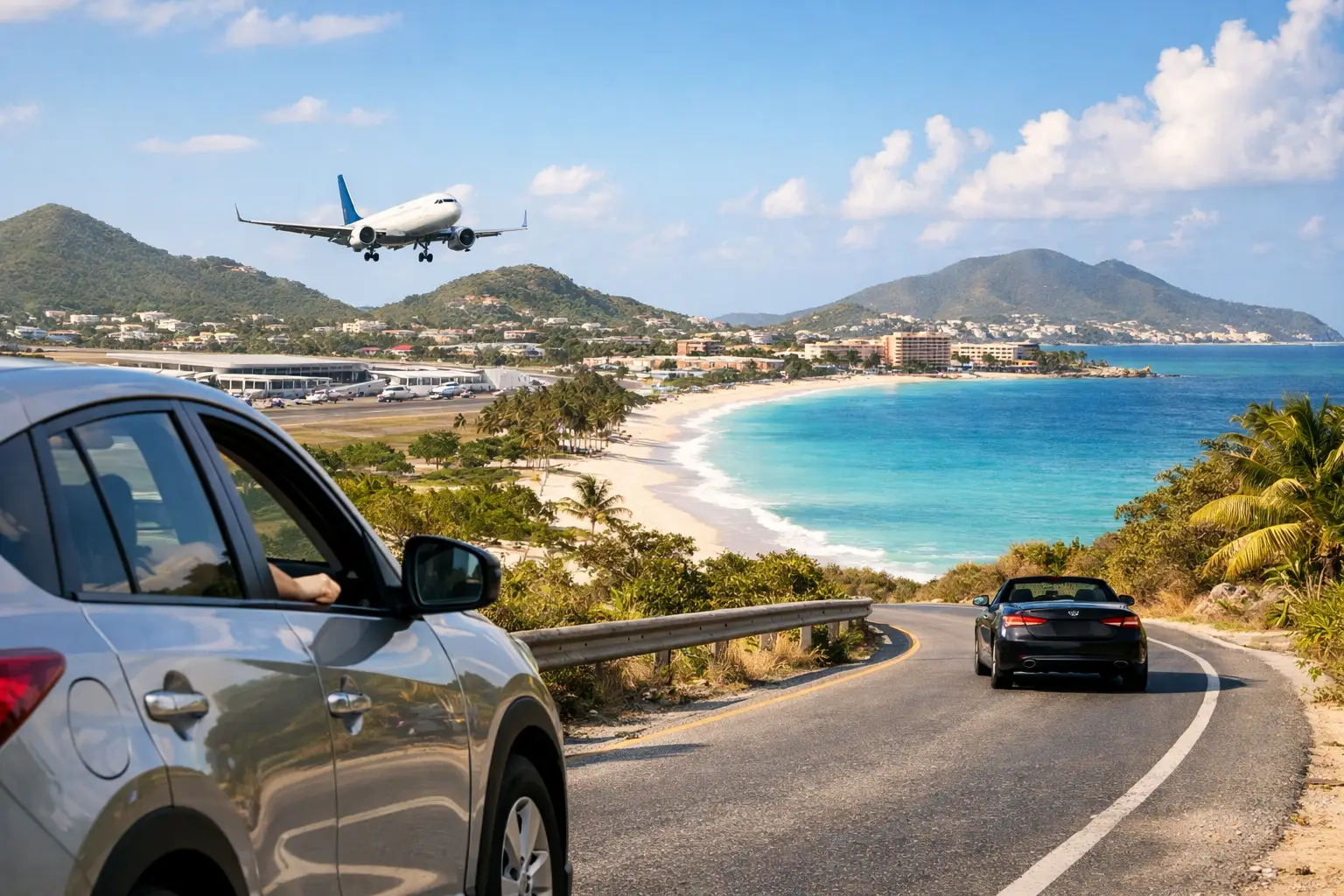
This is an easy first-day drive after arriving near Princess Juliana International Airport. Begin at Maho Beach, where planes approach dramatically close to the shoreline. It is a memorable stop, but it is not usually where travelers spend an entire quiet beach day. Watch the posted safety notices and stay clear of jet blast areas.

From there, drive through Simpson Bay for breakfast, a waterside lunch, or a walk along the beach. Continue toward Cupecoy, where the coastline feels more tucked away and the limestone cliffs create a different look from the broad sands around Maho. The sunset from this side of the island is often excellent.

Parking can be tight near Maho at peak times, so arriving in the morning helps. This route suits first-time visitors because it is close to the airport, simple to navigate, and easy to shorten if you are tired after a flight.

2. Philipsburg, Great Bay, and the Dutch Side Coast

For travelers who want a mix of town, beach, and local color, make Philipsburg the center of the day. The drive from Simpson Bay or the airport area usually takes you through Cole Bay and along the pond roads before reaching the capital. Once there, park once if possible and explore on foot.

Great Bay Beach is directly beside the boardwalk, so you can combine swimming with shopping, casual dining, and a stroll through Front Street. This is a practical option for families or groups where not everyone wants the same kind of beach day. One person can browse shops while another relaxes by the water without a complicated change of plans.

After Philipsburg, take the road toward Point Blanche for coastal views, then return before evening traffic builds. This is also a smart route for cruise visitors who have a full day ashore but do not want to venture too far from port.

What travelers usually worry about

Parking in Philipsburg is more difficult on busy days than at remote beaches. Do not count on finding a space immediately in the most central area. Arrive early, use a marked space, and be prepared to walk a few minutes. The payoff is that the town is one of the island's easiest places to enjoy without moving the car all day.

3. Oyster Pond, Orient Bay, and Grand Case

This is one of the most rewarding full-day routes for beach lovers. Start from the Dutch side and head east toward Oyster Pond, where the road becomes more scenic and the pace begins to slow. Then cross to the French side and continue to Orient Bay, known for its wide beach, clear water, and a lively selection of beach restaurants.

Orient Bay works well as a midday stop because you can rent chairs, eat lunch, and stay as long as you like. If you prefer a quieter atmosphere, keep the beach visit shorter and continue north to Grand Case. The village is known for its waterfront setting, colorful buildings, and strong dining scene.

Grand Case is especially good later in the day, but that creates a trade-off: parking can be more limited around dinner. Arrive in the late afternoon, walk the village, and stay for an early dinner if your schedule allows. The return drive after dark is manageable, but unfamiliar visitors should take it slowly and avoid rushing.

4. Marigot, Baie Rouge, and Terres Basses

For a slower French-side outing, drive to Marigot in the morning. The waterfront town has a more relaxed rhythm than Philipsburg, with cafés, markets on selected days, and views across the harbor. A stop at Fort Louis adds a short uphill walk and a broad look over Marigot Bay, Simpson Bay Lagoon, and the surrounding hills.

From Marigot, continue toward Baie Rouge. The beach is known for soft sand, striking blue water, and a setting that feels more open than the island's busier resort areas. Conditions can vary with the wind and surf, so look at the water before settling in, particularly if children are swimming.

If you want to keep driving, the Terres Basses area offers a peaceful coastal feel and access to several beautiful beaches. Roads in this area can be narrower, and some entrances are less obvious than major beach routes. A smaller car is convenient here, though an SUV is useful if your group needs space rather than because the roads demand it.

5. Pic Paradis and the island's hillside views

Not every memorable day trip needs to revolve around a beach. Pic Paradis, the island's highest point, offers a welcome change of scenery for travelers who want views, cooler breezes, and a glimpse of the island's greener interior. The route is best done in clear weather, when the panoramic views have the most impact.

The roads uphill can be narrow and steep in places. Use low speed, stay alert for pedestrians and local traffic, and do not feel pressured by a vehicle behind you. Pull over only where it is safe. This is a route where a confident driver and an SUV can be helpful, though careful drivers in a standard car can also enjoy it.

Pair the drive with a stop in Marigot or a late lunch in Grand Case. It makes a satisfying day for couples, repeat visitors, and anyone who has already checked off the island's best-known beaches.

6. Simpson Bay, Cole Bay, and a sunset loop

If you only have a half day, build a simple loop around Simpson Bay Lagoon. Begin in Simpson Bay, drive through Cole Bay, and use the roadside views to get a feel for the island's boating culture and busy harbor areas. Add a stop at a beach or café, then finish near Maho or Cupecoy for sunset.

This route is less about ticking off landmarks and more about enjoying the island at an unhurried pace. It is particularly useful on a departure day, when you want to see more than the resort area without committing to a long cross-island drive.

Good to know before you book

Choose your rental vehicle based on passengers, luggage, and the kind of days you actually want to have. A large vehicle may sound appealing, but a compact model can be easier in tight parking areas. On the other hand, families with beach bags, strollers, or several passengers will appreciate the comfort of an SUV or van.

Ask about pickup instructions, fuel expectations, insurance options, and what to do if you need roadside assistance. Clear terms matter as much as the vehicle itself. H & L Car Rental focuses on dependable airport-area pickup and honest pricing, helping travelers get from arrival to their first beach stop with less uncertainty.

The island rewards travelers who leave some space in the schedule. Pick a route, start before the roads get busy, and let the best stop of the day be the one you did not have to rush away from.
Can Tourists Drive in SXM? What to Know

Can Tourists Drive in SXM? What to Know

The first time you leave Princess Juliana International Airport, the island’s roads can look busier and more informal than the map suggested. Beach traffic, roundabouts, scooters, steep neighborhood streets, and drivers who know every shortcut all share a relatively small road network. So, can tourists drive in SXM? Yes. Most visitors can legally rent and drive a car with a valid driver’s license from home, and it is one of the easiest ways to experience both Sint Maarten and Saint-Martin on your own schedule.

The key is arriving prepared. Driving here is not difficult for a careful, confident driver, but it does reward patience, awareness, and a rental vehicle that fits the way you plan to travel.

Can tourists drive in SXM with a US license?

For most US visitors, a current, valid US driver’s license is generally accepted for a short vacation rental. You drive on the right-hand side of the road on both the Dutch and French sides of the island, which makes the basic experience familiar for American travelers.

Your license needs to be valid, legible, and held in your own name. The person whose name is on the rental agreement should be the person driving. Rental companies also commonly require a passport or another form of identification, a credit card or approved payment method for the security deposit, and a minimum driver age. Exact age requirements, deposit procedures, additional-driver rules, and insurance options can vary by company and vehicle category, so confirm them before you book.

An International Driving Permit is not usually the deciding factor for travelers with a valid US license, but it may be useful if your license is not in Roman characters or if your home-country documents are harder to interpret. If you have any doubt about your individual documents, ask your rental provider before arrival rather than sorting it out at the airport counter.

What travelers usually worry about

The island is split between Dutch Sint Maarten and French Saint-Martin, but visitors can normally drive between the two sides without a traditional border checkpoint. That freedom is a major reason a rental car makes sense. You can have breakfast in Simpson Bay, spend the afternoon at Orient Bay, and return to the Dutch side for dinner without planning around taxi availability.

Still, the open border does not mean every rental agreement is identical. Make sure your rental is authorized and properly insured for travel on both sides of the island. Ask directly if cross-border use is included and whether any conditions apply. This is a simple question that can prevent an unpleasant surprise after a minor incident or roadside problem.

Visitors also worry about whether local driving feels aggressive. It is better described as active and situational. Roads can narrow quickly, parking areas can be tight, and traffic builds around popular beaches, shopping areas, school hours, and the airport corridor. Drivers may stop unexpectedly to turn or allow someone to enter traffic. Leave room, avoid rushing, and let local traffic patterns unfold around you.

The road rules that matter most

Road signs, lane markings, and traffic lights should always be followed, but defensive driving matters just as much on SXM. Keep your attention on the road rather than the scenery. The sea views are beautiful, but many of the island’s most scenic routes also have curves, changing road surfaces, pedestrians, and parked vehicles close to the lane.

Speed limits are posted and should be respected, especially through villages and busy beach areas. Slowing down is not just about avoiding a ticket. It gives you time to react to a scooter passing, a pedestrian stepping out from between cars, or a vehicle turning without much warning.

Roundabouts are common. Reduce speed as you approach, follow the signs and lane markings, and yield as required to traffic already circulating. If you miss your exit, simply continue around rather than making a sudden move across lanes.

Seat belts should be worn by everyone in the vehicle. Do not drive after drinking, even if you only plan to travel a short distance back to your hotel. Taxis are a better choice after an evening out, particularly if you expect to enjoy the island’s nightlife in Simpson Bay or Maho.

Phone use is another easy mistake to avoid. Set your route before leaving, have a passenger handle directions when possible, or pull over safely before checking your map. A wrong turn is rarely a serious problem on an island this size. A distracted turn can be.

Best for first-time visitors

A compact or economy car is often the best choice for first-time visitors who are staying near Simpson Bay, Maho, Cupecoy, or Philipsburg. These vehicles are easier to park, use less fuel, and handle the island’s main roads comfortably. Couples who plan to spend most days at beaches and restaurants generally do not need a large vehicle.

A mid-size or full-size car can be more comfortable for families carrying beach gear, strollers, or several suitcases. If you are traveling with a group, an SUV or van gives everyone more room, though the trade-off is a larger vehicle in tight parking lots and narrow streets.

A Jeep or SUV can be appealing if you plan to explore hillier areas, reach less-developed beaches, or want additional ground clearance and cargo space. But an SUV is not essential for a standard island vacation. The main roads around hotels, beaches, grocery stores, and popular attractions are generally manageable in a regular car. Choose the size that will make parking and loading easiest for your group, not simply the biggest option available.

Parking without turning it into a daily headache

Parking is easiest when you plan around your destination. At many beaches and restaurants, you will find informal roadside spaces or small lots. In busy areas, arrive earlier than the lunch or sunset crowd, park fully off the driving lane, and never block a driveway, entrance, or another vehicle.

Philipsburg deserves a little extra planning. It is a popular stop for shopping, dining, and cruise-day activity, so parking can fill up quickly when ships are in port. Paid lots may be worth the convenience, especially if you would rather spend your time walking the boardwalk than circling for a free space. Keep valuables out of sight, lock the vehicle, and take only what you need for the day.

On the French side, beach areas and village centers can also become crowded during peak hours. Read posted signs carefully and avoid assuming that an open-looking shoulder is legal parking. If a space feels too tight or uncertain, move on. There is usually another option a few minutes away.

Local tip: plan for island time, not map time

A route that appears short can take longer than expected. Traffic near the airport, Simpson Bay Bridge, Cole Bay, Philipsburg, and major beach zones can change quickly. Rain showers can also make roads slick, and short tropical downpours may reduce visibility even when the day began sunny.

Build a little extra time into airport returns, dinner reservations, and excursion departures. This is especially helpful if you need to cross from one side of the island to the other at a busy time of day. Driving calmly is far more enjoyable when you are not watching the clock.

Before setting off, check the fuel level, know the type of fuel your vehicle uses, and take a few minutes to become familiar with the lights, wipers, mirrors, air conditioning, and spare-tire or roadside-assistance instructions. Photograph the vehicle condition at pickup, including wheels and windshield, so both you and the rental company have a clear record.

Good to know before you book

The lowest daily rate is not always the best value if it leaves important questions unanswered. Look for clear information about the security deposit, insurance coverage, fuel policy, mileage, additional drivers, airport pickup process, and what happens if you need assistance during your trip. Honest pricing and clear terms make it much easier to relax once you arrive.

At H & L Car Rental, travelers can choose from practical economy and compact cars through SUVs, Jeeps, and vans, depending on their luggage, group size, and plans. More important than the category, though, is booking a vehicle you will feel comfortable driving from day one.

If you are visiting during a holiday period, school break, major event, or the busiest winter travel months, reserve early. Smaller cars and family-friendly vehicles often go first, and waiting until arrival may limit your options.

Driving in SXM gives you the flexibility to follow your own beach list, stop when a viewpoint catches your eye, and enjoy both sides of the island without building each day around transportation. Bring your valid license, choose a car that suits your trip, give yourself extra time, and let the road be part of the vacation rather than a stress point.

SXM Driving Rules Visitors Should Know Before You Go

SXM Driving Rules Visitors Should Know Before You Go

The first roundabout after leaving the airport can feel like a lot when you are adjusting to a new car, unfamiliar signs, and island traffic all at once. The good news is that SXM driving rules are straightforward for visitors who take their time, watch the road, and let the local pace guide them. A rental car gives you the freedom to move between beaches, restaurants, resorts, and both sides of the island, but a few practical habits make that freedom much more enjoyable.

SXM Driving Rules Start With the Basics

Traffic drives on the right side of the road throughout both Sint Maarten and Saint-Martin. If you are visiting from the United States, that part will feel familiar. Road layouts, however, can be tighter, hillier, and busier than you may expect from looking at a map.

Seat belts should be worn by everyone in the vehicle. Keep your attention on the road and avoid handling your phone while driving. This is especially important around Simpson Bay, Cole Bay, Philipsburg, Maho, and Marigot, where traffic, pedestrians, scooters, parked cars, and turning vehicles can all share limited space.

Never assume another driver will move quickly just because the light has changed or the road is clear ahead. Island driving is often patient and practical. Give people room to merge, expect occasional slowdowns, and do not make rushed decisions near busy intersections.

Speed limits are posted in kilometers per hour, not miles per hour. This is one of the easiest details for American visitors to overlook. A speed limit of 50 km/h is roughly 31 mph, so check your dashboard and road signs before settling into your route. Limits can change between town areas and more open roads, and posted signs should always be your guide.

Roundabouts, Intersections, and Right of Way

Roundabouts are common on the island and help keep traffic moving where several roads meet. Slow down as you approach, look for traffic already circulating, and yield before entering. Use your turn signal as you exit whenever possible. It is a small courtesy that helps drivers behind you understand where you are headed.

Not every intersection feels as formal as one back home. You may come across roads where sightlines are short, markings are faded, or vehicles are parked close to a corner. Treat these areas carefully. Ease forward, look twice for scooters and motorcycles, and do not assume a clear lane means there is no one coming around the bend.

Local drivers know the roads well and may move with more confidence than a first-time visitor. There is no need to match that pace. Staying calm, using your signals, and choosing the safer gap is always the better call.

What travelers usually worry about

Most visitors are less concerned about the rules themselves than about traffic congestion and unfamiliar roads. The busiest periods often occur around morning and late-afternoon commuting times, particularly between Simpson Bay, Cole Bay, and Philipsburg. A route that looks short can take longer when traffic builds, so leave extra time for dinner reservations, airport returns, or a planned beach stop.

The island is compact, but that does not mean every drive is quick. Roads may narrow through neighborhoods, climb into the hills, or slow behind delivery trucks and buses. Build your day around a few nearby stops instead of trying to cross the island several times. You will spend less time in traffic and have more time to enjoy where you are.

Parking Rules and Smart Parking Habits

Parking can be easy at beaches, restaurants, and many hotels, but it becomes more competitive in popular areas such as Philipsburg, Marigot, Maho, and Simpson Bay. If you see a legal space that gives you enough room to park safely, it is often worth taking it rather than circling for a closer option.

Pay attention to signs, painted curbs, marked loading areas, and private lots. Do not block driveways, narrow streets, intersections, or another vehicle's path. Parking too tightly on a busy road can turn a simple stop into an obstacle for everyone else.

When you park near a beach or shopping area, lock the vehicle and keep bags, phones, passports, and other valuables out of sight. This is sensible travel practice anywhere, but it is especially helpful when your rental car makes it obvious that you are carrying vacation gear.

Local tip

For a day in Philipsburg, arrive earlier rather than hoping to find convenient parking at midday. Park once, then walk the boardwalk, Front Street, and nearby shops at an easy pace. It is usually far more relaxing than repeatedly moving the car between short stops.

Driving From the Dutch Side to the French Side

One of the best parts of renting a car is being able to explore both sides of the island in one trip. The border between Sint Maarten and Saint-Martin is generally easy to cross, and visitors typically do not encounter a traditional border checkpoint during normal travel. Still, you are entering a different jurisdiction, so drive attentively and respect the signs where you are.

Carry your driver's license and rental documents in the vehicle. Before confirming a rental, make sure the company permits travel on both the Dutch and French sides and that the vehicle has the required insurance coverage. This is a simple question that can prevent an unnecessary problem later in your vacation.

French-side roads can feel quieter in some areas, but do not let that encourage faster driving. The routes toward Grand Case, Orient Bay, and the island's northern beaches include curves, village traffic, pedestrians, and scenic stretches where it is easy to get distracted. Pull over safely if you want to admire the view or take photos.

Weather, Hills, and Road Conditions

A bright morning can turn into a heavy tropical shower with little warning. When rain arrives, reduce your speed, leave more following distance, and avoid sudden braking. Roads can become slick, and standing water may hide uneven pavement or potholes.

Some of the most beautiful areas are reached by hilly roads with sharp curves. Keep both hands on the wheel, take corners slowly, and avoid stopping in a blind bend. An economy or compact car is suitable for many island itineraries, while an SUV or Jeep can be a comfortable choice for families, travelers carrying beach gear, or guests planning to explore hillier routes. The best car depends less on the distance and more on your group size, luggage, and preferred level of comfort.

At night, use extra caution outside the busiest areas. Street lighting can vary, rain can reduce visibility, and road edges may be harder to see. If you are unfamiliar with a route, driving it during daylight first is often the easier option.

Good to Know Before You Book

A valid driver's license from home is generally the key document visitors need to drive, but rental requirements can vary by company, driver age, and vehicle category. Ask about the security deposit, fuel policy, coverage, additional-driver rules, and the procedure for roadside assistance before you confirm. Clear answers matter more than a low advertised rate that comes with surprises at pickup.

Choose a vehicle that fits the reality of your trip. Couples traveling light may appreciate the ease of a compact car in busy parking areas. Families often benefit from an SUV with room for suitcases, strollers, and coolers. Groups should consider a van rather than trying to split across multiple cars or squeeze into a vehicle with too little luggage space.

H & L Car Rental helps travelers choose from practical economy cars to larger SUVs and vans, with straightforward rental information designed to make arrival easier. Booking early is especially wise for holiday periods, school breaks, and major island events, when popular vehicle categories can sell out.

A Safer, More Relaxed Way to See the Island

The best island drives are not rushed. Leave a little early, keep your phone charged for navigation, carry water, and give yourself permission to change plans if traffic or weather shifts. Follow the signs, be courteous at roundabouts, and park with care. With those habits in place, your rental car becomes less about getting from point A to point B and more about having the freedom to stop when the beach, viewpoint, or lunch spot looks too good to pass up.

Rainy Day in St. Maarten? Places to Visit by Car in SXM

Rainy Day in St. Maarten? Places to Visit by Car

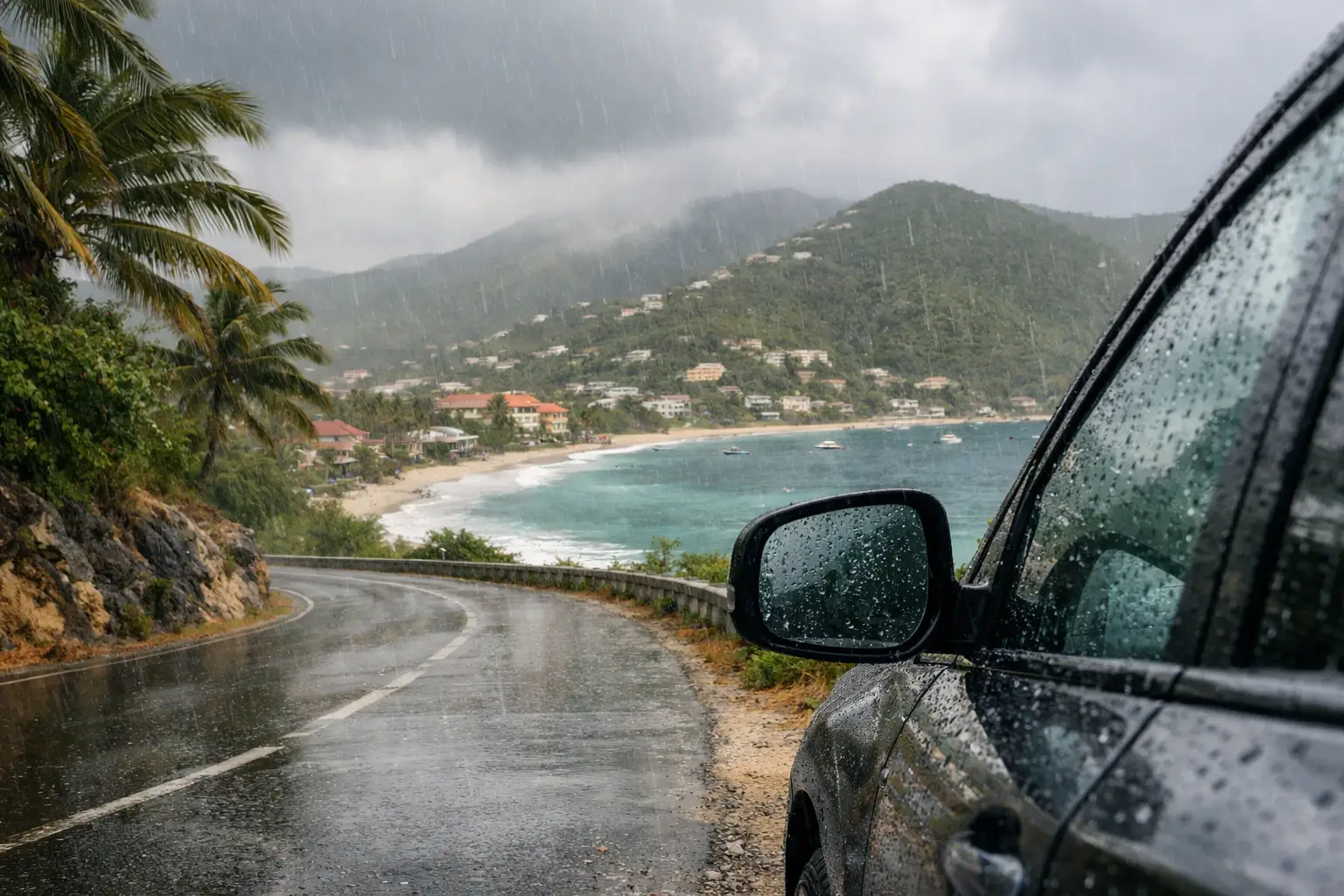
A rainy day in St. Maarten? Places you can still visit by car are closer than you may think. Island showers can arrive quickly, especially during wetter months, but they often pass just as quickly. Rather than giving up a vacation day to the hotel room, use your rental car to move comfortably between covered attractions, shopping areas, restaurants, and viewpoints when the sky starts to clear.

The best plan is not to chase a perfect beach day. It is to stay flexible, keep an eye on the conditions around you, and choose stops where a short shower will not spoil the experience. With a car, you can adjust your route without waiting for a taxi or spending the day exposed to the rain.

What travelers usually worry about on a rainy day

Most visitors are less concerned about a little rain than they are about driving in an unfamiliar place. The good news is that many island roads are manageable when you slow down and give yourself extra time. Heavy rain can make surfaces slick, reduce visibility, and create brief puddling in low areas. Roads can also feel busier when everyone leaves the beach at once.

Avoid rushing through roundabouts, leave more room behind the vehicle ahead, and use headlights when visibility drops. If a downpour is particularly strong, it is perfectly reasonable to pull into a safe parking area, café, or gas station and wait 15 or 20 minutes. On St. Maarten and St. Martin, weather can look very different from one side of the island to the other.

A compact or midsize car works well for couples who want easy parking in Philipsburg or Simpson Bay. Families and groups may appreciate the extra space and higher seating of an SUV or van, particularly when carrying umbrellas, towels, shopping bags, and beach gear that needs to stay dry.

Rainy day in St. Maarten: places to visit by car

Philipsburg for shopping, history, and a long lunch

Philipsburg is one of the easiest places to turn a rainy morning into a worthwhile outing. Park near the center and spend time browsing Front Street’s jewelry stores, souvenir shops, boutiques, and galleries. Many businesses are indoors or sheltered enough for you to move around between showers.

For travelers interested in local history, the Sint Maarten Museum offers a small but useful introduction to the island’s past, culture, and natural environment. It is a good stop when you want something more meaningful than shopping, though checking same-day opening hours before setting out is wise.

A rainy afternoon is also a fine excuse for a relaxed lunch. Choose a restaurant with covered seating, settle in, and let the weather do what it does. You may find that the streets become pleasantly less crowded once cruise passengers and beachgoers head back indoors.

Simpson Bay for dining and indoor entertainment

Simpson Bay is a practical rainy-day base because restaurants, cafés, bakeries, markets, and evening entertainment are all spread along an easy driving route. It is especially useful if you are staying near the airport, Maho, Cupecoy, or Pelican Key and want options without committing to a long drive.

Start with breakfast or coffee, then browse a local market or shop before choosing a place for lunch. The area is also a sensible choice later in the day if the weather never fully settles. You can enjoy a good dinner, live music when available, or casino entertainment without needing a beach forecast to cooperate.

Parking varies by venue, so do not assume every restaurant has a large lot. Arrive a little earlier than the dinner rush, especially if rain has pushed more visitors toward indoor plans.

Marigot for French-side flavor

Crossing to the French side can be a rewarding change of pace on a cloudy day. Marigot has cafés, shops, bakeries, and the waterfront area, giving you several reasons to stop even when swimming is not on the agenda. A warm pastry and coffee under cover can be a much better use of a wet morning than trying to sit through a storm on the sand.

The open-air market is more weather-dependent, so it may not be the best reason to make the drive during heavy rain. Still, the town’s restaurant terraces, boutiques, and indoor shops can make the trip worthwhile when showers are light or intermittent.

Good to know before you go: carry your driver’s license and rental documents when crossing between the Dutch and French sides. There is typically no formal border stop, but you should have your paperwork with you. Keep in mind that road conditions and parking can change quickly after a strong shower, particularly on narrower streets.

Maho and the airport area between showers

Maho Beach is known for aircraft viewing, but it does not need to be a full beach day to be interesting. When rain eases, drive over for a quick look at the runway area and the changing sea conditions. The views can be dramatic under cloudy skies, and restaurants nearby offer an easy place to wait if another shower moves in.

This is a short-stop option rather than an all-day rainy-day plan. Wind, rain, and flight schedules all affect the experience. If the weather is genuinely poor, stay back from the beach and avoid going into rough water. A rental car gives you the freedom to leave whenever conditions become less comfortable.

Scenic stops when the rain breaks

One advantage of island rain is that it often creates a brief window of clear air and brighter views afterward. If you see the clouds lifting, consider a drive toward Cole Bay, Simpson Bay Lagoon, or one of the higher roads overlooking the coast. You do not need to build your entire day around a viewpoint. Treat it as a 10-minute stop between indoor plans.

Do not pull over on a narrow curve or block traffic for a photo. Use established parking areas and keep the road clear. The views are better when you can enjoy them without worrying about passing cars or wet pavement.

Best for first-time visitors: build a flexible route

For a first visit, a simple route is usually better than trying to cover the whole island. Start near your accommodations with breakfast in Simpson Bay or Maho, drive to Philipsburg for shopping and a museum stop, then decide whether conditions are good enough for a scenic detour or a French-side lunch in Marigot.

This approach gives you several off-ramps. If it rains harder, stay in Philipsburg longer. If the weather improves, add a viewpoint or beach walk. If traffic builds, skip the longer drive and enjoy dinner close to where you are staying. Vacation time is more enjoyable when the schedule can bend.

Navigation apps are helpful, but do not rely on estimated drive times too closely during rain. A route that looks short on the map may take longer through traffic, around roadwork, or behind slower vehicles on wet roads.

Local tip: keep a small dry-day kit in the car

A few simple items make rainy driving much easier. Keep a compact umbrella, a light rain jacket, drinking water, and a dry bag or plastic tote for wet swimsuits and towels. Sandals can become slippery when wet, so shoes with better grip are useful if you plan to walk through town or visit a viewpoint.

It also helps to save one or two indoor-friendly restaurants or attractions on your map before the forecast changes. Reception may be limited in certain areas, and it is easier to make a decision when you already have a few nearby choices.

What to ask before confirming your rental car

Before your trip, ask where and how your vehicle will be collected, what insurance options are available, and whether there are any restrictions that affect your planned routes. Clear answers on the deposit, fuel policy, additional drivers, and return process help avoid surprises when your day is already being reshaped by the weather.

At H & L Car Rental, choosing the right vehicle is less about having the biggest car and more about having dependable transportation that suits your group, luggage, and plans. Honest pricing and a straightforward pickup process make it easier to head out when the rain lets up.

A wet forecast does not have to mean a lost day. Let the beach wait for the next patch of sun, take the island at a slower pace, and use the freedom of a car to find a good meal, a local shop, or a view worth stopping for.

Is a Small Car Enough for St. Maarten? What Travelers Should Consider

Is a Small Car Enough for St. Maarten Vacation?

A compact rental can feel like a smart choice the moment you see the island’s beach roads, tight parking areas, and busy resort zones. But if you are asking, “is a small car enough for St. Maarten? What travelers should consider,” the honest answer is: for many vacations, yes. For others, a little more room can make every day easier.

St. Maarten and St. Martin are wonderfully drivable, with major routes connecting the airport, Simpson Bay, Maho, Philipsburg, Orient Bay, Marigot, and many favorite beaches. You do not need a large vehicle simply to enjoy the island. The right choice comes down to how many people are traveling, how much luggage you have, where you are staying, and whether comfort or easy parking matters more to your group.

Why a small car works well in St. Maarten

Economy and compact cars are popular with couples, solo travelers, and friends traveling light. Most visitors spend their days going from a hotel or villa to the beach, restaurants, shops, and scenic stops. For that style of trip, a smaller car handles the job well.

The island’s main roads are paved and accessible with a standard passenger vehicle. A compact car is easy to maneuver through the busier areas around Simpson Bay, Maho, and Philipsburg, where parking spaces can be limited. It is also a comfortable fit for short drives, which is helpful because many popular destinations are closer together than first-time visitors expect.

A small car can also be a practical value choice. If you are traveling as a couple, staying near the beach, and packing one suitcase each, paying for a larger category may not add much to your trip. You will still have the freedom to stop for breakfast in a different neighborhood, visit beaches on both the Dutch and French sides, and avoid planning your day around taxis.

What travelers usually worry about

Most travelers do not worry about whether a compact car can reach the island’s attractions. They worry about luggage, hills, traffic, and whether they will feel cramped after a few days.

Luggage is usually the deciding factor. A small car may comfortably seat four adults, but that does not mean it will comfortably carry four adults plus four large suitcases, beach bags, and a cooler. Rental-car seating capacity and cargo capacity are two different things. If everyone is bringing checked luggage, choose your vehicle based on the trunk first.

The second concern is passenger comfort. Two adults in a compact car are usually very comfortable. Three adults can work well for day trips, especially with light bags. Four adults may prefer a mid-size or full-size car, particularly if you plan to drive around the island often or want room for beach chairs, groceries, and souvenirs.

Traffic can also change how a vehicle feels. At peak times, some areas can be slow, especially near busy shopping districts, popular beaches, and the roads around Simpson Bay. A compact car is easy to place in traffic and simple to park, but a larger vehicle may feel more relaxed when everyone is carrying bags or riding together after a long beach day.

Best for first-time visitors

For first-time visitors, a compact car is often the safest all-around recommendation when the trip includes one or two people with normal luggage. It is easy to drive, easy to park, and suitable for exploring both St. Maarten and St. Martin without paying for more space than you need.

Visitors arriving at Princess Juliana International Airport may especially appreciate a vehicle that does not feel oversized on unfamiliar roads. You drive on the right side of the road, and the main island routes are straightforward, but the pace can be lively in busier areas. A smaller car gives many travelers more confidence when navigating roundabouts, parking lots, and narrow streets near restaurants and villas.

If this is your first visit and you are unsure, think about your actual plans rather than the size of the island. Are you staying at a resort and taking short outings? A compact car is likely enough. Are you changing accommodations, picking up friends, carrying golf clubs, or planning grocery runs for a villa? Move up one category.

When a small car may not be enough

A small car can become inconvenient when your trip involves more people, more gear, or more ambitious daily plans. Families with younger children should consider the room required for child seats, strollers, beach toys, and bags. A compact vehicle may technically fit a family of four, but the trunk can fill quickly.

Travelers staying in hillside villas may also prefer more power and space. Many accommodations are easy to reach in a standard car, but some neighborhood roads can be steeper, narrower, or less even than the island’s main routes. You do not automatically need an SUV, but a mid-size car, SUV, or Jeep may feel more comfortable if your route includes regular uphill driving or you simply prefer a higher seating position.

An SUV is also worth considering for groups of three or four adults sharing a vehicle for the entire vacation. It provides room for luggage on arrival and departure days, while still giving everyone more personal space during beach-hopping days. For larger families or groups, a van is usually the more sensible option than trying to make a compact car work.

Parking, roads, and beach plans

Parking is one of the strongest reasons to choose a small rental car. In places such as Philipsburg, Maho, Simpson Bay, and Marigot, the best spaces can be tight or busy during popular hours. A compact vehicle makes it easier to pull into available spaces and move around congested lots.

That said, do not choose the smallest possible car only for parking if it means you will be uncomfortable the rest of the week. Beach days tend to create more cargo than visitors expect. Towels, umbrellas, snorkel gear, shopping bags, water, and a change of clothes can quickly occupy the back seat when the trunk is full.

A helpful middle ground is a mid-size sedan. It often offers a noticeably larger trunk and more rear-seat comfort without feeling difficult to handle. This category is a strong choice for two adults who pack heavily, a small family, or three friends who want a little extra breathing room.

Good to know before you book

Before confirming a rental, be realistic about the number of passengers and the amount of luggage that will be in the vehicle at the same time. Arrival day is the best test. If everyone and every suitcase cannot fit comfortably after landing, the car will not feel like a good deal.

Also consider how long you will keep the vehicle. For a quick weekend centered around a resort, a small car is often ideal. For a week or more, the comfort of a larger category may be worth it, especially if the car will be your regular transportation for dinner, shopping, beaches, and sightseeing.

Ask about the vehicle category rather than assuming every compact car has the same trunk space. Actual models can vary, and a helpful rental team can guide you toward an option that matches your party and travel style. At H & L Car Rental, clear vehicle guidance and honest pricing help travelers choose confidently without paying for features they do not need.

Local tip: plan for the days you will carry the most

Do not choose based only on the average day. Choose based on your busiest one. If you will pick up airport luggage, stock a villa with groceries, travel with children, or take a full-day island drive with friends, that is when extra room matters.

For couples traveling with carry-on bags or one suitcase each, a small car is usually more than enough for St. Maarten. For families, groups, and travelers with large luggage, upgrading to a mid-size car, SUV, or van can remove a lot of avoidable stress. The best rental is not necessarily the biggest one. It is the one that gives you enough space to enjoy the island without thinking about where the next bag will go.

From Princess Juliana Airport to Your Hotel by Rental Car

From Princess Juliana Airport to Your Hotel by Rental Car

The first decision after landing is often the one that shapes the whole vacation: how will you get from the airport to the hotel, then from the hotel to the beaches, restaurants, shops, and viewpoints you came to see? From Princess Juliana Airport to your hotel, getting around St. Maarten by rental car gives you the freedom to set your own pace from day one.

Whether you are staying near Maho, Simpson Bay, Cupecoy, Philipsburg, Orient Bay, Grand Case, or farther north on the French side, a rental car can make your arrival feel much less complicated. You can collect your luggage, pick up your vehicle, and head out without waiting for a shared transfer or planning every outing around taxi availability.

What travelers usually worry about after landing

First-time visitors commonly wonder whether the island is difficult to drive, whether roads are easy to follow, and whether they need a large vehicle. The reassuring answer is that many visitors drive comfortably here, especially when they take the first day slowly and allow extra time around busier areas.

Princess Juliana International Airport is on the Dutch side of the island, close to Maho and Simpson Bay. Depending on traffic and your hotel location, the drive may be short, but island driving is not always about mileage. Roads can narrow, roundabouts can be busy, and traffic may build near popular beaches, bridges, and shopping areas. A relaxed approach matters more than trying to rush.

If you arrive during a busy afternoon, give yourself a little breathing room before making dinner reservations or booking an activity. That way, your first drive is simply about settling in, not watching the clock.

From Princess Juliana Airport to your hotel by rental car

For hotels in Maho, Cupecoy, Simpson Bay, Beacon Hill, or Pelican Key, the trip from the airport is generally straightforward. These areas are close by, but traffic around the airport and the Maho area can move slowly at popular times. This is normal, particularly when visitors are stopping near the beach to watch planes land.

For a stay in Cole Bay, Porto Cupecoy, or the wider Simpson Bay area, having your own car is especially useful. These neighborhoods have plenty of dining, grocery stores, marinas, beaches, and nightlife, but they are spread out enough that walking everywhere may not be realistic in the heat.

If your hotel is in Philipsburg, allow more time than the map may suggest. The route is manageable, but traffic can increase when cruise visitors are in town or when roads are busy around Great Bay. A rental car still gives you more flexibility than a one-way transfer because you will have transportation ready for the rest of your stay.

Heading to the French side, such as Orient Bay, Grand Case, Anse Marcel, or Marigot? You can drive across the border without a formal checkpoint. The island is shared by Sint Maarten and Saint-Martin, and visitors move between the Dutch and French sides regularly. Road conditions, signs, and driving style can vary a little by area, so use a navigation app, stay alert, and enjoy the scenery rather than treating the drive like a race.

Best for first-time visitors

A rental car is a particularly good fit for travelers who want more than one beach day at the same resort. St. Maarten and St. Martin are compact enough for easy day trips, yet varied enough that you will likely want to explore both sides of the island.

One morning can start with coffee in Simpson Bay, continue with time at Mullet Bay or Maho Beach, and end with dinner in Grand Case. Another day might include shopping in Philipsburg, a stop at a lookout point, and a quiet sunset near Cupecoy. With a car, you do not have to choose just one zone of the island for the entire day.

It is also practical for families carrying beach bags, strollers, snorkeling gear, or groceries. Couples often enjoy it for the freedom to try restaurants outside their hotel area. For business travelers, it can make getting between the airport, meetings, and accommodations more predictable.

That said, a rental car may be less essential if you plan to stay at one all-inclusive resort and expect to spend nearly all your time there. In that case, taxis for a few outings may be enough. It depends on how independently you want to explore.

Good to know before you book

Vehicles drive on the right side of the road. Most visitors from the United States find this familiar, but the pace can feel different from driving at home. Be prepared for roundabouts, occasional steep or narrow roads, and drivers who may stop unexpectedly or pull in and out of roadside businesses.

Keep your seat belt on, avoid using your phone while driving, and never drink and drive. Roads are generally easiest to handle in daylight, especially on your first trip to an unfamiliar part of the island. At night, use extra care on less-developed roads where lighting may be limited.

Before confirming a rental, make sure you understand the pickup process, insurance options, fuel policy, deposit requirements, and what is included in the quoted rate. Transparent pricing matters after a long flight. You should know what you are paying for before you arrive, not discover added surprises at the counter.

At H & L Car Rental, travelers can choose from economy and compact cars through SUVs, Jeeps, and vans, allowing the vehicle to match the trip rather than paying for more car than needed.

Best car type for this route

For most couples and solo travelers, an economy or compact car is an easy choice. It is simple to park, fuel-efficient, and suitable for airport-to-hotel driving as well as everyday beach hopping. A mid-size or full-size car may be more comfortable for travelers with several suitcases or those who prefer a little extra room on longer days out.

An SUV can be a good choice for families, groups with beach equipment, or visitors who want a higher seating position and more cargo space. It is not required for the standard drive from the airport to most hotels, but it can be helpful if comfort and luggage capacity are priorities.

A Jeep may appeal to travelers who plan to explore more scenic, less-developed areas, while a van makes sense when a larger family or group wants to travel together. The best vehicle is not necessarily the biggest one. It is the one that fits your passengers, bags, and parking comfort.

Parking, traffic, and timing

Parking is usually manageable, but popular places require patience. Philipsburg can be busy during cruise ship days, while Maho, Simpson Bay, and beach access points may fill up around lunch and sunset. When you see a legal parking space near a popular stop, it is often worth taking it instead of assuming a closer one will open up.

Do not block driveways, park where signs prohibit it, or leave valuables visible in the vehicle. For beach days, bring only what you need and keep personal items out of sight. These simple habits go a long way toward a more relaxed outing.

Traffic is often heaviest around the airport corridor, Simpson Bay, Cole Bay, and Philipsburg. If you have a dinner reservation or a scheduled excursion, leave early. On an island, a 20-minute drive can become longer when traffic builds, especially after rain or during peak visitor periods.

Local tip: plan your first stop

Rather than driving directly into a full day of sightseeing after landing, make your first stop your hotel or a nearby grocery store. Get checked in, cool off, put away your bags, and get familiar with your vehicle. Then take a short drive close to your accommodation for dinner or sunset.

This small adjustment helps first-time visitors gain confidence before planning a longer cross-island day. By the next morning, the roads, roundabouts, and local traffic flow will already feel more familiar.

A rental car is not just transportation from Princess Juliana Airport to your hotel. It is the option to take the scenic turn, stay for one more swim, and make the island feel like your own for the week.

How to Plan the Perfect St. Martin Road Trip

How to Plan the Perfect St. Martin Road Trip

A road trip here can take you from airport runway views to quiet French-side coves, colorful waterfronts, and hilltop lookouts in one day. Knowing how to plan the perfect St. Martin road trip: routes, stops and travel tips helps you enjoy that freedom without spending your vacation circling for parking, backtracking across the island, or arriving at a beach after the best part of the day has passed.

The island is compact, but driving times can be deceptive. A route that looks short on a map can take longer during morning and afternoon traffic, especially around Simpson Bay, Cole Bay, Philipsburg, and the French-side border areas. The best plan is not to see everything at once. Pick one side of the island or one general loop each day, leave room for a long lunch or an unplanned swim, and let the road trip feel like a vacation rather than a checklist.

Start with the right route for your travel style

Most visitors arrive at Princess Juliana International Airport on the Dutch side, making it a convenient place to begin. From there, you can head south and east toward Simpson Bay, Philipsburg, and Oyster Pond, or travel north through Marigot and Grand Case toward the quieter beaches around Orient Bay and Anse Marcel.

For a first full day, the Dutch-side coastal route is an easy introduction. Drive from Simpson Bay to Maho Beach, continue through Cupecoy, then return through Simpson Bay and Cole Bay before heading toward Philipsburg. This route works well for travelers who want a mix of famous sights, restaurants, shopping, and accessible beaches without crossing the island several times.

If your priority is beach time and a slower pace, plan a French-side day instead. From the airport area, drive through Marigot, then continue toward Grand Case, Orient Bay, and Anse Marcel. The scenery changes noticeably as you go: marina views and hillside roads give way to open water, beach clubs, and villages where lunch can easily turn into an afternoon.

A third option is the island loop for travelers with limited time. Start early in Simpson Bay or Maho, go through Marigot and Grand Case, continue toward Orient Bay and Oyster Pond, then return to the Dutch side through Philipsburg. It is possible in a day, but it should be treated as a scenic drive with two or three meaningful stops, not a mission to visit every beach.

A relaxed Dutch-side day

Begin at Maho Beach early, before the busiest part of the day. Even if you are not there for the aircraft views, it is a memorable place to start and is only a short drive from the airport. From Maho, Simpson Bay is ideal for breakfast, a beach walk, or a stop at the marina.

Later, drive over the hill toward Cole Bay. The views can be beautiful, but the roads are busy and occasionally narrow, so take your time. Continue toward Philipsburg for the Boardwalk, Front Street shopping, or Great Bay Beach. If a cruise ship is in port, Philipsburg can feel much busier, so parking and lunch may be easier earlier in the day.

Finish near Oyster Pond or Dawn Beach if you want a quieter coastline before returning. This is a good route for couples, first-time visitors, and families who prefer familiar services and shorter driving stretches.

A French-side beach route

For a day that feels more focused on beaches and food, begin in Marigot. The waterfront area, market atmosphere, and Fort Louis viewpoint make it a worthwhile first stop. The climb to the fort is brief but steep, so wear comfortable shoes and bring water.

From Marigot, drive north to Grand Case. This village is known for its beach, dining, and relaxed pace. It is an excellent lunch stop, although reservations can be helpful during high season or for popular dinner spots. Afterward, continue to Orient Bay for a broad beach, water activities, and a livelier beach-club atmosphere.

If you still have energy, Anse Marcel offers a more tucked-away finish. The road in is hillier, but the bay feels removed from the island's busier areas. Plan to return before dark if you are unfamiliar with the roads.

Stops worth building into your St. Martin road trip

The best stops depend on the kind of day you want. Maho Beach is iconic and close to the airport, while Simpson Bay is a convenient base for dining and nightlife. Philipsburg suits travelers who want shopping, a waterfront stroll, and a central stop on the Dutch side.

On the French side, Marigot adds culture and views, Grand Case is a natural choice for lunch, and Orient Bay works well when the beach itself is the main event. Travelers who prefer calmer scenery may enjoy Anse Marcel, Friar's Bay, or a scenic drive toward Oyster Pond.

Do not try to force all of these into one day. A better rhythm is one major beach, one town or viewpoint, and one meal stop. The island rewards people who leave enough time to pull over for a view, stay longer where they are happy, and avoid the frustration of rushing between locations.

What travelers usually worry about

Can tourists drive easily in St. Maarten and St. Martin?

Yes, most visitors find driving manageable, particularly with a rental car that fits their group and luggage. Traffic drives on the right, and Americans will find the basic road setup familiar. Roads can be narrow, steep, or uneven in certain areas, and roundabouts require attention, so defensive driving is the right approach.

The Dutch and French sides are part of the same island, and travelers generally cross between them without a formal border stop. Still, driving styles, road conditions, and signage can vary slightly by area. Keep your license, rental documents, and phone charged, and use navigation as a guide rather than assuming its arrival times will account for traffic.

Is parking difficult?

Parking is usually manageable, but it depends on where and when you go. Philipsburg can be challenging on cruise-ship days, and Grand Case may be busier around dinner. Beach parking can also fill up by late morning during peak travel periods.

Arrive earlier for popular stops, use designated spaces where available, and never block driveways or narrow roads. If a beach or restaurant has limited parking, consider whether it is worth visiting at a quieter time rather than squeezing the stop into the busiest hour.

Do you need an SUV in St. Martin?

Not necessarily. An economy or compact car is often a practical choice for couples and light packers because it is easier to park and efficient for everyday island driving. A midsize or full-size car can be more comfortable for families, while SUVs are useful for travelers carrying more luggage, heading into hillier areas, or wanting extra space.

A Jeep may suit visitors who like an open-air island feel, but it is not required for standard beach and town routes. Vans make sense for larger groups who would otherwise need two vehicles. The best car is the one that gives your group enough room without making parking harder than it needs to be.

Good to know before you book

Book early when you are traveling during winter holidays, spring break, major events, or any period when flights and hotels are filling quickly. Vehicle availability can narrow quickly for SUVs, Jeeps, and vans, especially for families and groups.

Before confirming a rental, ask about the pickup process, deposit requirements, insurance options, fuel policy, mileage terms, additional-driver rules, and what to do if you need assistance. Clear answers before arrival make the first hour of your vacation much easier. H & L Car Rental focuses on dependable airport-area service and transparent pricing, which can be especially reassuring after a long travel day.

Also think about your actual itinerary. A compact car is ideal if you are staying in Simpson Bay and planning short beach drives. If you are splitting time between the Dutch and French sides with children, beach gear, or several suitcases, extra passenger and cargo room is usually worth it.

Local travel tips that make the day easier

Try to begin sightseeing before 9:30 a.m., particularly on days when you plan to visit Maho, Philipsburg, or popular beaches. The sun is gentler, parking is easier, and you will have more flexibility if traffic slows your plans later.

Keep swimwear, towels, sunscreen, water, and a change of clothes in the car. Island weather can shift quickly, and a short rain shower does not have to end the day. For beach stops, avoid leaving valuables visible inside the vehicle, even for a quick walk.

Fuel up before a longer loop, and do not wait until the tank is nearly empty. Gas stations are available around the island, but stopping when convenient is easier than looking for one while you are trying to make a dinner reservation or return the car.

Finally, allow extra time for sunset plans. A map may say your restaurant is 20 minutes away, but late-day traffic, a missed turn, or a scenic stop can change that quickly. The most enjoyable island road trips leave room for the moments you did not schedule - a view above Cole Bay, a quiet beach near sunset, or a table that turns into a long, unhurried meal.

Best Cars for Steep Roads in St. Maarten

Best Cars for Steep Roads in St. Maarten

A hillside villa can look close on a map, but the final few turns may be narrow, steep, and much more demanding than the drive from the airport. Choosing one of the best cars for steep roads in St. Maarten means thinking beyond price or luggage space. The right vehicle should feel confident on an uphill start, comfortable in warm weather, and practical for the beaches, restaurants, and day trips you have planned.

The good news is that most visitors do not need a heavy-duty off-road vehicle. Main roads across the Dutch and French sides are generally paved, and a well-maintained rental vehicle handles most island driving comfortably. Still, an SUV or Jeep can make a meaningful difference when your hotel, villa, or favorite beach route involves sharp inclines, tight bends, uneven pavement, or a wet road after a tropical shower.

What travelers usually worry about

The biggest concern is usually whether a smaller car will make it up the hill to a rental home. For many locations, it will. A compact car with a responsive automatic transmission can handle ordinary paved inclines when it is not overloaded. The question is not simply, “Can this car get there?” It is whether it will do so comfortably with four passengers, beach gear, groceries, and luggage.

Travelers also worry about parking. This is where a compact car has a real advantage. Parking areas around Philipsburg, Simpson Bay, Maho, and popular beach stops can be tight, especially during busy periods. A larger vehicle gives you more confidence on a hill, but it asks a little more of you in narrow spaces. The best choice depends on where you are staying and how you plan to spend your days.

Rain is another factor. Roads can become slick quickly during a passing shower, particularly on steep paved sections where sand, leaves, or runoff collect. Good tires, sensible speed, and a vehicle that does not feel strained under load matter more than having four-wheel drive for most visitors.

Best cars for steep roads in St. Maarten

SUV: the best all-around choice

For couples, families, and small groups staying in hilly areas, an SUV is often the easiest recommendation. It generally provides stronger uphill performance than an economy vehicle, more room for passengers and bags, and a higher seating position that helps drivers see around curves and parked vehicles.

An SUV is especially useful if your plans include daily driving between beaches, restaurant areas, supermarkets, and a villa in the hills. You get a more relaxed ride without moving into the size of a van. For many travelers, that balance of power, comfort, air conditioning, and storage makes an SUV the most practical answer.

It is not automatically the right choice for everyone. A couple staying in a flat-area hotel near Simpson Bay or Maho, with light luggage and no plans for remote hillside accommodations, may find a compact car easier to park and less expensive. But if your lodging has a steep driveway or you expect to carry several people, choosing the larger vehicle is usually worth the added confidence.

Jeep: best for steeper villa access and adventurous plans

A Jeep is a strong option for travelers who want extra clearance, a sturdy feel, and the freedom to explore roads that are less predictable than the main routes. It can be a particularly good fit for hillside villas, scenic drives, and visitors who simply prefer a more commanding driving position.

That said, a Jeep is not a requirement for every island itinerary. It can be noisier than a conventional SUV, may offer less enclosed cargo space depending on the model, and can feel larger when parking in busy areas. Choose it because its capability matches your stay and travel style, not because every road in St. Maarten calls for off-road driving.

Compact car: good for light travelers on mostly paved routes

A compact car can be a smart, budget-conscious choice when your hotel is on flatter ground and your plans focus on the island’s main roads. It is easy to maneuver, easier to park, and suitable for two people with modest luggage. Many visitors enjoy a compact car for getting from Princess Juliana International Airport to beach areas, dining spots, and shopping districts.

The trade-off appears on a long or very steep climb with a full load. If there are three or four adults in the car, several suitcases, and a hillside destination, the compact option can feel less relaxed. It may still be capable, but it is not the vehicle most travelers would choose if steep roads are a regular part of the vacation.

Full-size car: comfortable, but check your access road

A full-size car offers generous passenger comfort and often has enough power for normal hill driving. It works well for travelers who want a traditional sedan-style ride and have accommodations with straightforward road access. It can be a pleasant choice for longer drives around the island.

Before booking, consider the final approach to your lodging. Low clearance, a long wheelbase, and a larger turning circle can be less convenient on a sharply sloped driveway or narrow residential lane. If the access road is steep or uneven, an SUV may be the more comfortable choice.

Best car type for your route and accommodations

Where you sleep matters as much as where you plan to go. If you are staying in a resort near the airport, Maho, Simpson Bay, or a generally level part of the island, a compact or mid-size car may be all you need. You will still have the independence to visit beaches, restaurants, casinos, and attractions at your own pace.

For a villa above Cole Bay, Oyster Pond, Dawn Beach, or another elevated neighborhood, an SUV is usually the safer default. These areas can involve steep approaches, sharp turns, and driveways where a little extra clearance and pulling power are welcome. If you are unsure, ask your host whether the road is fully paved, whether the driveway is steep, and whether guests commonly use an SUV.

For families, do not judge by passenger count alone. Two adults and two children can easily fill a compact car once you add suitcases, a stroller, beach bags, and a cooler. A mid-size or full-size SUV makes the first and last travel days much easier, while also giving everyone more breathing room on the road.

Good to know before you book

Automatic transmission is the comfortable choice for most visitors, particularly on hill starts and stop-and-go traffic. It lets you focus on the road, the curves, and local driving conditions rather than shifting on a climb. Confirm the transmission type when reserving if that is important to you.

Also think about your luggage honestly. A vehicle that looks spacious in photos may have limited cargo room once every seat is occupied. If your group has large suitcases or golf clubs, moving up one vehicle category can prevent a cramped airport pickup and make day trips more enjoyable.

A reliable rental also matters more than the badge on the hood. Ask about the vehicle category, air conditioning, pickup process, and what support is available if you have a question during your trip. H & L Car Rental offers a range of economy cars, sedans, SUVs, Jeeps, and vans, so travelers can choose based on their actual route instead of paying for more vehicle than they need.

Local tip: drive the hill, not the map

Navigation apps are useful, but they cannot always show how steep a driveway feels, how tight a turn becomes when another car is coming downhill, or where a road has rough patches after rain. Take the first climb slowly, leave extra room behind the vehicle ahead, and avoid rushing a hill start.

On a steep descent, ease off the accelerator early rather than braking hard at the last moment. Keep both hands on the wheel through tight turns, and be patient with local traffic, scooters, pedestrians, and parked vehicles. The island is meant to be enjoyed, not hurried through.

If your villa arrival is after dark, it can help to make your first approach before sunset when possible. Hillside roads are much easier to read in daylight, especially when you are unfamiliar with the turns. Once you have done the route once, the rest of the week feels far more natural.

When to book early

Book early when you know you need an SUV, Jeep, van, or a specific amount of luggage space. These categories are often in higher demand during holiday periods, school breaks, and busy winter travel months. Waiting until arrival can limit your options, particularly if you are traveling with family or staying at a hillside property.

Early booking also gives you time to compare vehicle size with your itinerary. A couple may decide a compact is ideal after confirming their hotel access is flat. A group may realize that a van or SUV is more sensible once everyone’s luggage is counted. That is the kind of decision that is easiest to make before travel day.

What to ask before confirming

If steep roads are part of your vacation, ask three simple questions before confirming: Is the vehicle automatic? How many bags does it comfortably carry with all passengers seated? Which category is best for a steep villa driveway? Provide the location or neighborhood of your accommodations if you can. A local rental team can often give more useful guidance when they understand your real route.

The best rental car is the one that lets you leave the airport feeling prepared, not uncertain. Give yourself enough space, enough uphill confidence, and enough comfort to enjoy every beach stop and hillside view along the way.

Business Trip to St. Maarten? Why Renting a Car Saves Time

Business Trip to St. Maarten? Save Time by Car

Your plane lands, your phone reconnects, and within minutes you are juggling hotel check-in times, meeting schedules, and texts asking where to meet. On a business trip to St. Maarten, why a rental car can save time becomes obvious almost immediately. The island is compact, but a tight work schedule can still unravel fast when you depend on taxis, wait for rides, or try to coordinate around someone else’s timing.

For vacation travelers, a delay of 20 minutes may not matter much. For business travelers, it often does. If you are here for site visits, supplier meetings, client dinners, conferences, property tours, or a quick fly-in fly-out schedule, control over your own transportation can make the day smoother from the start.

Business trip to St. Maarten? Why a rental car can save time on arrival

The first time-saving advantage happens before your workday even begins. After landing at Princess Juliana International Airport, most business travelers want one thing - to get moving. Waiting for a taxi line, explaining your destination, and then arranging another ride later adds friction to a trip that is already packed.

With a rental car reserved in advance, the transition from airport to hotel or first appointment is much more direct. You collect the vehicle, load your bags once, and head out on your own schedule. That matters even more if your arrival time is close to a meeting or if your hotel is not the only stop on your agenda.

Business travel often comes with small timing pressures that add up. Maybe you need to drop luggage, stop for coffee, pick up printed materials, or meet a colleague before heading to an event. A car gives you that flexibility without turning every small errand into a separate transport arrangement.

The island is small, but schedules are not

One common assumption is that because St. Maarten and St. Martin are relatively small, transportation will be simple no matter what. Sometimes that is true. But small islands still have rush periods, event traffic, busy restaurant zones, and hotel areas where wait times for transport can stretch longer than expected.

If your day includes more than one stop, the time savings from driving yourself become easier to see. A morning meeting in Simpson Bay, an afternoon appointment in Philipsburg, and dinner on the French side may sound manageable on paper. In practice, relying on taxis for each segment can eat into your day, especially if plans shift.

That is the real issue for business travelers - not distance, but responsiveness. When your meeting ends early, you want to leave early. When a client asks to move lunch by 30 minutes, you need to adjust quickly. A rental car helps you respond instead of waiting.

What travelers usually worry about

Many business travelers hesitate because they are not sure whether renting a car will feel like extra work. Usually the concerns are practical. Is driving easy? Is parking difficult? Will I really use the car enough to justify it?

For most visitors, driving here is straightforward. Roads around the main business and hotel areas are familiar enough for US travelers, and signage is generally manageable. You do want to stay alert, especially in busier zones and during peak times, but this is not a place where renting a car is only for highly experienced drivers.

Parking depends on where you are going. In some popular areas, it can be tighter during lunch or dinner hours, but for business use, parking is usually more manageable than visitors expect. Hotels, office locations, marinas, and commercial areas often make it easier to step in and out of your day without overcomplicating transport.

As for value, it depends on how your trip is structured. If you are staying in one resort and attending one event on-site, you may not need a car every day. But if you have multiple meetings, want flexibility, or need to move between the Dutch and French sides, the time savings can easily outweigh the cost.

Best for first-time visitors with a work agenda

If this is your first visit, a rental car can actually reduce stress rather than add to it. Business trips leave less room for trial and error. You do not want to arrive and start figuring out local transport options while your calendar is already active.

Having your own car makes the island feel simpler. You can leave when you are ready, keep your belongings with you, and avoid repeatedly calculating travel time around someone else’s availability. That sense of control helps if you are balancing work calls, formal meetings, and personal downtime in one short stay.

It also gives you a buffer. If you finish early, you can head back to your hotel, take a scenic route, or stop for a quick meal without needing to coordinate another pickup. On a business trip, those small windows of freedom are often where the trip becomes easier.

Business trip to St. Maarten? Why a rental car can save time between meetings

The biggest time drain on many work trips is not the long trip. It is the in-between trip. The 15-minute hop to a meeting turns into 35 minutes because you are waiting on transport. The quick dinner turns into a late evening because getting back is less predictable than expected.

A rental car gives structure to the gaps between appointments. You can build a realistic day, leave margin where needed, and recover more easily if one stop runs over. That is especially useful for travelers visiting multiple hotels, properties, ports, venues, or offices in a single day.

There is also the privacy factor. If you need to take calls before or after a meeting, review notes, or keep materials in the trunk, your own vehicle makes that much easier. It becomes a practical workspace between stops, not just transportation.

Good to know before you book

For a business trip, the smartest move is to keep the booking process simple and predictable. Look for clear pricing, straightforward pickup terms, and vehicle options that fit your actual schedule rather than your ideal one. Dependability matters more than novelty when you are traveling for work.

An economy or compact car is often enough for solo travelers attending standard meetings. It is easier to park and practical for airport, hotel, and town driving. If you are carrying presentation materials, traveling with colleagues, or expect longer days on the road, a mid-size or full-size car may feel more comfortable. SUVs are useful if you want extra room or simply prefer a higher driving position, but they are not essential for every business traveler.

It is also worth confirming the basics before arrival: pickup timing, what documents you need, fuel policy, deposit terms, and whether airport collection is efficient. This is where a dependable local company can make a big difference. Providers such as H & L Car Rental appeal to many travelers because they keep the process clear, practical, and focused on getting people on the road without unnecessary confusion.

When a taxi may still make sense

There are cases where renting a car is not the best fit. If your entire trip is centered in one hotel, your meetings are all on-site, and you only plan one or two outside dinners, a taxi may be enough. The same goes for travelers who truly do not want to drive at all.

But that is usually the exception on a work trip, not the rule. Once your schedule involves airport transfer, hotel transfer, one off-site meeting, dinner, and a possible change of plans, the convenience of a car starts to show up quickly.

The trade-off is simple. A taxi can be fine for a very fixed plan. A rental car is usually better for a real-world business schedule, where things move, expand, run late, or end early.

Local tip

If you know your trip dates in advance, book early during busy travel periods. Business travelers are not the only ones arriving through the airport, and vehicle availability can tighten faster than expected during holiday weeks, major events, and high season.

Also, do not overbook the vehicle type. For most business stays, the best car is the one that is easy to collect, easy to park, and comfortable enough for a full day of movement. Bigger is not always better when your main goal is saving time.

A business trip runs better when transportation stops being part of the problem. If you can land, get moving, adjust your day as needed, and make each stop without depending on ride availability, you gain something every traveler wants more of - time that stays yours.

Simpson Bay by Car: Best Stops to Make

Simpson Bay by Car: Best Stops to Make

You notice it as soon as you leave the airport area - Simpson Bay moves at its own pace. One minute you are passing marinas, beach bars, and bakeries, and the next you are looking for a place to pull over because the water is suddenly that blue. If you want to experience Simpson Bay by car: restaurants, beaches, nightlife, and scenic stops all in one day, having your own vehicle makes the area far easier to enjoy without rushing.

Simpson Bay works especially well for travelers who do not want a strict itinerary. It is one of those parts of the island where a short drive can turn into a beach stop, a long lunch, sunset views, and a late dinner without much planning. That flexibility is the real advantage. Taxis can get you there, but a rental car lets you stay longer where you want and skip quickly past spots that are too crowded for your taste.

Why Simpson Bay is one of the easiest areas to explore by car

For first-time visitors, Simpson Bay is a comfortable place to drive. Roads are generally straightforward, there is plenty going on during the day and evening, and you are never too far from food, fuel, or another beach. It feels lively without being complicated.

The trade-off is traffic. During busy hours, especially late afternoon and around dinner time, short distances can take longer than expected. Parking also depends on timing. Earlier in the day, beach access and restaurant parking are usually manageable. After sunset, popular dining and nightlife areas can fill up fast, so patience matters.

If your hotel is nearby, you might not need the car every single hour. But for beach hopping, grocery stops, dinner plans, and seeing a few scenic points in one outing, driving gives you much more control over the day.

Simpson Bay by car: restaurants, beaches, nightlife, and scenic stops

The easiest way to enjoy Simpson Bay is to think in layers rather than a checklist. Start with the beach while the day is cooler, shift into lunch or a marina-side break, leave room for a scenic stop in the late afternoon, and then decide whether your evening is going to be relaxed or lively.

Simpson Bay Beach is often the natural first stop. It is long, attractive, and usually easier for a casual beach visit than some of the island's more talked-about stretches. You can find calmer sections for a quiet morning walk or areas closer to bars and restaurants if you want convenience. Not every stretch feels the same, which is part of the appeal.

Kim Sha Beach offers a different mood. It is more social, easier for a laid-back lunch stop, and works well if you want to park once and keep things simple. Families often like it because the atmosphere tends to be easygoing. Travelers looking for postcard-worthy solitude may prefer another beach, but for accessibility and nearby food, it is hard to beat.

When it comes to restaurants, Simpson Bay gives you range. You will find casual beachside meals, marina-facing dinners, pizza and burgers that are easy after a swim, and more polished places for seafood or steak at night. This is useful if everyone in your group wants something different. You do not need to build your whole day around one reservation unless you are aiming for a very popular dinner spot.

Nightlife is one of the area's biggest draws, but it varies more than visitors sometimes expect. Some places are all about cocktails and sunset views. Others lean toward live music, dancing, or late-night energy. If you are hoping for a relaxed evening, arrive earlier and stay near the water. If you want more action, go later and be prepared for busier parking and a louder scene.

The scenic part of Simpson Bay is often in the in-between moments. The marina views, the bridge area, boats moving in and out, and the changing light near the lagoon all make even a short drive feel like part of the day out. You do not always need a formal lookout point here. Sometimes the best stop is simply a safe place to park and take in the view for a few minutes.

Best for first-time visitors

If this is your first trip, Simpson Bay is a smart area to start with because it gives you a broad sense of the island without demanding much effort. You can combine beach time, dining, practical errands, and an evening out in one part of your trip. That matters on a short vacation.

It is also close enough to key arrival points that you do not lose a lot of time getting there. Many travelers like using Simpson Bay as an early trip day because it helps them settle in. You can grab supplies, get familiar with local driving, and still feel like you are on vacation rather than just running around.

A compact or midsize car is usually a comfortable choice for this area. You do not need anything oversized for regular Simpson Bay driving, and smaller vehicles make parking easier. If you are traveling with beach gear, a family, or several suitcases, an SUV can be worth it for space, but not because the route is difficult.

What travelers usually worry about

The biggest question is usually parking. In Simpson Bay, parking is not impossible, but it is inconsistent. Some restaurants have their own lots or dedicated spaces, while others rely on roadside parking or nearby public areas. During lunch, things are easier. At dinner and later into the night, it can take more circling.

Another common concern is whether driving after dark feels stressful. In this area, the answer depends on your comfort level and the time of night. Main roads are active, and there is enough going on that you generally do not feel isolated. Still, roads can be narrower than some US visitors expect, and pedestrians, scooters, and parked cars all require attention.

Traffic around bridge openings or peak movement times can also catch people off guard. If you have a dinner reservation or a specific nightlife plan, give yourself more time than the map suggests. On the island, a short drive and a quick drive are not always the same thing.

Good to know before you book

If your trip includes a lot of time in Simpson Bay, book the type of vehicle that fits your real plans, not your idealized ones. Couples often do well with an economy or compact car. If you are bringing snorkeling gear, shopping bags, a stroller, or a group of friends, that extra cargo room starts to matter quickly.

This is also one of those areas where clear rental terms make a difference. Ask about parking guidance, pickup logistics, fuel expectations, and what support is available if you have a question during your rental. Dependable service matters more than flashy extras when you are arriving, getting oriented, and trying to make the most of limited vacation time.

For travelers landing and heading straight into the Simpson Bay area, a smooth airport pickup helps set the tone. That is one reason many visitors prefer working with companies that keep pricing straightforward and the process simple. H & L Car Rental is a good fit for travelers who want that practical, no-hidden-fees approach and just want to get on the road without confusion.

Local tip: build your day around timing, not distance

Simpson Bay looks compact on a map, and it is, but the best experience comes from timing your stops well. Beaches are better earlier, lunch is flexible, and scenic pauses become more rewarding in the late afternoon when the light softens. If you wait until evening to do everything, you will spend more of your time finding parking and navigating crowds.

A good rhythm is beach first, casual meal second, drive and scenic pause third, then dinner or nightlife depending on your energy. That plan still leaves room to be spontaneous, which is really the point of having a car here.

If you want one extra layer to the day, drive a bit beyond your main stop rather than staying parked in one place for hours. Simpson Bay connects easily to nearby areas, so you can keep the day interesting without turning it into a full island road trip.

When to book early

If you are visiting during a busy travel period, book your rental car early if you want a specific vehicle type. Compact cars and SUVs tend to go quickly because they suit most travelers best. Waiting too long can leave you choosing from what is available rather than what actually fits your plans.

The same idea applies to dinner reservations in Simpson Bay, especially for waterfront spots or places known for evening crowds. You do not need to over-plan every meal, but for one or two key nights, it helps.

Rain can also change how you use the area. On a clear day, beach hopping is easy. On a mixed-weather day, having a car becomes even more useful because you can shift quickly from beach time to lunch, shopping, or a scenic drive without losing the day.

What to ask before confirming your car

Before you finalize your rental, ask about parking advice for busy areas, after-hours return details, and what insurance options are available. It is also smart to confirm what size vehicle is most practical for where you are staying. Larger is not always better on island roads.

If you are planning to be out late in Simpson Bay, ask yourself a simple question too: do you want a car mainly for flexibility during the day, or are you also counting on it for evening plans? That answer affects where you park, when you leave, and how relaxed the night feels.

Simpson Bay rewards travelers who keep things flexible. Bring a towel, leave room for an unplanned stop, and do not worry about seeing every corner in one pass. With a car and a little timing, this is one of the easiest places on the island to enjoy exactly the kind of day you are in the mood for.