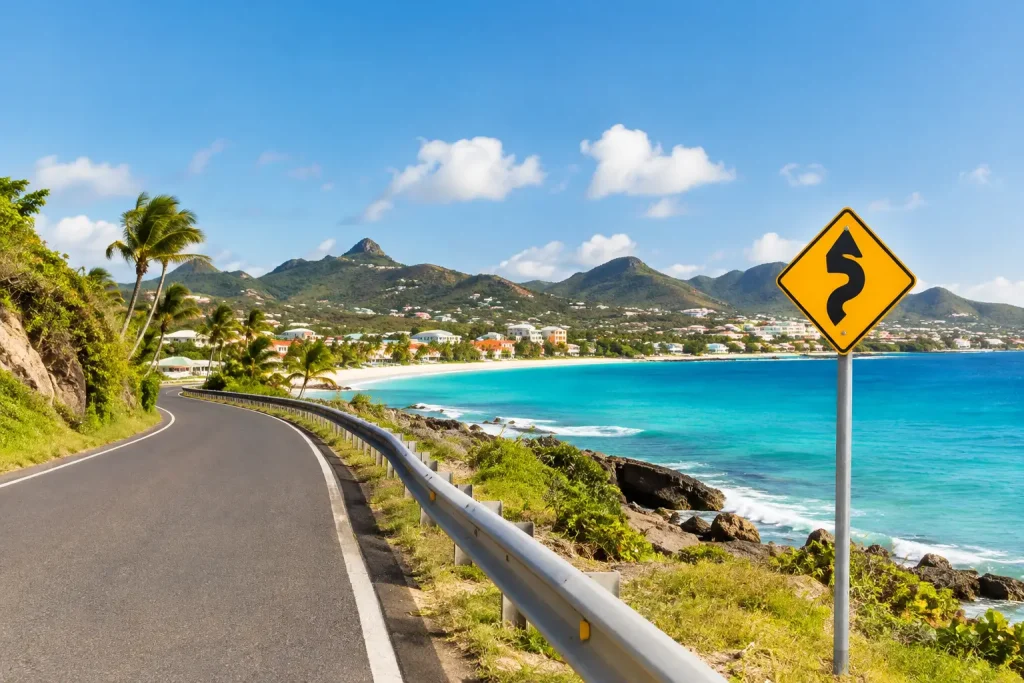
You have just picked up your rental car near Princess Juliana International Airport, the beach is calling, and then the first roundabout appears. This island road signage guide helps you recognize the signs that matter most in St. Maarten and St. Martin, so the first drive feels like the start of your vacation, not its first stressful moment.
Road signs across the island are generally familiar to US visitors, but the mix of Dutch-side and French-side roads, narrow streets, active villages, and busy beach areas calls for a little extra attention. Drive on the right, follow the posted signs, and give yourself more time than your map app suggests. On an island, a short distance can still include traffic, hills, pedestrians, and frequent turns.
What travelers usually worry about
Most visitors are not worried about understanding a red octagonal stop sign. The questions usually begin with roundabouts, parking restrictions, one-way streets, and signs that may be written in French. The good news is that the shapes and symbols do most of the work, even when the wording is unfamiliar.
A red-bordered circular sign usually means a restriction. It may prohibit entry, parking, a particular turning movement, or certain vehicle types. A blue circular sign often gives a required direction, such as keeping right or following a one-way route. Yellow diamond-shaped signs are warnings, so ease off the accelerator and look ahead for curves, crossings, or changing road conditions.
Treat signs as the final authority, especially around construction, schools, beach access roads, and town centers. GPS is useful for finding a destination, but it may not immediately reflect a temporary closure or a changed traffic pattern.
Island road signage guide: signs to recognize first
Stop, yield, and priority
A STOP sign means a complete stop, even if the road looks clear. At a yield sign, slow down and give way to traffic that has priority. This comes up often at roundabouts and when joining a busier main road from a side street.
At roundabouts, follow the yield sign at the entrance and give priority to vehicles already circulating unless posted signage tells you otherwise. Enter only when there is a safe gap, use your signal as you leave, and avoid changing lanes abruptly. Roundabouts can move traffic efficiently, but they are less forgiving when a driver tries to make a last-second turn.
No entry and one-way streets
The red circle with a horizontal white bar is a no-entry sign. It is especially worth watching for in busy areas where streets are narrow and routes are designed to keep traffic flowing in one direction.
One-way signs may be marked with an arrow and can also include French wording. “Sens unique” means one way. If you miss your turn, do not reverse or turn around in the street. Continue safely and let navigation reroute you. A few extra minutes is always better than creating a dangerous situation in a tight area.
Speed and warning signs
Speed limits are posted in kilometers per hour, not miles per hour. This is one of the easiest adjustments for American drivers to overlook. Your rental car’s speedometer may display both units, but take a moment before leaving the airport to identify the kilometer markings.
Warning signs deserve real attention. They can alert you to curves, steep grades, pedestrian activity, intersections, or road narrowing. Island roads are not all wide, straight coastal roads. A route can shift quickly from a busy commercial area to a hilly lane with limited shoulders, parked cars, and local foot traffic.
Parking signs
Parking is straightforward when you plan for it, but it can be limited near popular beaches, restaurants, shopping areas, and cruise-day activity in Philipsburg. Look for posted parking instructions and avoid assuming an open roadside space is legal just because another vehicle is parked there.
Do not block driveways, intersections, access lanes, or areas that restrict stopping. If a sign is unclear, choose a designated lot or another clearly permitted space. The walk may be longer, but it can save you the inconvenience of returning to a ticket, a blocked car, or an avoidable delay.
French-side signs without the guesswork
Crossing between the Dutch side and French side is usually easy, and many visitors do it several times during a stay. There is no need to make the drive complicated, but it is wise to expect French wording on some signs.
A few useful terms can help. “Arrêt” means stop. “Ralentir” means slow down. “Parking” is commonly used for parking areas, while “centre-ville” refers to the town center. You do not need to memorize every phrase. Focus on the color, shape, arrows, and symbols first, then use the words as added confirmation.
Direction signs may point toward places such as Marigot, Grand Case, Orient Bay, Philipsburg, Simpson Bay, or Maho. Keep an eye on destination names rather than waiting for your phone to announce every turn. Cellular service and navigation are usually helpful, but signs are often easier to follow when traffic is moving quickly.
Best for first-time visitors: how to read the road ahead
The safest driving habit on the island is looking farther ahead than you might at home. Watch for signs before you reach an intersection, not while you are already deciding which lane to use. Leave room behind the vehicle ahead, particularly in rain or on descending roads, and expect scooters, pedestrians, and vehicles entering from side streets.
Traffic can build around airport hours, school times, popular beach zones, and late-afternoon routes. That does not mean you should avoid exploring. It simply means a relaxed plan works better than trying to fit every beach, viewpoint, and dinner reservation into one day.
When you approach an unfamiliar junction, reduce speed early. If you are unsure where to go, continue through safely, pull into a legal place when available, and check your route. Sudden braking or stopping in a travel lane creates more risk than taking the long way around.
Local tip: let road conditions set the pace
Posted limits matter, but conditions matter too. Rain can arrive quickly, and roads may become slick after a dry spell. In hilly areas, curves, blind driveways, and uneven pavement call for patience. At night, visibility can be reduced on roads with limited lighting, so plan unfamiliar drives before dark when possible.
Beach traffic has its own rhythm. People may cross unexpectedly while carrying chairs or watching for a restaurant entrance, and parking maneuvers can slow the road. Near Maho Beach and other popular stops, expect congestion at peak times and keep your attention on the road rather than the view.
Use your horn sparingly, signal early, and avoid driving aggressively. A calm approach is not only more comfortable, it is often the quickest way to move through island traffic.
Good to know before you book
The right rental vehicle can make signs and road conditions easier to manage because comfort affects confidence. A compact car is a practical choice for couples or solo travelers who expect to park in busy areas and stay mainly on paved routes. A midsize car or SUV may suit families, beach gear, or travelers who want more room for longer drives.
You do not need an SUV solely to read the roads or visit the island’s main attractions. Most visitors do well in a standard car. The better question is how many people and bags you have, how much comfort you want, and whether you plan to spend significant time exploring hilly areas. If you are traveling with a group, a van can keep everyone together and reduce the need to coordinate multiple cars.
Before confirming a rental, ask about pickup instructions, insurance options, fuel expectations, and the vehicle category that fits your party. Dependable vehicles and clear pricing remove distractions, letting you focus on where the road leads next. H & L Car Rental can help visitors choose a vehicle that suits their itinerary without paying for more space than they need.
The island is best enjoyed at an unhurried pace. Read the signs early, respect the roads you share with locals, and allow room in the day for a wrong turn that turns into a new beach, bakery, or viewpoint.