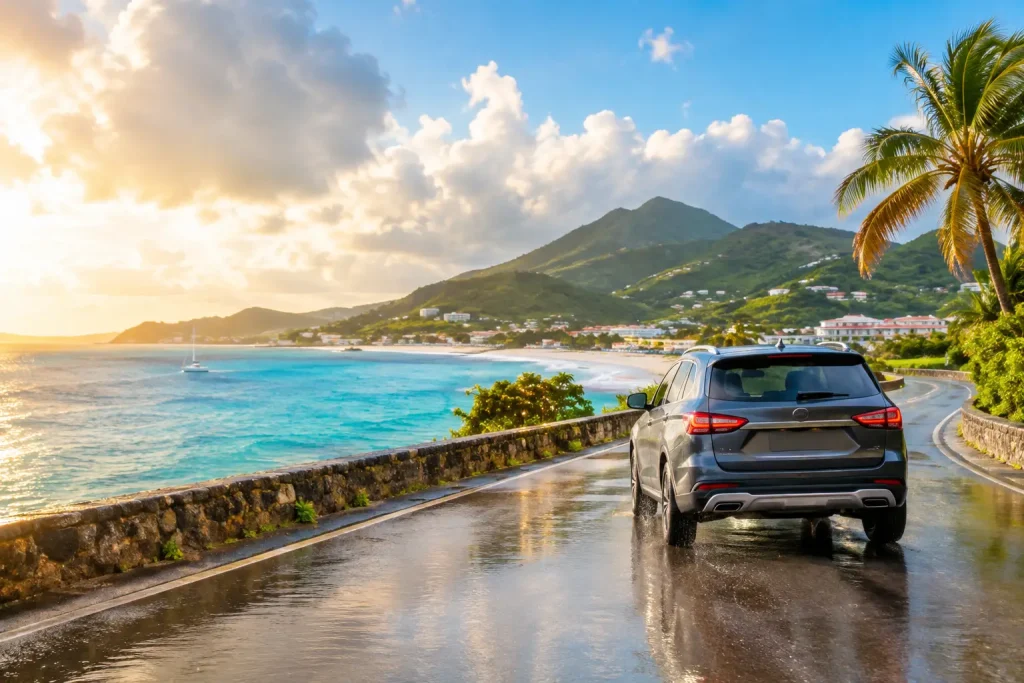
A sunny beach morning can turn into a heavy tropical shower by lunch, particularly during the wetter months. Rainy season driving in St. Maarten is usually very manageable, but it asks for a little more patience than a dry-day drive to the beach. The reward is still the same: the freedom to explore at your own pace, wait out a passing shower in a café, and continue when the roads are clear again.
The island is compact, but its roads can change quickly with the weather. Short, intense rain can reduce visibility, make paved surfaces slick, and leave standing water in low-lying areas. A few simple habits will help you stay comfortable and confident behind the wheel.
What travelers usually worry about
Most visitors are not concerned about driving in light rain. The questions tend to come up when a tropical downpour begins: Are the roads safe? Will the drive from the airport take longer? Is an SUV necessary? Should plans be canceled?
The practical answer is that it depends on the intensity of the rain and where you are headed. Many showers pass relatively quickly. If visibility is good and water is not collecting on the road, slowing down and leaving extra space is often all that is needed. During heavier rain, the smart choice may be to pull into a safe parking area, have a drink or meal, and let the worst of it pass.
Do not assume that a small island means every route is easy in every condition. Some roads are narrow, some have hills and curves, and busy areas around Simpson Bay, Cole Bay, Philipsburg, and Maho can feel more crowded when everyone is driving carefully at once. Build flexibility into your day rather than trying to keep a tight schedule.
Before you leave, check the simple things
A two-minute check before setting off can prevent a frustrating drive. Make sure you know how the windshield wipers, headlights, air conditioning, and defogging controls work in your rental car. Humidity can fog the windshield quickly, especially after a rainy stop or when several passengers are in the vehicle.
Set your route before you begin driving, preferably while parked with a reliable signal. Trying to follow directions through an unfamiliar roundabout or turn while rain is coming down hard creates unnecessary stress. If you are traveling to a beach, restaurant, or hotel in a less familiar part of the island, allow extra time.
It is also worth keeping a small towel or microfiber cloth in the car for wet sandals, umbrellas, or a damp seat. This is not a safety essential, but it makes a rainy beach day far more pleasant.
Good to know before you book
When choosing a rental vehicle, focus first on the size of your group, luggage, and planned routes. A compact or economy car can be a sensible choice for couples who expect to stay mainly on paved roads and prefer easy parking. It is not automatically a poor choice because rain is in the forecast.
An SUV or Jeep can offer more ground clearance and room for families, beach gear, or travelers staying in hilly areas. That can feel reassuring during wet weather, but it does not make it safe to drive quickly through standing water. Larger vehicles also require more care in tight parking areas and narrow roads.
Ask about the vehicle condition, windshield wipers, tire condition, roadside support procedures, and what to do if weather affects your travel plans. Clear rental terms and honest pricing matter at any time, and they are especially reassuring when the forecast is unsettled. H & L Car Rental can help travelers choose a vehicle category that fits the trip rather than simply choosing the largest option.
How to drive safely during a heavy shower
Rain changes the road surface before it changes the scenery. After a dry spell, the first rain can mix with dust and oil on pavement, making the surface unexpectedly slippery. Reduce speed early, before entering a curve or approaching traffic, and avoid sharp steering movements.
Leave more following distance than you would on a dry day. Stopping takes longer on wet roads, and drivers ahead may brake suddenly for puddles, pedestrians, or slowed traffic. Brake gently and in a straight line whenever possible. If you miss a turn, keep going and find a safe place to turn around instead of making a last-second maneuver.
Use headlights when rain affects visibility, even during daylight. They help other drivers see you, and they can make it easier to spot road edges, puddles, and changing traffic conditions. Keep both hands available for the wheel instead of holding an umbrella, phone, or loose beach items.
If rain is beating so hard that you cannot clearly see the vehicle ahead or the road markings, do not try to push through simply because your destination is nearby. Pull over only in a safe, legal location away from moving traffic. Avoid stopping on a blind curve, a narrow roadside, or an area where water may rise.
Standing water is not a shortcut
The most avoidable rainy-day mistake is driving through water without knowing how deep it is. A puddle that looks shallow can hide a pothole, debris, or a softened road edge. Water can also affect braking and vehicle components if it is deeper than expected.
Avoid flooded sections whenever there is another route or a safe place to wait. Do not follow the vehicle in front just because it made it through. Different vehicles have different clearance, and conditions can change within minutes. If a road looks questionable, turn around rather than testing it.
This is especially relevant around low-lying roads and drainage areas. Local drivers may know which spots collect water, but visitors should never feel pressured to copy another driver's decision. Caution is the better vacation strategy.
Parking and walking in wet weather
Rain often makes parking take a little longer in popular areas. Give yourself room to open doors without stepping into traffic, and avoid parking where runoff could flow around the vehicle. If you are parking on a slope, take extra care when getting in and out because painted lines, tiles, and wet pavement can be slippery.
At beaches and scenic stops, secure loose items before you leave the car. Wind can arrive with a shower, and wet sand quickly finds its way onto floors and seats. Keep valuables out of sight and lock the vehicle as you normally would. Rain does not remove the need for basic travel awareness.
For dinner plans or shopping in Philipsburg, consider arriving a little earlier than usual when the forecast looks unsettled. You will have more time to find a suitable space and can enjoy the stop instead of circling in rain.
Best for first-time visitors
First-time drivers in St. Maarten and St. Martin should keep rainy-day plans simple. Choose one main area to explore rather than attempting a full-island schedule with several timed reservations. For example, pair a beach near your accommodation with a nearby lunch spot, then decide on the next stop once the weather settles.
Remember that traffic moves on the right, but road layouts, roundabouts, parked cars, pedestrians, and scooters may be different from what you are used to at home. Drive defensively and expect the unexpected, particularly when rain reduces sight lines.
A calm approach works better than trying to make up lost time. The island has plenty of places to pause: covered restaurants, markets, hotel lobbies, and scenic viewpoints when conditions permit. A shower can be an interruption, but it does not need to take over the day.
Local tip: Let the forecast shape the order of your day
Plan outdoor stops and longer drives earlier when the morning looks clearer, then keep indoor activities, lunch, or shopping flexible for later. Weather can vary across the island, so a shower near your hotel does not always mean every beach or neighborhood is rainy. Still, avoid chasing sunshine if it means rushing across the island in poor conditions.
When you return to your accommodation after a wet drive, take a moment to remove wet gear and check that lights and windows are off before locking the car. It is a small routine that keeps the next morning easy.
A little rain is part of the Caribbean experience. Give yourself extra time, choose a vehicle that suits your actual plans, and let safety set the pace. The beach, the next viewpoint, and your dinner reservation will be much more enjoyable when you arrive relaxed.