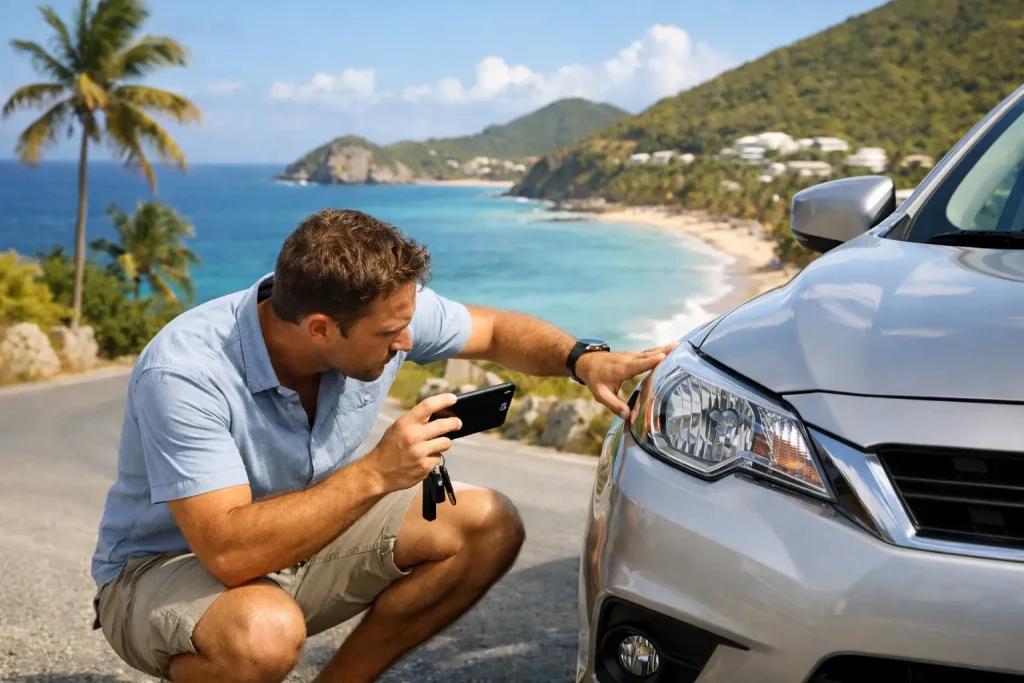
The first few minutes after collecting your keys can protect the rest of your trip. Knowing how to inspect a rental car before driving means you can leave the airport with a clear record of the vehicle’s condition, a working understanding of its controls, and fewer surprises when it is time to return it. It is a simple routine, but it matters even more when you are eager to get from Princess Juliana International Airport to your hotel, beach, or dinner reservation.
A good inspection is not about searching for problems or delaying your vacation. It is about being practical. Take 10 minutes while the car is still parked, ideally with a rental team member nearby if you have questions. In St. Maarten and St. Martin, bright sunlight, sea air, narrow parking areas, and sandy roads can make small marks easy to miss later, so a quick photo record is especially worthwhile.
Before You Start the Rental Car Inspection
Have your rental agreement and your phone ready before loading luggage. Check that the vehicle’s license plate, make, model, and fuel level match the paperwork. If your agreement notes existing damage, compare it with the car in front of you rather than assuming every mark has already been recorded.
Take photos or a slow walk-around video in good light. Capture all four sides, the roof if you can see it, the windshield, wheels, front bumper, rear bumper, and the fuel gauge once you are inside. Photos are most useful when they are clear and time-stamped, but they do not need to be perfect. The goal is a straightforward record of the car at pickup.
If you notice anything not listed on the agreement, point it out before departing and ask for it to be documented. This can include scratches, dents, cracked trim, stained upholstery, chipped glass, or a missing hubcap. Honest, transparent rental service works best when both the traveler and the rental team begin with the same information.
How to Inspect a Rental Car Before Driving: The Exterior
Start at the driver’s door and walk slowly around the vehicle in one direction. Looking at the car in a consistent order makes it less likely that you will overlook a panel or wheel.
Pay attention to more than obvious dents. Check bumpers and lower door edges for scuffs, since these are common in tight parking spaces. Look at the windshield and windows for chips or cracks, especially near the driver’s line of sight. A small chip may already be noted, but it should still be on the agreement before you leave.
Inspect the tires at the same time. You do not need to be a mechanic to spot a concern. Look for a tire that appears very low, a sidewall bulge, a deep cut, or visibly uneven wear. Confirm that the tires look properly inflated and that the vehicle has the expected spare tire or tire-repair equipment if your rental provider supplies it. If anything seems questionable, ask for assistance rather than taking a chance on your first drive.
Check the headlights, taillights, mirrors, and wiper blades. Mirrors should be intact and adjustable, and wipers should not be torn or hanging loose. Salt air and sudden tropical showers are part of island driving, so clear visibility is more than a convenience.
Local tip: Look low and look up
Island visitors often focus on door scratches and forget the areas that can be hard to see. Take a moment to look at the lower bumpers and rocker panels, particularly if you have rented an SUV or Jeep. Then look up for roof marks if the vehicle is parked under trees or in a covered area. You are not expected to inspect underneath the car, but if you see a fresh fluid puddle or something hanging beneath the vehicle, notify the rental desk before driving.
Check the Cabin Before Loading Your Bags
Once the exterior is documented, open every door and take a quick look inside. Check the seats, dashboard, floor mats, trunk or cargo area, and headliner for stains, tears, broken pieces, or personal items left by a previous renter. Reporting an item you find protects you from confusion later and may help reunite it with its owner.
Sit in the driver’s seat and adjust it before setting off. Make sure you can comfortably reach the pedals and see clearly through the mirrors. If you are traveling with children, this is also the right time to confirm that child seats are correctly installed and that seat belts latch properly.
Turn the ignition on and scan the instrument panel. Warning lights commonly illuminate briefly at startup, but they should not remain on once the engine is running, except for reminders such as an unfastened seat belt. If a check-engine, tire-pressure, brake, oil, or temperature warning stays lit, do not assume it is normal. Ask the rental team to check it or provide another vehicle.
Try the air conditioning, especially before leaving the pickup area. St. Maarten’s warmth and humidity can make a working A/C system a major comfort factor after a flight. Test the windshield wipers and washer fluid as well. A quick spray confirms the system works before an unexpected shower makes it urgent.
Know the Controls Before the Road Gets Busy
Every vehicle has small differences, and those differences feel larger when you are driving somewhere unfamiliar. Before moving, locate the headlights, turn signals, hazard lights, windshield wipers, parking brake, gear selector, fuel-door release, and hood release. If the car uses push-button start, an electronic parking brake, or an unfamiliar shifter, take a minute to understand it while parked.
Set up navigation before you pull away. Enter your hotel address, save your rental company’s contact information, and make sure your phone has a charging cable if you plan to use it for directions. Do not try to troubleshoot navigation while merging into airport traffic or navigating a busy roundabout.
Also confirm the fuel type. Most rental vehicles have a fuel label inside the fuel door or near the gauge, but asking is always better than guessing. Using the wrong fuel can turn a smooth first day into an expensive interruption.
What Travelers Usually Worry About
Many first-time renters worry that they will be held responsible for every tiny mark. The practical answer is to document what you see, make sure unrecorded damage is added to the rental agreement, and keep your photos until the rental is closed. You do not need to create a long report for normal wear already acknowledged by the provider.
Travelers also ask whether they should test-drive the vehicle before accepting it. A short check within the pickup area is sensible when permitted. Listen for unusual noises, confirm the brakes feel normal, and make sure the steering responds as expected. If the car does not feel right, say so immediately. It is much easier for a rental team to help before you are on your way.
Another common concern is fuel. Read the agreement to understand the return fuel expectation. Take a photo of the gauge at pickup, and keep any refueling receipt near the end of your trip if your agreement requires you to return the car at the same level. This is a small habit that can prevent an avoidable question at drop-off.
Good to Know Before You Leave the Airport
Before the wheels start moving, verify that you have the essentials: rental agreement, driver’s license, keys, any parking or gate instructions, and an emergency contact number. Ask what to do if you get a flat tire, need roadside assistance, or have an accident. You hope not to need those details, but knowing the correct process helps you stay calm if something happens.
If you are picking up from H & L Car Rental or another local provider, do not hesitate to ask for a quick demonstration of an unfamiliar feature. A helpful team would rather answer a question about the fuel door or parking brake than have you spend the first part of your vacation frustrated in the parking lot.
A Simple Departure Routine for First-Time Visitors
When your inspection is complete, buckle up, set your mirrors, and take a calm minute before joining traffic. Watch for pedestrians, scooters, and cars pulling out of airport and hotel areas. Keep your first drive uncomplicated if possible: follow your navigation, avoid rushing, and learn the vehicle’s braking and turning feel before heading to a more crowded beach area or across the island.
Your rental car should feel like a dependable part of the trip, not another thing to worry about. A few careful minutes at pickup give you the confidence to settle in, put the windows down when the weather allows, and enjoy the road ahead.