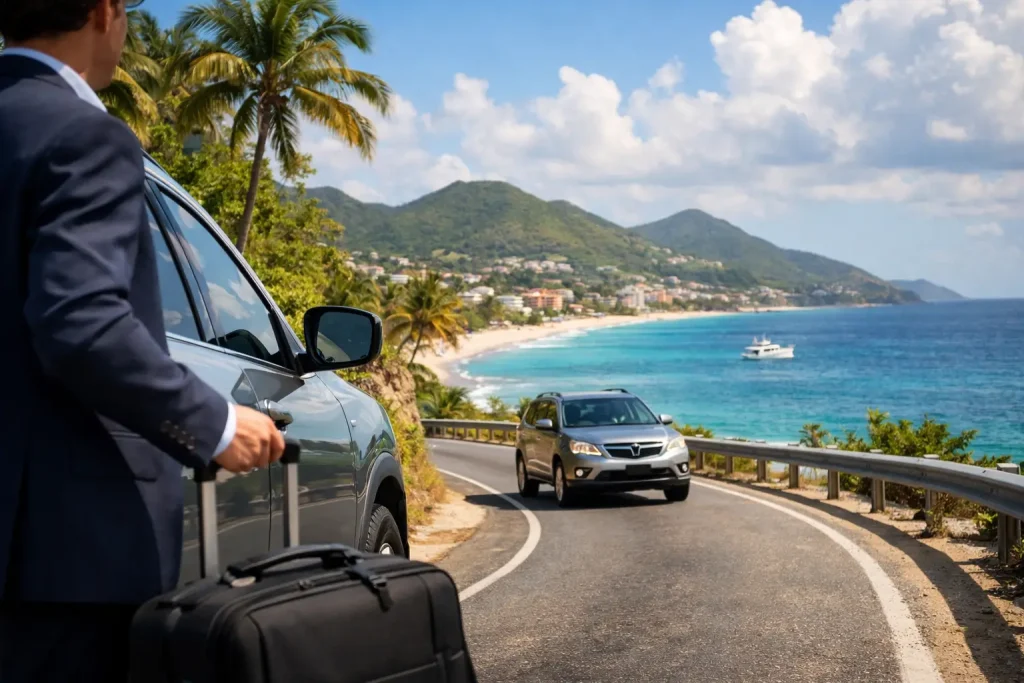
Your plane lands, your phone reconnects, and within minutes you are juggling hotel check-in times, meeting schedules, and texts asking where to meet. On a business trip to St. Maarten, why a rental car can save time becomes obvious almost immediately. The island is compact, but a tight work schedule can still unravel fast when you depend on taxis, wait for rides, or try to coordinate around someone else’s timing.
For vacation travelers, a delay of 20 minutes may not matter much. For business travelers, it often does. If you are here for site visits, supplier meetings, client dinners, conferences, property tours, or a quick fly-in fly-out schedule, control over your own transportation can make the day smoother from the start.
Business trip to St. Maarten? Why a rental car can save time on arrival
The first time-saving advantage happens before your workday even begins. After landing at Princess Juliana International Airport, most business travelers want one thing - to get moving. Waiting for a taxi line, explaining your destination, and then arranging another ride later adds friction to a trip that is already packed.
With a rental car reserved in advance, the transition from airport to hotel or first appointment is much more direct. You collect the vehicle, load your bags once, and head out on your own schedule. That matters even more if your arrival time is close to a meeting or if your hotel is not the only stop on your agenda.
Business travel often comes with small timing pressures that add up. Maybe you need to drop luggage, stop for coffee, pick up printed materials, or meet a colleague before heading to an event. A car gives you that flexibility without turning every small errand into a separate transport arrangement.
The island is small, but schedules are not
One common assumption is that because St. Maarten and St. Martin are relatively small, transportation will be simple no matter what. Sometimes that is true. But small islands still have rush periods, event traffic, busy restaurant zones, and hotel areas where wait times for transport can stretch longer than expected.
If your day includes more than one stop, the time savings from driving yourself become easier to see. A morning meeting in Simpson Bay, an afternoon appointment in Philipsburg, and dinner on the French side may sound manageable on paper. In practice, relying on taxis for each segment can eat into your day, especially if plans shift.
That is the real issue for business travelers - not distance, but responsiveness. When your meeting ends early, you want to leave early. When a client asks to move lunch by 30 minutes, you need to adjust quickly. A rental car helps you respond instead of waiting.
What travelers usually worry about
Many business travelers hesitate because they are not sure whether renting a car will feel like extra work. Usually the concerns are practical. Is driving easy? Is parking difficult? Will I really use the car enough to justify it?
For most visitors, driving here is straightforward. Roads around the main business and hotel areas are familiar enough for US travelers, and signage is generally manageable. You do want to stay alert, especially in busier zones and during peak times, but this is not a place where renting a car is only for highly experienced drivers.
Parking depends on where you are going. In some popular areas, it can be tighter during lunch or dinner hours, but for business use, parking is usually more manageable than visitors expect. Hotels, office locations, marinas, and commercial areas often make it easier to step in and out of your day without overcomplicating transport.
As for value, it depends on how your trip is structured. If you are staying in one resort and attending one event on-site, you may not need a car every day. But if you have multiple meetings, want flexibility, or need to move between the Dutch and French sides, the time savings can easily outweigh the cost.
Best for first-time visitors with a work agenda
If this is your first visit, a rental car can actually reduce stress rather than add to it. Business trips leave less room for trial and error. You do not want to arrive and start figuring out local transport options while your calendar is already active.
Having your own car makes the island feel simpler. You can leave when you are ready, keep your belongings with you, and avoid repeatedly calculating travel time around someone else’s availability. That sense of control helps if you are balancing work calls, formal meetings, and personal downtime in one short stay.
It also gives you a buffer. If you finish early, you can head back to your hotel, take a scenic route, or stop for a quick meal without needing to coordinate another pickup. On a business trip, those small windows of freedom are often where the trip becomes easier.
Business trip to St. Maarten? Why a rental car can save time between meetings
The biggest time drain on many work trips is not the long trip. It is the in-between trip. The 15-minute hop to a meeting turns into 35 minutes because you are waiting on transport. The quick dinner turns into a late evening because getting back is less predictable than expected.
A rental car gives structure to the gaps between appointments. You can build a realistic day, leave margin where needed, and recover more easily if one stop runs over. That is especially useful for travelers visiting multiple hotels, properties, ports, venues, or offices in a single day.
There is also the privacy factor. If you need to take calls before or after a meeting, review notes, or keep materials in the trunk, your own vehicle makes that much easier. It becomes a practical workspace between stops, not just transportation.
Good to know before you book
For a business trip, the smartest move is to keep the booking process simple and predictable. Look for clear pricing, straightforward pickup terms, and vehicle options that fit your actual schedule rather than your ideal one. Dependability matters more than novelty when you are traveling for work.
An economy or compact car is often enough for solo travelers attending standard meetings. It is easier to park and practical for airport, hotel, and town driving. If you are carrying presentation materials, traveling with colleagues, or expect longer days on the road, a mid-size or full-size car may feel more comfortable. SUVs are useful if you want extra room or simply prefer a higher driving position, but they are not essential for every business traveler.
It is also worth confirming the basics before arrival: pickup timing, what documents you need, fuel policy, deposit terms, and whether airport collection is efficient. This is where a dependable local company can make a big difference. Providers such as H & L Car Rental appeal to many travelers because they keep the process clear, practical, and focused on getting people on the road without unnecessary confusion.
When a taxi may still make sense
There are cases where renting a car is not the best fit. If your entire trip is centered in one hotel, your meetings are all on-site, and you only plan one or two outside dinners, a taxi may be enough. The same goes for travelers who truly do not want to drive at all.
But that is usually the exception on a work trip, not the rule. Once your schedule involves airport transfer, hotel transfer, one off-site meeting, dinner, and a possible change of plans, the convenience of a car starts to show up quickly.
The trade-off is simple. A taxi can be fine for a very fixed plan. A rental car is usually better for a real-world business schedule, where things move, expand, run late, or end early.
Local tip
If you know your trip dates in advance, book early during busy travel periods. Business travelers are not the only ones arriving through the airport, and vehicle availability can tighten faster than expected during holiday weeks, major events, and high season.
Also, do not overbook the vehicle type. For most business stays, the best car is the one that is easy to collect, easy to park, and comfortable enough for a full day of movement. Bigger is not always better when your main goal is saving time.
A business trip runs better when transportation stops being part of the problem. If you can land, get moving, adjust your day as needed, and make each stop without depending on ride availability, you gain something every traveler wants more of - time that stays yours.