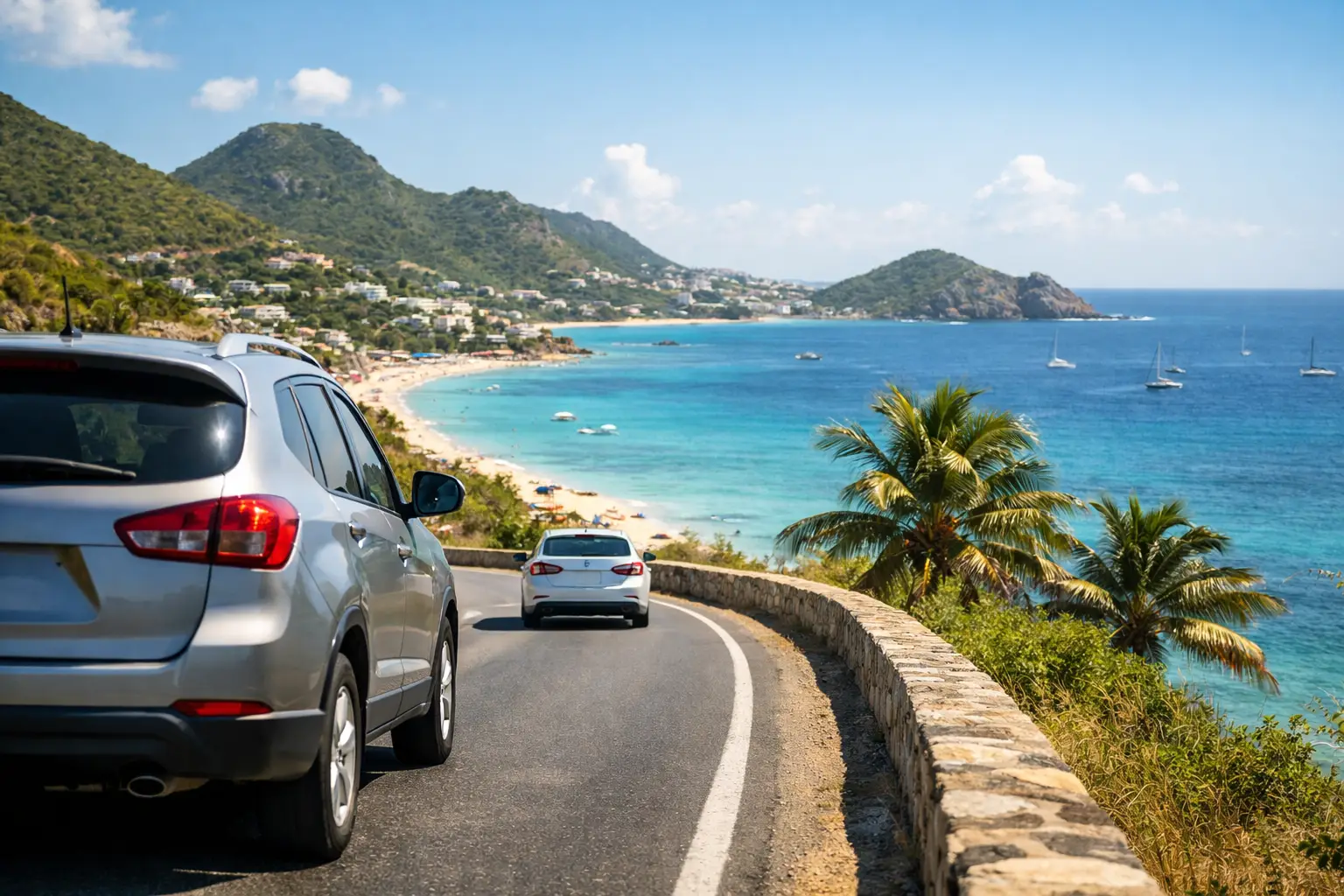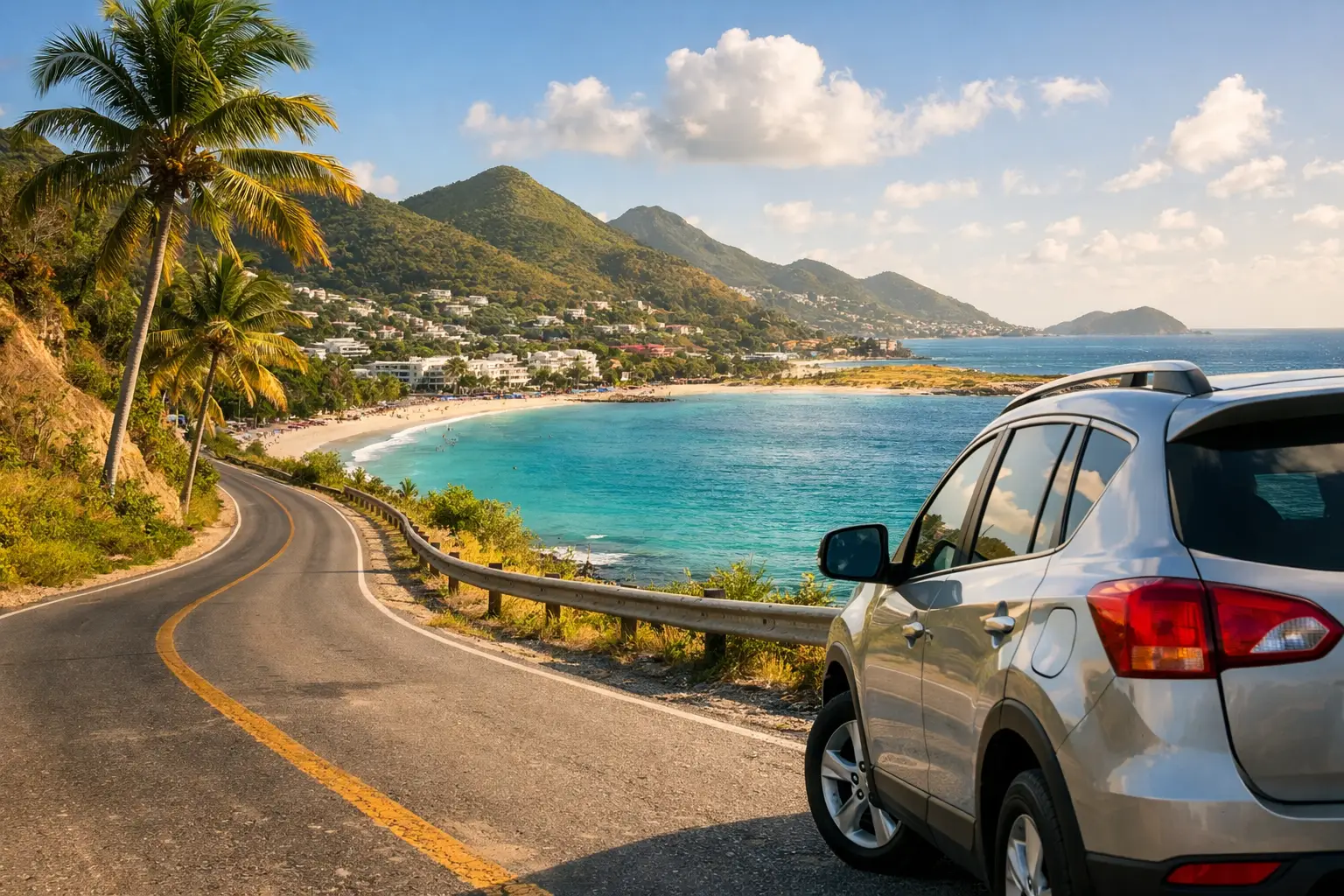
The first time you leave Princess Juliana International Airport, the island’s roads can look busier and more informal than the map suggested. Beach traffic, roundabouts, scooters, steep neighborhood streets, and drivers who know every shortcut all share a relatively small road network. So, can tourists drive in SXM? Yes. Most visitors can legally rent and drive a car with a valid driver’s license from home, and it is one of the easiest ways to experience both Sint Maarten and Saint-Martin on your own schedule.
The key is arriving prepared. Driving here is not difficult for a careful, confident driver, but it does reward patience, awareness, and a rental vehicle that fits the way you plan to travel.
Can tourists drive in SXM with a US license?
For most US visitors, a current, valid US driver’s license is generally accepted for a short vacation rental. You drive on the right-hand side of the road on both the Dutch and French sides of the island, which makes the basic experience familiar for American travelers.
Your license needs to be valid, legible, and held in your own name. The person whose name is on the rental agreement should be the person driving. Rental companies also commonly require a passport or another form of identification, a credit card or approved payment method for the security deposit, and a minimum driver age. Exact age requirements, deposit procedures, additional-driver rules, and insurance options can vary by company and vehicle category, so confirm them before you book.
An International Driving Permit is not usually the deciding factor for travelers with a valid US license, but it may be useful if your license is not in Roman characters or if your home-country documents are harder to interpret. If you have any doubt about your individual documents, ask your rental provider before arrival rather than sorting it out at the airport counter.
What travelers usually worry about
The island is split between Dutch Sint Maarten and French Saint-Martin, but visitors can normally drive between the two sides without a traditional border checkpoint. That freedom is a major reason a rental car makes sense. You can have breakfast in Simpson Bay, spend the afternoon at Orient Bay, and return to the Dutch side for dinner without planning around taxi availability.
Still, the open border does not mean every rental agreement is identical. Make sure your rental is authorized and properly insured for travel on both sides of the island. Ask directly if cross-border use is included and whether any conditions apply. This is a simple question that can prevent an unpleasant surprise after a minor incident or roadside problem.
Visitors also worry about whether local driving feels aggressive. It is better described as active and situational. Roads can narrow quickly, parking areas can be tight, and traffic builds around popular beaches, shopping areas, school hours, and the airport corridor. Drivers may stop unexpectedly to turn or allow someone to enter traffic. Leave room, avoid rushing, and let local traffic patterns unfold around you.
The road rules that matter most
Road signs, lane markings, and traffic lights should always be followed, but defensive driving matters just as much on SXM. Keep your attention on the road rather than the scenery. The sea views are beautiful, but many of the island’s most scenic routes also have curves, changing road surfaces, pedestrians, and parked vehicles close to the lane.
Speed limits are posted and should be respected, especially through villages and busy beach areas. Slowing down is not just about avoiding a ticket. It gives you time to react to a scooter passing, a pedestrian stepping out from between cars, or a vehicle turning without much warning.
Roundabouts are common. Reduce speed as you approach, follow the signs and lane markings, and yield as required to traffic already circulating. If you miss your exit, simply continue around rather than making a sudden move across lanes.
Seat belts should be worn by everyone in the vehicle. Do not drive after drinking, even if you only plan to travel a short distance back to your hotel. Taxis are a better choice after an evening out, particularly if you expect to enjoy the island’s nightlife in Simpson Bay or Maho.
Phone use is another easy mistake to avoid. Set your route before leaving, have a passenger handle directions when possible, or pull over safely before checking your map. A wrong turn is rarely a serious problem on an island this size. A distracted turn can be.
Best for first-time visitors
A compact or economy car is often the best choice for first-time visitors who are staying near Simpson Bay, Maho, Cupecoy, or Philipsburg. These vehicles are easier to park, use less fuel, and handle the island’s main roads comfortably. Couples who plan to spend most days at beaches and restaurants generally do not need a large vehicle.
A mid-size or full-size car can be more comfortable for families carrying beach gear, strollers, or several suitcases. If you are traveling with a group, an SUV or van gives everyone more room, though the trade-off is a larger vehicle in tight parking lots and narrow streets.
A Jeep or SUV can be appealing if you plan to explore hillier areas, reach less-developed beaches, or want additional ground clearance and cargo space. But an SUV is not essential for a standard island vacation. The main roads around hotels, beaches, grocery stores, and popular attractions are generally manageable in a regular car. Choose the size that will make parking and loading easiest for your group, not simply the biggest option available.
Parking without turning it into a daily headache
Parking is easiest when you plan around your destination. At many beaches and restaurants, you will find informal roadside spaces or small lots. In busy areas, arrive earlier than the lunch or sunset crowd, park fully off the driving lane, and never block a driveway, entrance, or another vehicle.
Philipsburg deserves a little extra planning. It is a popular stop for shopping, dining, and cruise-day activity, so parking can fill up quickly when ships are in port. Paid lots may be worth the convenience, especially if you would rather spend your time walking the boardwalk than circling for a free space. Keep valuables out of sight, lock the vehicle, and take only what you need for the day.
On the French side, beach areas and village centers can also become crowded during peak hours. Read posted signs carefully and avoid assuming that an open-looking shoulder is legal parking. If a space feels too tight or uncertain, move on. There is usually another option a few minutes away.
Local tip: plan for island time, not map time
A route that appears short can take longer than expected. Traffic near the airport, Simpson Bay Bridge, Cole Bay, Philipsburg, and major beach zones can change quickly. Rain showers can also make roads slick, and short tropical downpours may reduce visibility even when the day began sunny.
Build a little extra time into airport returns, dinner reservations, and excursion departures. This is especially helpful if you need to cross from one side of the island to the other at a busy time of day. Driving calmly is far more enjoyable when you are not watching the clock.
Before setting off, check the fuel level, know the type of fuel your vehicle uses, and take a few minutes to become familiar with the lights, wipers, mirrors, air conditioning, and spare-tire or roadside-assistance instructions. Photograph the vehicle condition at pickup, including wheels and windshield, so both you and the rental company have a clear record.
Good to know before you book
The lowest daily rate is not always the best value if it leaves important questions unanswered. Look for clear information about the security deposit, insurance coverage, fuel policy, mileage, additional drivers, airport pickup process, and what happens if you need assistance during your trip. Honest pricing and clear terms make it much easier to relax once you arrive.
At H & L Car Rental, travelers can choose from practical economy and compact cars through SUVs, Jeeps, and vans, depending on their luggage, group size, and plans. More important than the category, though, is booking a vehicle you will feel comfortable driving from day one.
If you are visiting during a holiday period, school break, major event, or the busiest winter travel months, reserve early. Smaller cars and family-friendly vehicles often go first, and waiting until arrival may limit your options.
Driving in SXM gives you the flexibility to follow your own beach list, stop when a viewpoint catches your eye, and enjoy both sides of the island without building each day around transportation. Bring your valid license, choose a car that suits your trip, give yourself extra time, and let the road be part of the vacation rather than a stress point.