Free Airport Pickup & Drop-off
Free Second Driver
Free Hotel Pickup & Drop-off
Have questions? +1 721 544 1884

From Princess Juliana Airport to Your Hotel by Rental Car

From Princess Juliana Airport to Your Hotel by Rental Car

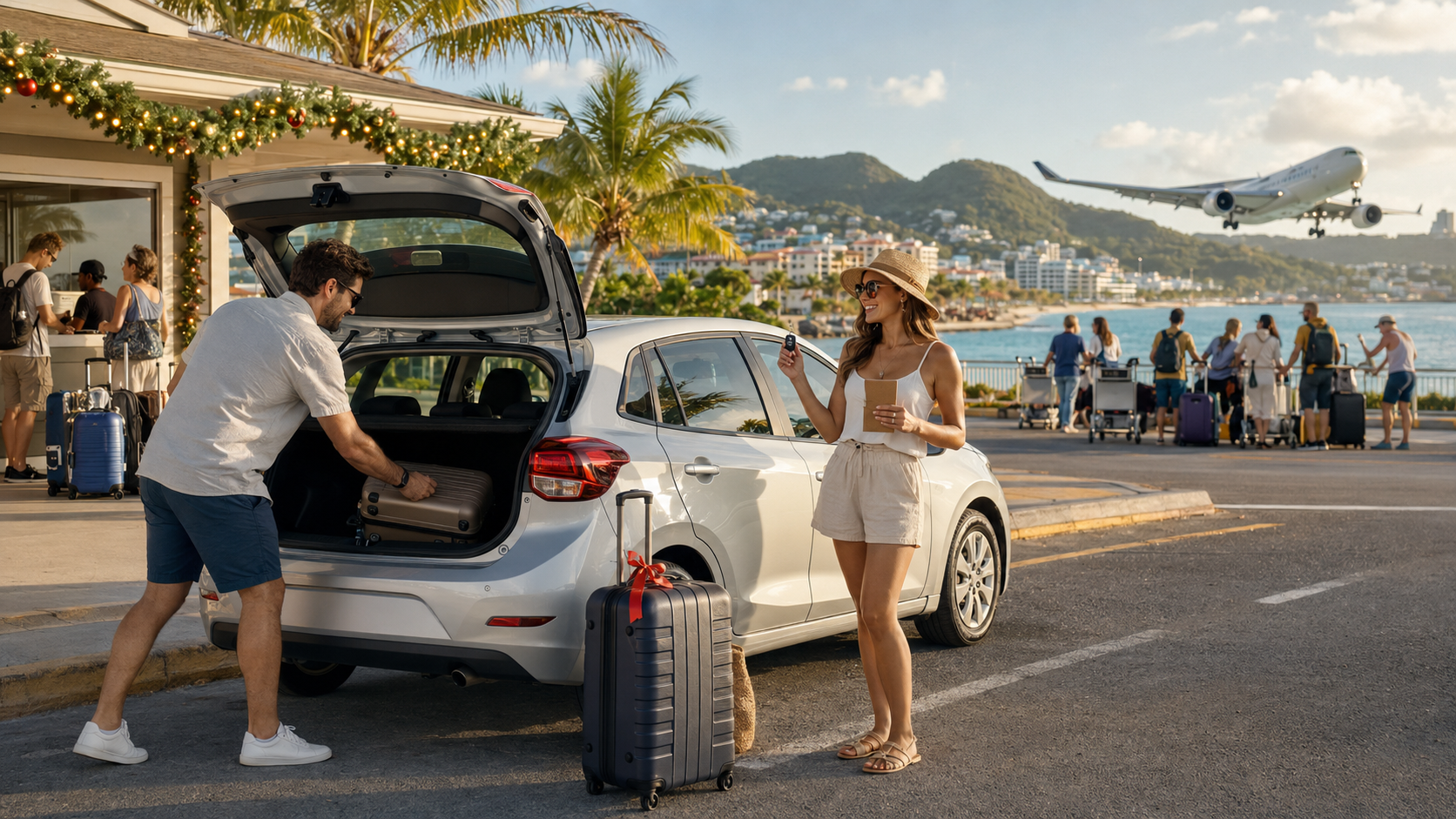
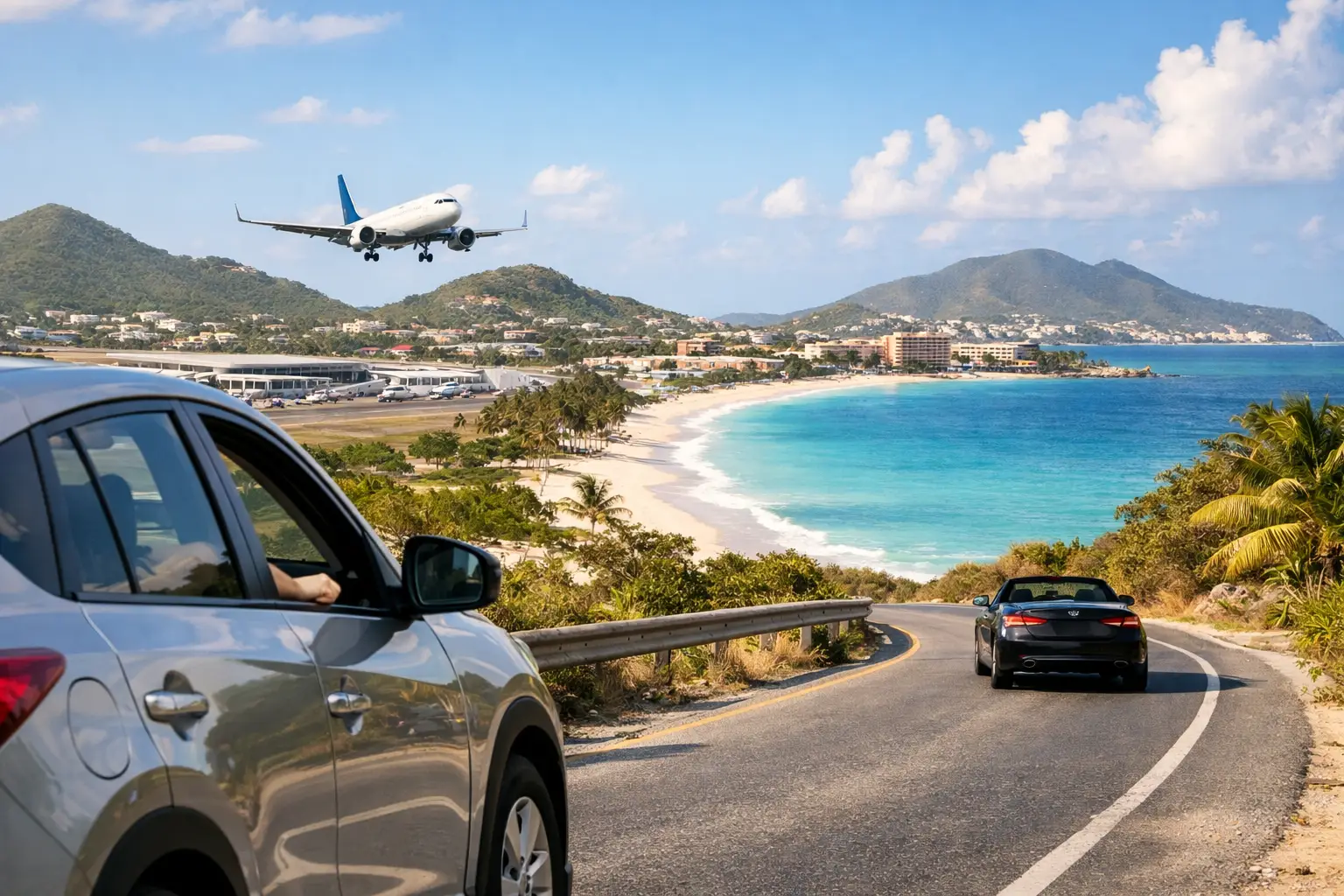
The first decision after landing is often the one that shapes the whole vacation: how will you get from the airport to the hotel, then from the hotel to the beaches, restaurants, shops, and viewpoints you came to see? From Princess Juliana Airport to your hotel, getting around St. Maarten by rental car gives you the freedom to set your own pace from day one.

Whether you are staying near Maho, Simpson Bay, Cupecoy, Philipsburg, Orient Bay, Grand Case, or farther north on the French side, a rental car can make your arrival feel much less complicated. You can collect your luggage, pick up your vehicle, and head out without waiting for a shared transfer or planning every outing around taxi availability.

What travelers usually worry about after landing

First-time visitors commonly wonder whether the island is difficult to drive, whether roads are easy to follow, and whether they need a large vehicle. The reassuring answer is that many visitors drive comfortably here, especially when they take the first day slowly and allow extra time around busier areas.

Princess Juliana International Airport is on the Dutch side of the island, close to Maho and Simpson Bay. Depending on traffic and your hotel location, the drive may be short, but island driving is not always about mileage. Roads can narrow, roundabouts can be busy, and traffic may build near popular beaches, bridges, and shopping areas. A relaxed approach matters more than trying to rush.

If you arrive during a busy afternoon, give yourself a little breathing room before making dinner reservations or booking an activity. That way, your first drive is simply about settling in, not watching the clock.

From Princess Juliana Airport to your hotel by rental car

For hotels in Maho, Cupecoy, Simpson Bay, Beacon Hill, or Pelican Key, the trip from the airport is generally straightforward. These areas are close by, but traffic around the airport and the Maho area can move slowly at popular times. This is normal, particularly when visitors are stopping near the beach to watch planes land.

For a stay in Cole Bay, Porto Cupecoy, or the wider Simpson Bay area, having your own car is especially useful. These neighborhoods have plenty of dining, grocery stores, marinas, beaches, and nightlife, but they are spread out enough that walking everywhere may not be realistic in the heat.

If your hotel is in Philipsburg, allow more time than the map may suggest. The route is manageable, but traffic can increase when cruise visitors are in town or when roads are busy around Great Bay. A rental car still gives you more flexibility than a one-way transfer because you will have transportation ready for the rest of your stay.

Heading to the French side, such as Orient Bay, Grand Case, Anse Marcel, or Marigot? You can drive across the border without a formal checkpoint. The island is shared by Sint Maarten and Saint-Martin, and visitors move between the Dutch and French sides regularly. Road conditions, signs, and driving style can vary a little by area, so use a navigation app, stay alert, and enjoy the scenery rather than treating the drive like a race.

Best for first-time visitors

A rental car is a particularly good fit for travelers who want more than one beach day at the same resort. St. Maarten and St. Martin are compact enough for easy day trips, yet varied enough that you will likely want to explore both sides of the island.

One morning can start with coffee in Simpson Bay, continue with time at Mullet Bay or Maho Beach, and end with dinner in Grand Case. Another day might include shopping in Philipsburg, a stop at a lookout point, and a quiet sunset near Cupecoy. With a car, you do not have to choose just one zone of the island for the entire day.

It is also practical for families carrying beach bags, strollers, snorkeling gear, or groceries. Couples often enjoy it for the freedom to try restaurants outside their hotel area. For business travelers, it can make getting between the airport, meetings, and accommodations more predictable.

That said, a rental car may be less essential if you plan to stay at one all-inclusive resort and expect to spend nearly all your time there. In that case, taxis for a few outings may be enough. It depends on how independently you want to explore.

Good to know before you book

Vehicles drive on the right side of the road. Most visitors from the United States find this familiar, but the pace can feel different from driving at home. Be prepared for roundabouts, occasional steep or narrow roads, and drivers who may stop unexpectedly or pull in and out of roadside businesses.

Keep your seat belt on, avoid using your phone while driving, and never drink and drive. Roads are generally easiest to handle in daylight, especially on your first trip to an unfamiliar part of the island. At night, use extra care on less-developed roads where lighting may be limited.

Before confirming a rental, make sure you understand the pickup process, insurance options, fuel policy, deposit requirements, and what is included in the quoted rate. Transparent pricing matters after a long flight. You should know what you are paying for before you arrive, not discover added surprises at the counter.

At H & L Car Rental, travelers can choose from economy and compact cars through SUVs, Jeeps, and vans, allowing the vehicle to match the trip rather than paying for more car than needed.

Best car type for this route

For most couples and solo travelers, an economy or compact car is an easy choice. It is simple to park, fuel-efficient, and suitable for airport-to-hotel driving as well as everyday beach hopping. A mid-size or full-size car may be more comfortable for travelers with several suitcases or those who prefer a little extra room on longer days out.

An SUV can be a good choice for families, groups with beach equipment, or visitors who want a higher seating position and more cargo space. It is not required for the standard drive from the airport to most hotels, but it can be helpful if comfort and luggage capacity are priorities.

A Jeep may appeal to travelers who plan to explore more scenic, less-developed areas, while a van makes sense when a larger family or group wants to travel together. The best vehicle is not necessarily the biggest one. It is the one that fits your passengers, bags, and parking comfort.

Parking, traffic, and timing

Parking is usually manageable, but popular places require patience. Philipsburg can be busy during cruise ship days, while Maho, Simpson Bay, and beach access points may fill up around lunch and sunset. When you see a legal parking space near a popular stop, it is often worth taking it instead of assuming a closer one will open up.

Do not block driveways, park where signs prohibit it, or leave valuables visible in the vehicle. For beach days, bring only what you need and keep personal items out of sight. These simple habits go a long way toward a more relaxed outing.

Traffic is often heaviest around the airport corridor, Simpson Bay, Cole Bay, and Philipsburg. If you have a dinner reservation or a scheduled excursion, leave early. On an island, a 20-minute drive can become longer when traffic builds, especially after rain or during peak visitor periods.

Local tip: plan your first stop

Rather than driving directly into a full day of sightseeing after landing, make your first stop your hotel or a nearby grocery store. Get checked in, cool off, put away your bags, and get familiar with your vehicle. Then take a short drive close to your accommodation for dinner or sunset.

This small adjustment helps first-time visitors gain confidence before planning a longer cross-island day. By the next morning, the roads, roundabouts, and local traffic flow will already feel more familiar.

A rental car is not just transportation from Princess Juliana Airport to your hotel. It is the option to take the scenic turn, stay for one more swim, and make the island feel like your own for the week.
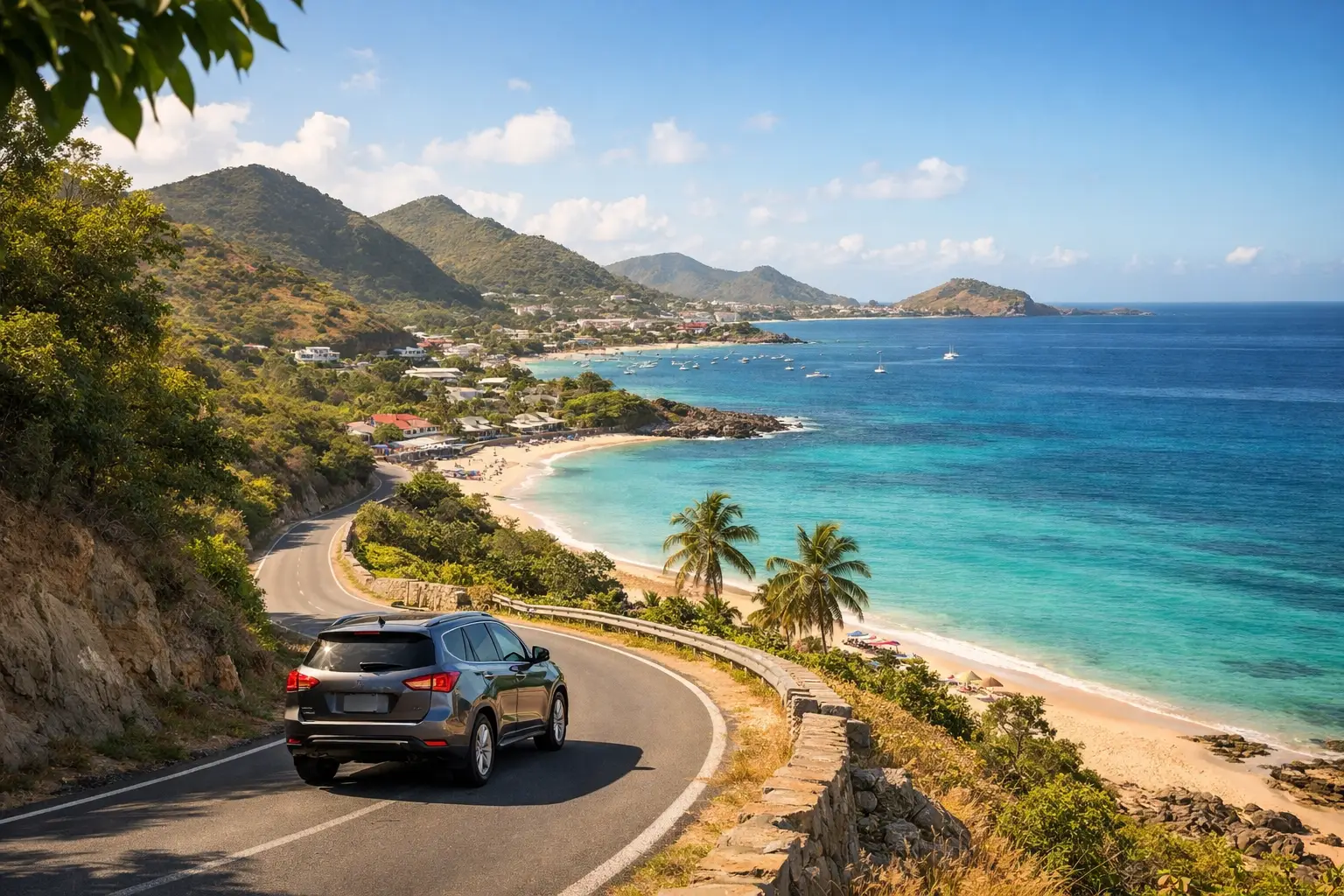
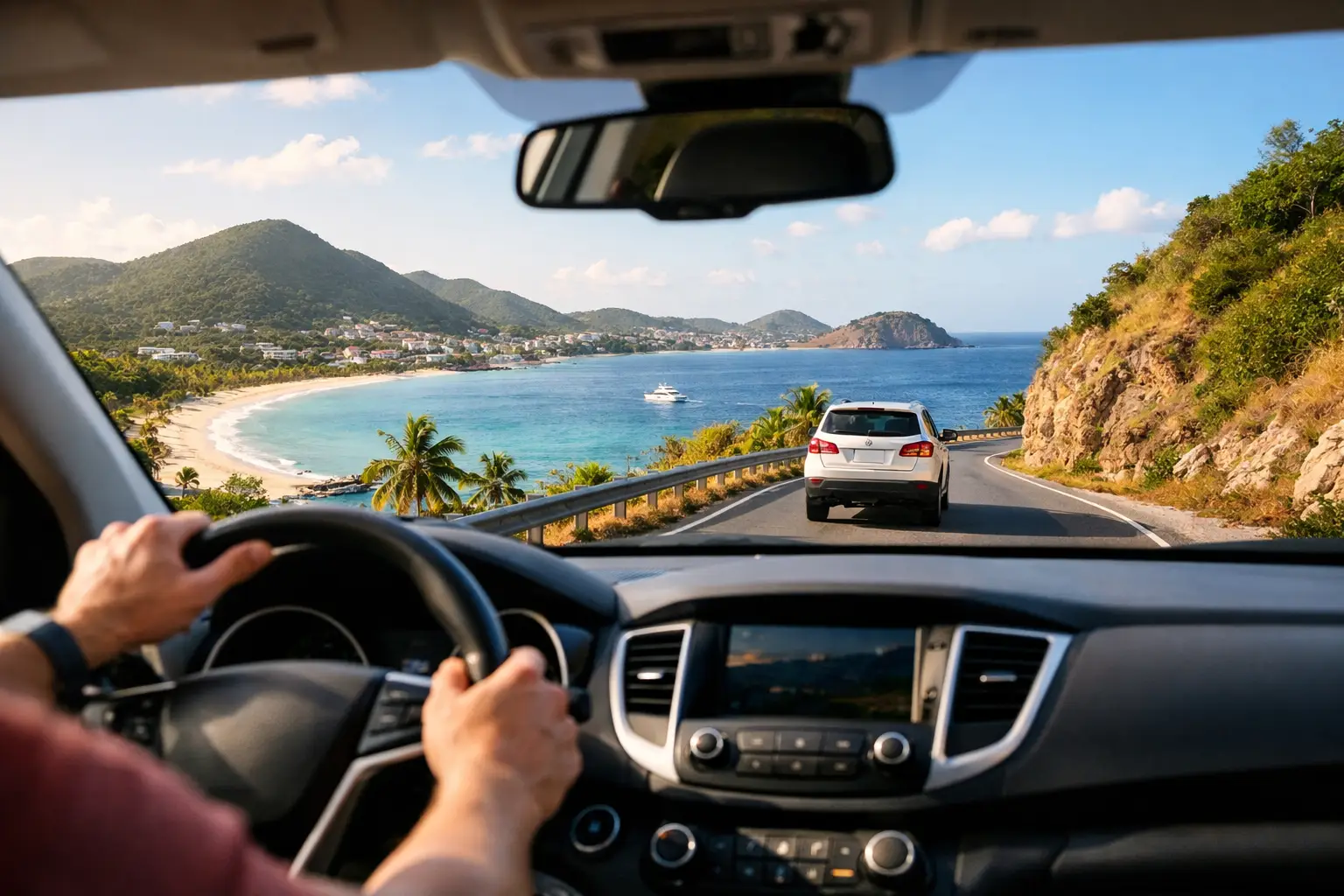
How to Plan the Perfect St. Martin Road Trip

How to Plan the Perfect St. Martin Road Trip

A road trip here can take you from airport runway views to quiet French-side coves, colorful waterfronts, and hilltop lookouts in one day. Knowing how to plan the perfect St. Martin road trip: routes, stops and travel tips helps you enjoy that freedom without spending your vacation circling for parking, backtracking across the island, or arriving at a beach after the best part of the day has passed.

The island is compact, but driving times can be deceptive. A route that looks short on a map can take longer during morning and afternoon traffic, especially around Simpson Bay, Cole Bay, Philipsburg, and the French-side border areas. The best plan is not to see everything at once. Pick one side of the island or one general loop each day, leave room for a long lunch or an unplanned swim, and let the road trip feel like a vacation rather than a checklist.

Start with the right route for your travel style

Most visitors arrive at Princess Juliana International Airport on the Dutch side, making it a convenient place to begin. From there, you can head south and east toward Simpson Bay, Philipsburg, and Oyster Pond, or travel north through Marigot and Grand Case toward the quieter beaches around Orient Bay and Anse Marcel.

For a first full day, the Dutch-side coastal route is an easy introduction. Drive from Simpson Bay to Maho Beach, continue through Cupecoy, then return through Simpson Bay and Cole Bay before heading toward Philipsburg. This route works well for travelers who want a mix of famous sights, restaurants, shopping, and accessible beaches without crossing the island several times.

If your priority is beach time and a slower pace, plan a French-side day instead. From the airport area, drive through Marigot, then continue toward Grand Case, Orient Bay, and Anse Marcel. The scenery changes noticeably as you go: marina views and hillside roads give way to open water, beach clubs, and villages where lunch can easily turn into an afternoon.

A third option is the island loop for travelers with limited time. Start early in Simpson Bay or Maho, go through Marigot and Grand Case, continue toward Orient Bay and Oyster Pond, then return to the Dutch side through Philipsburg. It is possible in a day, but it should be treated as a scenic drive with two or three meaningful stops, not a mission to visit every beach.

A relaxed Dutch-side day

Begin at Maho Beach early, before the busiest part of the day. Even if you are not there for the aircraft views, it is a memorable place to start and is only a short drive from the airport. From Maho, Simpson Bay is ideal for breakfast, a beach walk, or a stop at the marina.

Later, drive over the hill toward Cole Bay. The views can be beautiful, but the roads are busy and occasionally narrow, so take your time. Continue toward Philipsburg for the Boardwalk, Front Street shopping, or Great Bay Beach. If a cruise ship is in port, Philipsburg can feel much busier, so parking and lunch may be easier earlier in the day.

Finish near Oyster Pond or Dawn Beach if you want a quieter coastline before returning. This is a good route for couples, first-time visitors, and families who prefer familiar services and shorter driving stretches.

A French-side beach route

For a day that feels more focused on beaches and food, begin in Marigot. The waterfront area, market atmosphere, and Fort Louis viewpoint make it a worthwhile first stop. The climb to the fort is brief but steep, so wear comfortable shoes and bring water.

From Marigot, drive north to Grand Case. This village is known for its beach, dining, and relaxed pace. It is an excellent lunch stop, although reservations can be helpful during high season or for popular dinner spots. Afterward, continue to Orient Bay for a broad beach, water activities, and a livelier beach-club atmosphere.

If you still have energy, Anse Marcel offers a more tucked-away finish. The road in is hillier, but the bay feels removed from the island's busier areas. Plan to return before dark if you are unfamiliar with the roads.

Stops worth building into your St. Martin road trip

The best stops depend on the kind of day you want. Maho Beach is iconic and close to the airport, while Simpson Bay is a convenient base for dining and nightlife. Philipsburg suits travelers who want shopping, a waterfront stroll, and a central stop on the Dutch side.

On the French side, Marigot adds culture and views, Grand Case is a natural choice for lunch, and Orient Bay works well when the beach itself is the main event. Travelers who prefer calmer scenery may enjoy Anse Marcel, Friar's Bay, or a scenic drive toward Oyster Pond.

Do not try to force all of these into one day. A better rhythm is one major beach, one town or viewpoint, and one meal stop. The island rewards people who leave enough time to pull over for a view, stay longer where they are happy, and avoid the frustration of rushing between locations.

What travelers usually worry about

Can tourists drive easily in St. Maarten and St. Martin?

Yes, most visitors find driving manageable, particularly with a rental car that fits their group and luggage. Traffic drives on the right, and Americans will find the basic road setup familiar. Roads can be narrow, steep, or uneven in certain areas, and roundabouts require attention, so defensive driving is the right approach.

The Dutch and French sides are part of the same island, and travelers generally cross between them without a formal border stop. Still, driving styles, road conditions, and signage can vary slightly by area. Keep your license, rental documents, and phone charged, and use navigation as a guide rather than assuming its arrival times will account for traffic.

Is parking difficult?

Parking is usually manageable, but it depends on where and when you go. Philipsburg can be challenging on cruise-ship days, and Grand Case may be busier around dinner. Beach parking can also fill up by late morning during peak travel periods.

Arrive earlier for popular stops, use designated spaces where available, and never block driveways or narrow roads. If a beach or restaurant has limited parking, consider whether it is worth visiting at a quieter time rather than squeezing the stop into the busiest hour.

Do you need an SUV in St. Martin?

Not necessarily. An economy or compact car is often a practical choice for couples and light packers because it is easier to park and efficient for everyday island driving. A midsize or full-size car can be more comfortable for families, while SUVs are useful for travelers carrying more luggage, heading into hillier areas, or wanting extra space.

A Jeep may suit visitors who like an open-air island feel, but it is not required for standard beach and town routes. Vans make sense for larger groups who would otherwise need two vehicles. The best car is the one that gives your group enough room without making parking harder than it needs to be.

Good to know before you book

Book early when you are traveling during winter holidays, spring break, major events, or any period when flights and hotels are filling quickly. Vehicle availability can narrow quickly for SUVs, Jeeps, and vans, especially for families and groups.

Before confirming a rental, ask about the pickup process, deposit requirements, insurance options, fuel policy, mileage terms, additional-driver rules, and what to do if you need assistance. Clear answers before arrival make the first hour of your vacation much easier. H & L Car Rental focuses on dependable airport-area service and transparent pricing, which can be especially reassuring after a long travel day.

Also think about your actual itinerary. A compact car is ideal if you are staying in Simpson Bay and planning short beach drives. If you are splitting time between the Dutch and French sides with children, beach gear, or several suitcases, extra passenger and cargo room is usually worth it.

Local travel tips that make the day easier

Try to begin sightseeing before 9:30 a.m., particularly on days when you plan to visit Maho, Philipsburg, or popular beaches. The sun is gentler, parking is easier, and you will have more flexibility if traffic slows your plans later.

Keep swimwear, towels, sunscreen, water, and a change of clothes in the car. Island weather can shift quickly, and a short rain shower does not have to end the day. For beach stops, avoid leaving valuables visible inside the vehicle, even for a quick walk.

Fuel up before a longer loop, and do not wait until the tank is nearly empty. Gas stations are available around the island, but stopping when convenient is easier than looking for one while you are trying to make a dinner reservation or return the car.

Finally, allow extra time for sunset plans. A map may say your restaurant is 20 minutes away, but late-day traffic, a missed turn, or a scenic stop can change that quickly. The most enjoyable island road trips leave room for the moments you did not schedule - a view above Cole Bay, a quiet beach near sunset, or a table that turns into a long, unhurried meal.

Why Automatic Cars Are Convenient for Driving Around St. Maarten

Why Automatic Cars Are Convenient for Driving Around St. Maarten

You have just landed at Princess Juliana International Airport, picked up your luggage, and want to get to your hotel without turning your first hour on the island into a driving lesson. That is why automatic cars are convenient for driving around St. Maarten: they let most visitors focus on traffic, turns, views, and their plans instead of shifting gears on unfamiliar roads.

For many US travelers, an automatic feels natural from the first mile. It is familiar, easy to operate, and especially helpful on an island where a short drive can include busy roadside activity, roundabouts, hills, narrow lanes, and frequent stops for beach access, restaurants, or photos. An automatic rental car is not the only good choice, but it is often the simplest one.

Why Automatic Cars Are Convenient for Driving Around St. Maarten

St. Maarten and St. Martin are easy to enjoy by car because the island packs beaches, dining, shopping, viewpoints, and hotel areas into a relatively compact space. The roads do not always feel like those in a large US city, however. Traffic can build around Simpson Bay, Cole Bay, Philipsburg, and the airport area, particularly when visitors are arriving, cruise activity is high, or people are heading out for dinner.

An automatic takes one task off your plate in stop-and-go conditions. Instead of working a clutch as traffic inches forward, you can concentrate on keeping a comfortable distance, watching for scooters and pedestrians, and following your navigation directions. That reduced effort matters after a flight, during a warm afternoon, or when the whole family is eager to reach the beach.

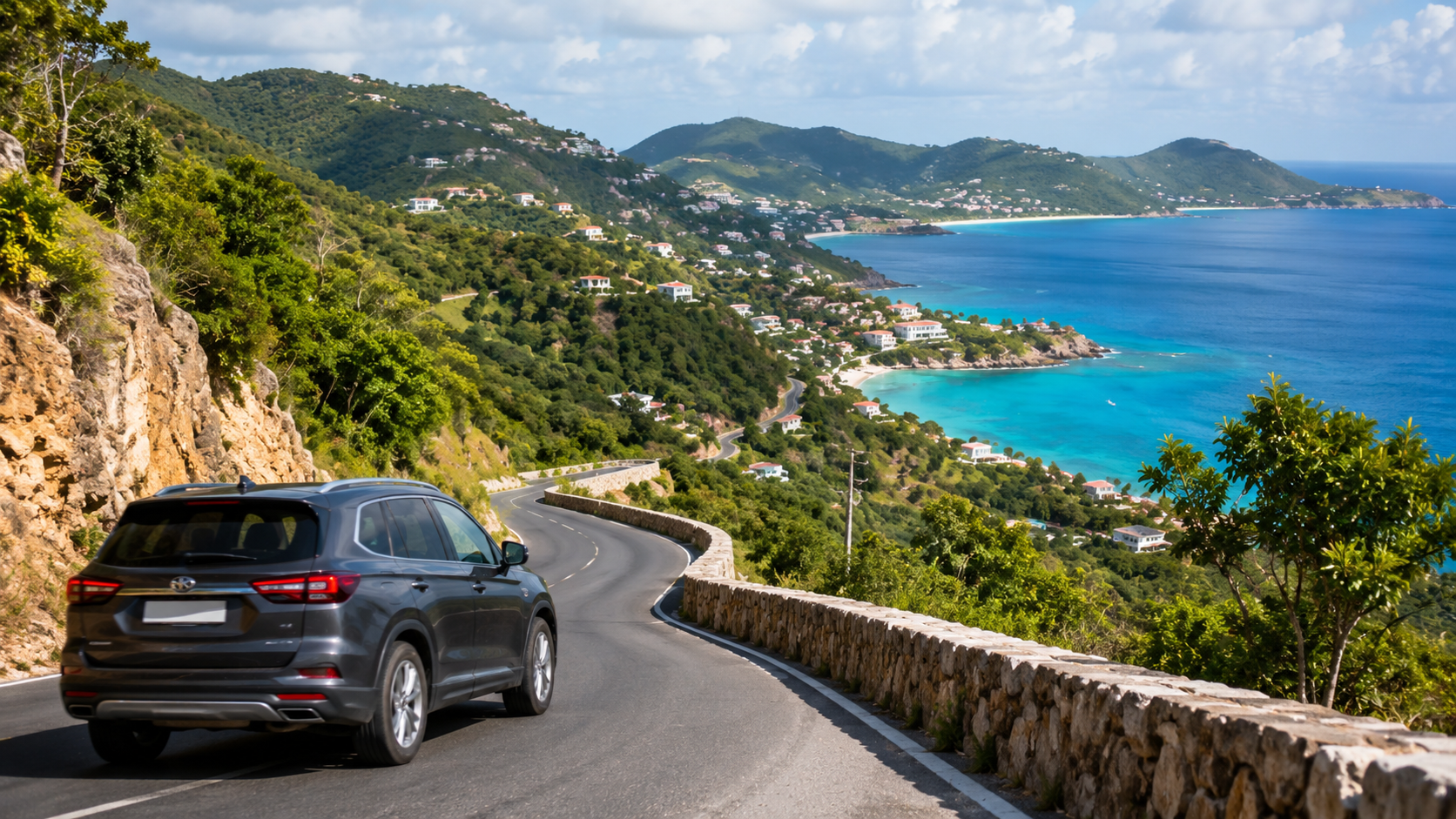
The island also has roads that rise and curve, especially when your plans take you beyond the main coastal stretches. Automatic transmission is useful when pulling away on an incline or moving through a series of slower turns. You can keep both hands and your attention where they belong without worrying about finding the right gear at the wrong moment.

Familiar driving for US visitors

Traffic drives on the right, which will feel familiar to visitors from the United States. Even so, every destination has its own rhythm. Local drivers may know the roads well, parking areas can be tight, and the approach to a roundabout may come sooner than expected when you are watching the scenery.

With an automatic, the basic operation of the vehicle requires less thought. That gives first-time visitors more mental space to read signs, look for the correct exit, and make calm decisions. It is a small advantage, but it can make the first few drives feel much more relaxed.

What travelers usually worry about

A common concern is whether the island's roads require a large vehicle or advanced driving skills. Usually, they do not. Most visitors can drive comfortably with normal care, patience, and a vehicle that suits their party and luggage.

The more realistic challenge is that popular areas can become busy. A drive that looks short on a map may take longer during peak traffic. Roads may narrow near beach entrances, and you may need to slow down for pedestrians, parked cars, or a vehicle pulling out. An automatic makes these frequent speed changes less tiring.

Another worry is driving between the Dutch and French sides of the island. Visitors can generally travel between Sint Maarten and Saint-Martin without the experience feeling like a complicated international road trip. Still, the road character can change from one area to the next, and roundabouts are common on the French side. Take your time, yield appropriately, and do not assume every turn will be as wide or clearly marked as it is back home.

Best for first-time visitors

An automatic car is especially practical if this is your first visit, if you have not driven a manual transmission in years, or if you will be sharing driving duties with a partner. There is little value in choosing a manual simply because it is available if only one person in your group feels comfortable operating it.

It is also a smart choice for families. Parents often have more to manage: luggage, child seats, snacks, beach bags, and a tired child in the back seat. An automatic does not solve every travel detail, but it reduces the physical effort of driving between hotel stops, grocery runs, and beach days.

Couples on a short getaway may appreciate it for a different reason. With limited vacation time, a straightforward car makes spontaneous plans easier. You can leave Simpson Bay for dinner in Grand Case, make a stop at a lookout, or spend the afternoon beach-hopping without feeling that every drive needs extra preparation.

When a manual may still make sense

Manual cars can work well for confident manual drivers, particularly travelers who regularly drive them at home and prefer the extra control. They may also be a good fit if availability or price makes a manual the better option for your dates.

The key is to be honest about comfort level. Vacation driving is not the best time to relearn how to use a clutch, particularly if you are arriving after a long flight or expect to drive in traffic. For most US visitors, the convenience of an automatic is worth prioritizing.

Best car type for your island plans

Transmission is only one part of choosing the right rental. The best vehicle depends on how many people are traveling, how much luggage you have, and where you plan to go.

An economy or compact automatic is a practical match for one or two travelers who are packing light and spending most of their time around the main beach, dining, and shopping areas. Their smaller footprint can be useful when parking near busy spots. A midsize or full-size automatic gives couples with more bags and small families extra room without making everyday driving complicated.

SUVs are popular for families, groups, and travelers carrying beach equipment. The higher seating position can be appealing on uneven roads or when you want more passenger space. But bigger is not always better. A large vehicle can feel less convenient in tight parking areas, so choose the size you will actually use. Vans are the sensible option for larger parties who would rather travel together than coordinate multiple cars.

Good to know before you book

Automatic vehicles are popular with visitors, so booking early is wise for holiday weeks, school breaks, and periods when the island is especially busy. Waiting until arrival can limit your choice of vehicle size or leave you comparing options when you would rather be on your way.

Before confirming a rental, make sure the vehicle category fits your luggage as well as your passenger count. Four adults and four large suitcases may need more space than a compact sedan can comfortably provide. If you plan to pick up groceries, carry dive gear, or bring a stroller, allow room for those items too.

It also helps to understand the rental terms before your trip. Ask what is included in the quoted price, how the deposit works, which drivers can be added, and what coverage options are available. Clear answers before you arrive make the pickup process quicker and help avoid surprises. Dependable service and honest pricing should make your trip easier, not give you more details to sort out at the counter.

Local tip: plan for flexibility, not speed

The best way to drive around the island is not to rush. Leave extra time when traveling through busy areas, especially around the airport corridor, Simpson Bay, Cole Bay, and Philipsburg. If a route is slow, enjoy the fact that your rental car gives you choices. You can stop for a coffee, change beaches, or take a scenic route rather than waiting on a fixed shuttle schedule.

Keep beach clothes, drinking water, and a small bag of essentials in the car, but avoid leaving valuables visible when you park. At popular beaches and shopping areas, a little planning goes a long way: arrive earlier when possible, park carefully, and expect to walk a short distance during busier times.

An automatic car supports that flexible island pace. It is easy to drive, easy to share with another qualified driver, and well suited to the mix of relaxed coastal roads and busier town traffic you are likely to encounter.

Whether you choose a compact for a simple couples trip or an SUV for a family vacation, pick a vehicle that helps you feel comfortable from the airport onward. H & L Car Rental can help travelers find a dependable automatic option with clear pricing, so the drive becomes part of a relaxed St. Maarten experience rather than a task to worry about.

Group Travel in St. Maarten: When to Rent a Van, SUV, or Larger Vehicle

Group Travel in St. Maarten: When to Rent a Van, SUV, or Larger Vehicle

The question behind group travel in St. Maarten: when to rent a van, SUV, or larger vehicle usually comes up before the trip even begins. Four people may fit in a standard car on paper, but add airport bags, beach chairs, a stroller, or groceries for the villa, and the ride can feel crowded before you leave Princess Juliana International Airport.

Choosing a larger rental is not only about passenger count. It is about how your group plans to spend each day, how much luggage you are bringing, and whether everyone wants to travel together. The right vehicle can make beach hopping, dinner reservations, and day trips between the Dutch and French sides much easier. The wrong one can mean cramped back seats, limited cargo space, or taking two cars when one would have been more convenient.

Start with people, luggage, and plans

A useful rule is to count both passengers and their belongings. A vehicle described as seating five may technically carry five adults, but it may not comfortably hold five large suitcases at the same time. This matters most for airport pickup and departure days, when everyone has bags.

Think through the group as it will actually travel. Are there adults who need more legroom? Young children who require car seats? Golf clubs, dive gear, coolers, or a folding wheelchair? Is your hotel close to restaurants, or will you be driving to Simpson Bay, Philipsburg, Orient Bay, and other parts of the island throughout the week?

If your answer includes a lot of gear, several full-size bags, or regular full-group outings, moving up a vehicle category is often worth it. A little extra room can make the vacation feel far more relaxed.

When an SUV is the right choice

An SUV is often the sweet spot for families and smaller groups of three to five travelers. It gives you more cargo capacity and a higher seating position than a compact or mid-size car, while still being easy to handle around hotels, beach parking areas, and busier town streets.

Best for families and active travelers

SUVs work especially well for a family of four with suitcases, beach bags, and child equipment. They are also a practical choice for two couples who want to explore together without squeezing into a sedan. If you plan to carry snorkeling equipment, a cooler, shopping bags, or supplies for a condo stay, the additional storage is helpful.

The higher ride height can also be reassuring on island roads that are narrow, uneven in spots, or steep near hillside accommodations. You do not need an SUV simply because you are visiting St. Maarten, but it can offer extra confidence and comfort for travelers who prefer more space.

The trade-off: space without unlimited seating

An SUV is not automatically the answer for every group. Many models seat five, and the rear cargo area becomes limited when every seat is occupied by adults with large luggage. If there are six or more passengers, or if five people are arriving with a week’s worth of bags, a van may be the more practical choice.

Also consider where you will park. While SUVs are manageable across the island, they are larger than economy cars. In popular areas at busy times, you may need a little more patience when finding a space.

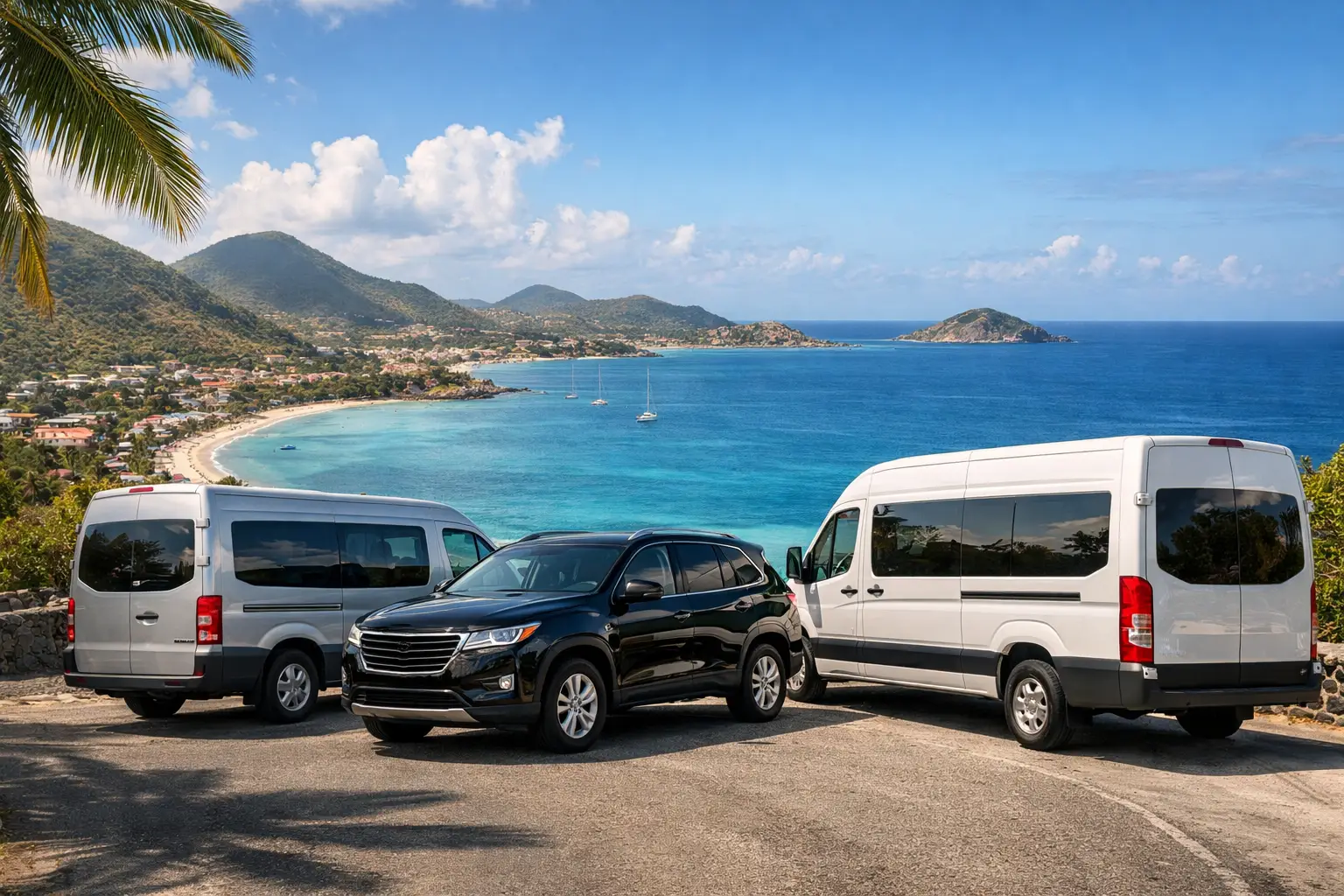
When a van makes more sense

A van is the best option when keeping everyone together matters more than having a smaller vehicle. For larger families, friend groups, wedding guests, and multigenerational travelers, it can simplify nearly every part of the trip.

Choose a van for six or more travelers

Once your group reaches six people, a van usually deserves serious consideration. It gives passengers their own seats, allows more room for bags, and prevents the inconvenience of coordinating two rental vehicles. That means one departure time for breakfast, one vehicle for beach days, and fewer worries about anyone getting lost or arriving separately.

A van can also be a better value than renting two smaller cars. The exact cost depends on travel dates and availability, but one larger vehicle may reduce the number of rental agreements, fuel stops, parking decisions, and security deposits your group needs to manage.

For groups of seven or more, pay close attention to the stated passenger and luggage capacity before booking. Seating capacity does not always equal comfortable capacity, particularly if every traveler has a large suitcase. Ask how many bags the vehicle can reasonably hold with all seats in use.

Good for groups with different mobility needs

Traveling with grandparents, younger children, or anyone who appreciates easier access? A van can make getting in and out more comfortable, especially compared with packing several adults into the rear of a smaller car. It also leaves room for items that make travel easier, such as a stroller, mobility aid, extra water, or a cooler.

That said, vans are larger vehicles, and drivers should be comfortable with their size. Roads around St. Maarten and St. Martin can be busy, especially near Simpson Bay, Maho, Philipsburg, and popular beach areas. A confident driver who takes turns slowly and parks thoughtfully will find a van very manageable.

When a larger vehicle is worth the upgrade

Sometimes the group is only four or five people, yet a larger vehicle is still the better decision. Consider upgrading if you are staying in a villa and plan to buy groceries, if your group is bringing sports equipment, or if you expect to spend long days on the road together.

A larger vehicle is also worthwhile when comfort is a priority. A week of close quarters can wear on even the best travel companions. More shoulder room, better legroom, and enough space for everyone’s personal items can make the drive from the airport to your accommodation feel like the start of a vacation rather than a transportation challenge.

For groups splitting their time between both sides of the island, one roomy vehicle can make day planning easier. You can leave beach supplies in the vehicle, stop for lunch without reorganizing luggage, and keep everyone on the same schedule.

What travelers usually worry about

The most common concern is whether a larger rental will be difficult to drive. For most visitors, the answer depends less on the vehicle itself and more on driving habits. St. Maarten is compact, but roads can be narrow, traffic can build at peak times, and parking is tighter in popular areas than at a large mainland shopping center.

Take your time, use your mirrors, and avoid treating the island like a place to rush through. A van or full-size SUV may require more attention when parking, but the benefit is that your entire party and their belongings fit comfortably.

Another concern is fuel. Larger vehicles typically use more fuel than economy cars. If your group is sharing costs, however, that difference may be small compared with the convenience of traveling together. It is a trade-off worth considering honestly: lower fuel use and a tighter fit, or added room and greater comfort.

Good to know before you book

Book the vehicle around your biggest travel day, not your quietest one. The airport arrival day is usually the best test. If your group cannot comfortably fit with all luggage after landing, the vehicle is too small, even if it will feel fine after bags are dropped at the hotel.

Before confirming, check the number of passengers, expected luggage, and whether you need child seats. If you are staying in an area with limited parking or steep access roads, mention that too. A dependable rental company should help you compare categories based on real travel needs instead of simply steering you toward the largest option.

At H & L Car Rental, travelers can choose from a range of cars, SUVs, Jeeps, and vans, making it easier to match the vehicle to the group rather than forcing the group into the wrong vehicle. Clear pricing and the right size rental help avoid surprises after arrival.

When to book early

Larger vehicles are often the first categories to become limited during busy travel periods. This is especially true around holidays, school breaks, major island events, and peak winter travel months. If your group needs a van, has specific seating requirements, or is traveling with several children, reserving early gives you more choice.

Do not wait until arrival to decide whether one vehicle will work. Availability may be limited, and changing from a standard car to a van at the last minute can be difficult during high-demand weeks.

A practical way to decide

For two to four light packers, a standard car or compact SUV may be enough. For four to five travelers with regular luggage and beach gear, an SUV often provides the best balance. For six or more people, or any group with substantial bags, a van is usually the comfortable, practical answer.

The goal is not to rent the biggest vehicle available. It is to choose the one that lets your group arrive together, carry what it needs, and enjoy the island without turning every drive into a packing exercise. A little extra space at the start of the trip often pays off every day after that.

A Slow Travel Guide to Exploring St. Maarten by Car

A Slow Travel Guide to Exploring St. Maarten by Car

The island gets busy in the places everyone sees first: the airport area, Simpson Bay, Philipsburg, and the road toward popular beaches. But a slow travel guide to exploring St. Maarten by car starts with a different idea: choose less in a day, stay longer at each stop, and let the drive be part of the vacation.

Having your own rental car gives you that freedom. You can leave the beach before the afternoon crowds build, take a scenic detour when the view calls for it, or stop for lunch without watching the clock for a taxi. St. Maarten and St. Martin are compact, but the roads, hills, traffic patterns, and beach parking all reward travelers who give themselves room to slow down.

What slow travel looks like on the island

Slow travel is not about trying to visit every beach in one week. It is about building simple days around one area, with time for a swim, a long lunch, a lookout point, and an unplanned stop along the way.

A good rhythm is one main destination in the morning, a relaxed meal, and one nearby place in the afternoon. For example, spend a morning around Maho and Cupecoy, then drive to Simpson Bay for lunch and sunset. On another day, make Grand Case your main stop, with time to explore the French-side coastline rather than racing back across the island.

This approach also makes driving more pleasant. Rather than treating the car as transportation between a long checklist of attractions, you can travel outside the busiest periods and choose where to linger.

Good to know before you book

The right vehicle depends less on distance and more on the way you plan to travel. Most visitors can comfortably explore the island in an economy, compact, or mid-size car. These are easier to park near beaches, restaurants, and shopping areas, and they are a practical choice for couples or small families traveling light.

An SUV can be a better fit if you are carrying several beach bags, traveling with children, staying in a hillier area, or simply want more room and a higher seating position. A Jeep appeals to travelers who want an open-air island feel, though it is worth thinking about luggage space, sun exposure, and the possibility of passing showers. Larger families and groups are usually more comfortable in a full-size vehicle or van.

You do not need an SUV solely because you are visiting St. Maarten. Main roads connect the island well, and many of the best-known beaches are easy to reach in a standard car. The better question is how much space, comfort, and luggage capacity your trip requires.

When comparing rental options, ask what is included in the quoted rate, how pickup works after landing, what documentation is needed, and what the fuel and return expectations are. Clear answers help you avoid surprises and begin your vacation with confidence. Dependable local rental providers such as H & L Car Rental can also help match the vehicle to your hotel location and group size.

A relaxed three-day route by car

Day one: Settle into the Dutch side

After arriving at Princess Juliana International Airport, keep your first driving day light. Depending on where you are staying, head toward Simpson Bay, Maho, or Pelican Key, check in, and resist the urge to cover the entire island immediately.

Maho Beach is a memorable early stop if you want to see aircraft approaching the runway, but it can become crowded. Visit for a short while, then continue to Cupecoy Beach or a nearby waterfront spot where the pace is quieter. From there, return through Simpson Bay for dinner rather than adding another long drive.

This first day is also the right time to become comfortable with the car, local roundabouts, road signs, and parking. Roads can be narrow in places, and traffic may move more slowly than expected. That is normal. Leave extra time and avoid making your first afternoon a tight schedule.

Day two: Philipsburg and the east coast

Start early for Philipsburg, especially if shopping or the boardwalk is part of your plan. Morning is generally easier for parking and walking before cruise-related activity and midday heat pick up. Park where permitted, keep valuables out of sight, and enjoy the town on foot once you arrive.

After lunch, continue toward the east coast for a change of scenery. Orient Bay on the French side is a natural choice for beach time, while the drive itself offers changing views of hills, bays, and neighborhoods. If you prefer a quieter afternoon, choose one beach and stay there instead of hopping between several.

The trip between the Dutch and French sides is usually straightforward for visitors. There is no routine border checkpoint in the way many US travelers expect, but you should still carry your driver’s license and rental documents. Drive attentively, follow posted rules, and remember that the island has different administrative sides even though it feels like one connected destination.

Day three: Grand Case, Marigot, and a scenic return

Plan a French-side day around Grand Case and Marigot. Grand Case is known for its beach, restaurants, and relaxed village atmosphere. It is a place where slow travel pays off: arrive late morning, enjoy the water, take your time over lunch, and walk before moving on.

Marigot offers a different feel, with waterfront views and a market atmosphere on certain days. Parking may be more limited near the center, so patience matters. If you find a space a short walk away, take it rather than circling repeatedly for the closest possible spot.

On the drive back, leave room for a scenic pause. The road near Cole Bay and Simpson Bay can be busy, particularly later in the day, but the lagoon views are worth enjoying when traffic allows. If sunset is important to you, pick one location and arrive early rather than trying to chase it across the island.

What travelers usually worry about

Is driving easy for tourists?

For most US visitors, yes. Driving is on the right, and the island is manageable once you settle into the pace. The biggest adjustment is not the driving rules - it is allowing for traffic, tight parking areas, hills, and roads that may feel unfamiliar after dark.

Use your navigation app, but do not rely on it blindly. A route that looks quick on a map can take longer during busy times or after rain. Keep your phone charged, know the name of your hotel or villa, and ask your rental provider for practical directions if your accommodation is in a less familiar area.

Is parking difficult in St. Maarten?

It depends on the time and place. Parking can be easy at some beaches and difficult around Philipsburg, Maho, Simpson Bay, and popular restaurant areas during peak hours. The simplest solution is to arrive earlier, accept a short walk, and avoid blocking roads or private driveways.

Do not leave bags, electronics, passports, or beach gear visible in the vehicle. Even in a relaxed destination, basic travel habits matter. Bring only what you need when you park and secure the car every time.

When should you book a rental car?

Book early if you are traveling during holidays, school breaks, major events, or the busiest winter months. Availability for SUVs, Jeeps, vans, and specific vehicle sizes can tighten first. Early booking gives you more choice and more time to compare options based on your actual needs instead of settling for what remains.

Local tip: Plan around the clock, not just the map

A beach that is 20 minutes away in light traffic may take much longer at a busy time. Build your days around early mornings, long midday stops, and relaxed evenings near where you are staying. If you have dinner reservations across the island, leave earlier than your map estimate suggests.

The same principle applies to weather. Tropical showers can be brief, but roads may become slick and views can change quickly. A slower itinerary gives you flexibility to wait out a shower over lunch or switch beach plans without feeling that the day is lost.

Your rental car is most valuable when it removes pressure. Pick a vehicle that fits your people and luggage, keep your plans comfortably loose, and give each part of the island time to make an impression. The best St. Maarten days are often the ones with enough space for one more swim, one more view, or one more stop you did not plan.

Holiday Travel in St. Maarten: Why Booking Your Rental Car Early Helps

Holiday car rental SXM

Holiday travel in St. Maarten: why booking your rental car early helps comes down to one simple reality - the island has a limited number of vehicles, while demand rises quickly when visitors arrive for Christmas, New Year’s, Easter, school breaks, and long weekends. Waiting until the last minute can turn an easy airport pickup into a search for whatever happens to be available.

For many travelers, a rental car is not just transportation from Princess Juliana International Airport to the hotel. It is the freedom to have breakfast in Simpson Bay, spend the afternoon at Mullet Bay or Orient Bay, enjoy dinner in Grand Case, and return on your own schedule. Booking ahead helps make that kind of flexible vacation possible.

Why holiday rental cars book up quickly

St. Maarten and St. Martin are popular because one trip can offer beaches, restaurants, shopping, nightlife, scenic drives, and two distinct sides of one island. During holiday periods, that appeal brings families, couples, cruise visitors extending their stays, and returning guests who know exactly when they want to visit.

Rental fleets are carefully sized for the island. That is good for maintaining vehicles and offering dependable service, but it also means there is not an unlimited supply of cars when several busy arrival days overlap. The most requested categories tend to go first: economical cars for couples, compact vehicles for easy parking, SUVs for families, Jeeps for open-air island exploring, and vans for groups traveling together.

If your dates are fixed, reserving early means you can choose a vehicle that suits your trip rather than reorganizing your plans around the only remaining option.

What travelers usually worry about

The biggest concern is often cost. Some travelers assume booking later will reveal a better deal, but holiday weeks are different from quieter travel periods. As availability becomes limited, the lowest-priced vehicle categories may sell out first. Even if a car is still available closer to arrival, it may not be the size or style you had planned for.

There is also the question of arrival logistics. After a flight, most people want a clear plan: collect luggage, complete the pickup process, load the car, and start the vacation. A confirmed reservation gives you more certainty than trying to arrange transportation after landing, especially when multiple flights arrive around the same time.

Early booking does not mean you should book blindly. Read the rental terms, understand the deposit and insurance options, and confirm the pickup instructions before you finalize the reservation. The goal is not simply to reserve any vehicle. It is to reserve the right vehicle with clear, honest pricing and no surprises.

When to book early for holiday travel in St. Maarten

For Christmas and New Year’s travel, it is wise to book as soon as flights and accommodations are confirmed. These dates are among the most popular on the island, and travelers often make arrangements months ahead. The same approach is helpful for spring break, Easter week, major event periods, and school vacation weeks.

If you are traveling during a less busy holiday weekend, you may still find availability closer to your arrival date. However, booking early remains useful if you need a specific vehicle type, are traveling with children, have a lot of luggage, or need room for a larger group.

Flexibility changes the equation. A couple staying near restaurants and beaches in Simpson Bay may be comfortable with a compact car and can sometimes adapt if their first choice is unavailable. A family of five with beach gear, strollers, and a full itinerary has much less room to compromise. In that case, reserving an SUV or van early can save a great deal of stress.

Best for first-time visitors

First-time visitors often underestimate how much they will want to explore after seeing the island map. Distances may look short, but a day can include beach stops, viewpoints, grocery runs, and dinner on the other side of the island. Having a reserved car waiting makes it easier to get comfortable from the first day.

It also lets you select a vehicle you feel confident driving. A compact or midsize car is a practical choice for many first-time visitors because it is easy to handle, fits most parking spaces comfortably, and works well for everyday island routes. An SUV may be a better fit if you are traveling with family or carrying more luggage, but it is not required for most visitors simply because they are on an island vacation.

Choosing the car before the popular options disappear

The best rental car depends on your passengers, luggage, and plans, not just the number of seats on paper. A small economy or compact car works well for one or two travelers packing light. It can also be easier to park in busier areas such as Philipsburg, Simpson Bay, and Maho.

For couples who want extra room or travelers carrying multiple suitcases, a midsize or full-size car can be more comfortable. Families often appreciate an SUV for its cargo space and higher seating position. Groups should consider a van early, especially if everyone wants to travel together rather than coordinating multiple cars.

Jeeps are popular with visitors who enjoy an open-air feel and want a fun option for beach hopping. They are not essential for driving around St. Maarten, but they can be a great match for travelers who value the experience as much as the destination. During busy holiday dates, the point is to reserve the category that fits your vacation before you have to settle for one that does not.

Good to know before you book

A few details can make an early reservation far more useful. Start by confirming your exact arrival and departure times, including your flight number if the rental company requests it. This helps the team prepare for your pickup and makes communication easier if a flight schedule changes.

Think honestly about luggage. Four adults may fit in a compact car, but four adults with large suitcases and beach bags may not be comfortable. If you are unsure, choosing a slightly larger category can be worthwhile for the extra space alone.

You should also ask what is included in the quoted rate. Travelers should understand applicable taxes, deposits, insurance choices, additional driver policies, fuel expectations, and any child-seat needs before confirming. Transparent answers are particularly valuable during the holidays, when nobody wants to spend vacation time sorting out an avoidable misunderstanding.

At H & L Car Rental, the focus is on dependable vehicles, convenient airport service, and straightforward pricing so travelers can begin their stay with confidence. Whatever company you choose, clear terms and responsive communication should be part of the decision.

Local tip: plan for freedom, not a packed schedule

A rental car gives you flexibility, but the best holiday trips still leave room for the island’s pace. Traffic can be heavier around popular beaches, shopping areas, and dinner hours during peak weeks. Allow extra time when crossing between the Dutch and French sides, particularly if you have reservations.

Early mornings are often ideal for a beach visit, a scenic drive, or a grocery stop before the day gets busy. Later, having your own vehicle means you can choose a quieter beach, change plans if the weather shifts, or stay for sunset without watching the clock for a ride back.

Parking can require patience in popular areas, but it is manageable when you arrive earlier, use designated spaces, and avoid treating every stop as a rush. A smaller vehicle can be helpful if your itinerary includes busy town centers, while a larger vehicle may be worth it when passenger comfort and luggage capacity matter more.

What to ask before confirming

Before finalizing your holiday reservation, make sure you know the pickup location and process, the documents required at the counter, the vehicle category being held, and how to reach the rental company if your flight is delayed. Ask whether the rate includes the items discussed and whether there are any seasonal restrictions or minimum rental periods for your dates.

If you need a child seat, extra driver, van, Jeep, or a particular transmission type, request it at the time of booking rather than assuming it can be added after arrival. Holiday availability is most limited for specialized needs.

Booking early is not about overplanning every minute of your trip. It is about arriving with one major detail handled, so the first decision you make on the island can be which beach to visit first.

Best Cars for Steep Roads in St. Maarten

Best Cars for Steep Roads in St. Maarten

A hillside villa can look close on a map, but the final few turns may be narrow, steep, and much more demanding than the drive from the airport. Choosing one of the best cars for steep roads in St. Maarten means thinking beyond price or luggage space. The right vehicle should feel confident on an uphill start, comfortable in warm weather, and practical for the beaches, restaurants, and day trips you have planned.

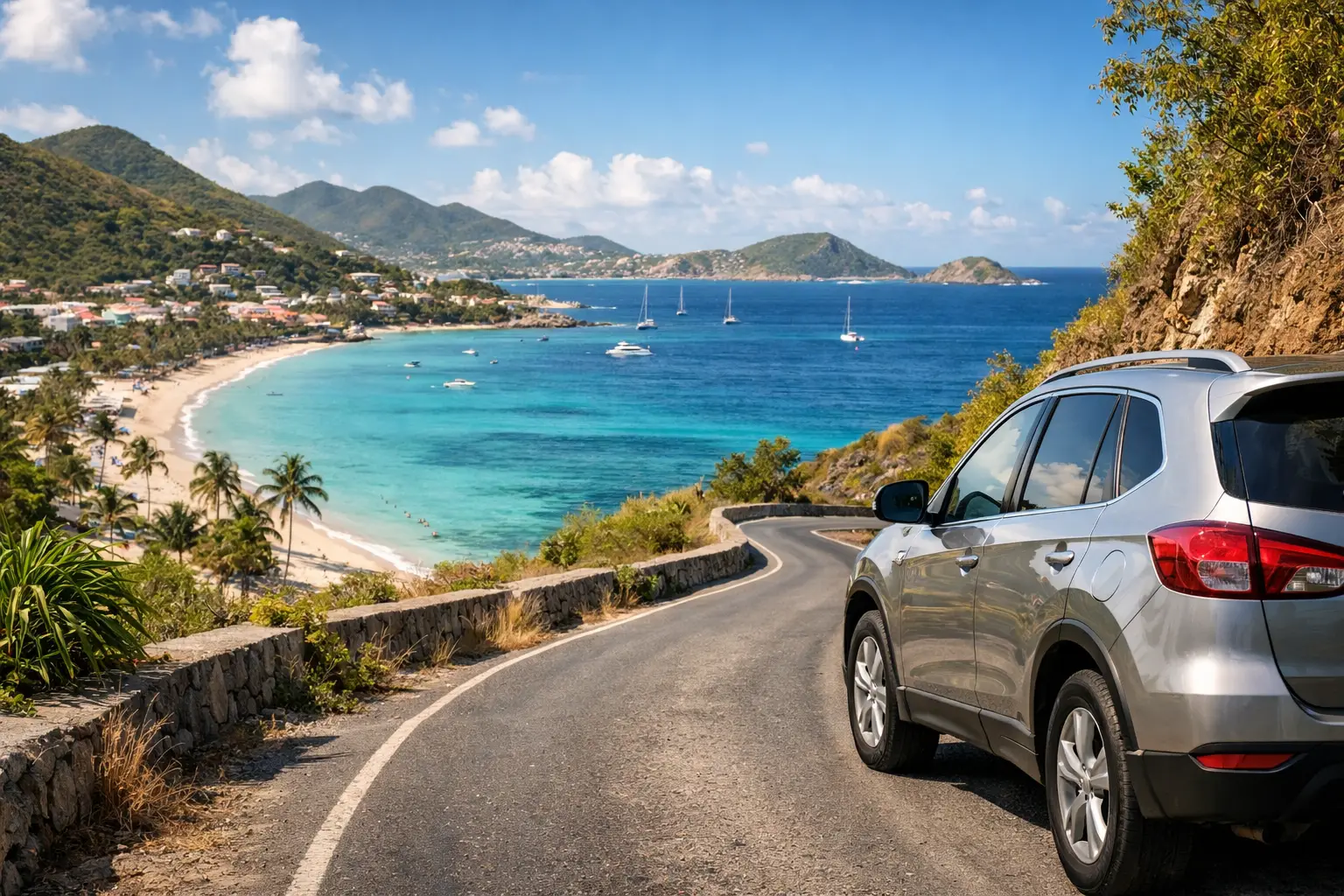
The good news is that most visitors do not need a heavy-duty off-road vehicle. Main roads across the Dutch and French sides are generally paved, and a well-maintained rental vehicle handles most island driving comfortably. Still, an SUV or Jeep can make a meaningful difference when your hotel, villa, or favorite beach route involves sharp inclines, tight bends, uneven pavement, or a wet road after a tropical shower.

What travelers usually worry about

The biggest concern is usually whether a smaller car will make it up the hill to a rental home. For many locations, it will. A compact car with a responsive automatic transmission can handle ordinary paved inclines when it is not overloaded. The question is not simply, “Can this car get there?” It is whether it will do so comfortably with four passengers, beach gear, groceries, and luggage.

Travelers also worry about parking. This is where a compact car has a real advantage. Parking areas around Philipsburg, Simpson Bay, Maho, and popular beach stops can be tight, especially during busy periods. A larger vehicle gives you more confidence on a hill, but it asks a little more of you in narrow spaces. The best choice depends on where you are staying and how you plan to spend your days.

Rain is another factor. Roads can become slick quickly during a passing shower, particularly on steep paved sections where sand, leaves, or runoff collect. Good tires, sensible speed, and a vehicle that does not feel strained under load matter more than having four-wheel drive for most visitors.

Best cars for steep roads in St. Maarten

SUV: the best all-around choice

For couples, families, and small groups staying in hilly areas, an SUV is often the easiest recommendation. It generally provides stronger uphill performance than an economy vehicle, more room for passengers and bags, and a higher seating position that helps drivers see around curves and parked vehicles.

An SUV is especially useful if your plans include daily driving between beaches, restaurant areas, supermarkets, and a villa in the hills. You get a more relaxed ride without moving into the size of a van. For many travelers, that balance of power, comfort, air conditioning, and storage makes an SUV the most practical answer.

It is not automatically the right choice for everyone. A couple staying in a flat-area hotel near Simpson Bay or Maho, with light luggage and no plans for remote hillside accommodations, may find a compact car easier to park and less expensive. But if your lodging has a steep driveway or you expect to carry several people, choosing the larger vehicle is usually worth the added confidence.

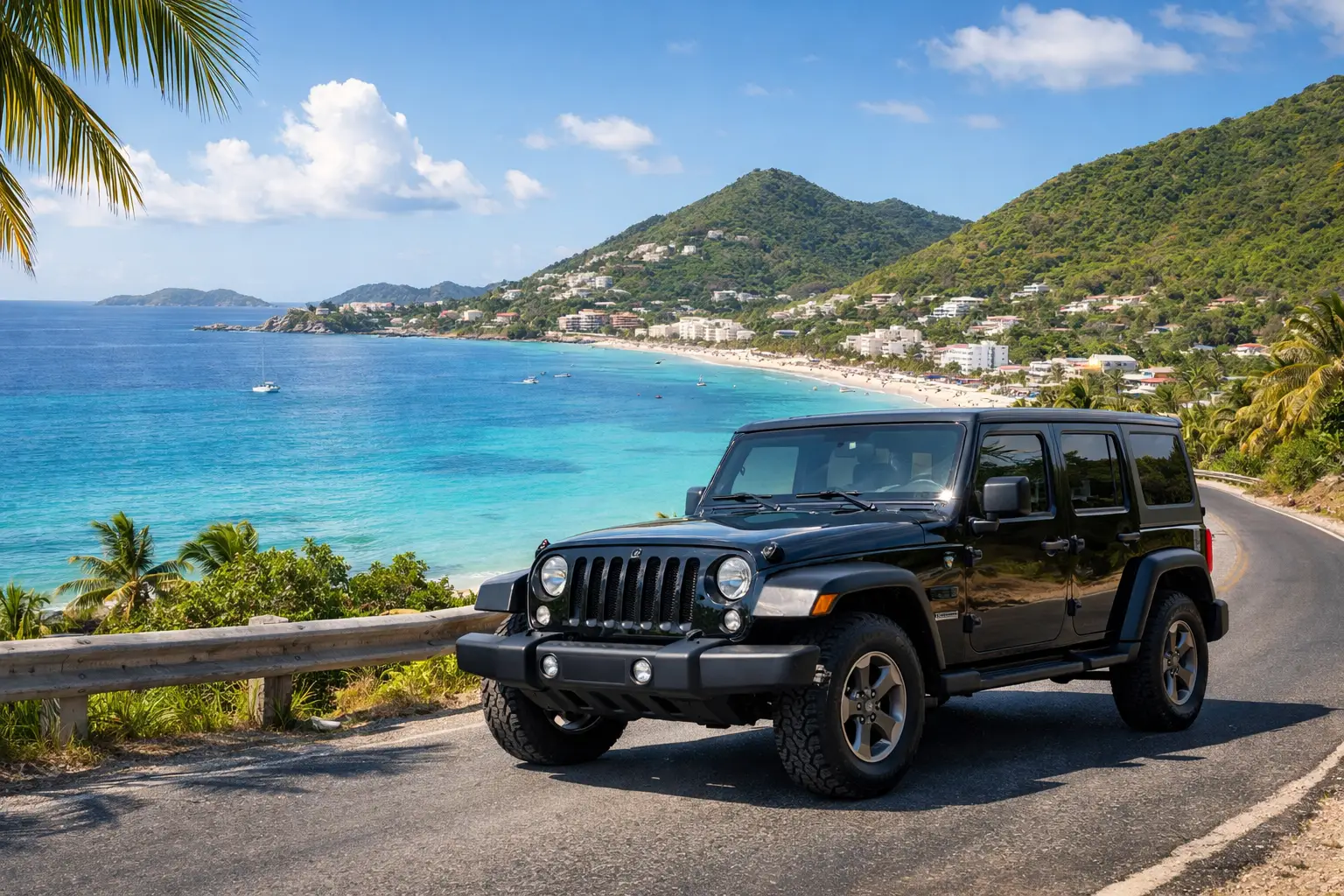
Jeep: best for steeper villa access and adventurous plans

A Jeep is a strong option for travelers who want extra clearance, a sturdy feel, and the freedom to explore roads that are less predictable than the main routes. It can be a particularly good fit for hillside villas, scenic drives, and visitors who simply prefer a more commanding driving position.

That said, a Jeep is not a requirement for every island itinerary. It can be noisier than a conventional SUV, may offer less enclosed cargo space depending on the model, and can feel larger when parking in busy areas. Choose it because its capability matches your stay and travel style, not because every road in St. Maarten calls for off-road driving.

Compact car: good for light travelers on mostly paved routes

A compact car can be a smart, budget-conscious choice when your hotel is on flatter ground and your plans focus on the island’s main roads. It is easy to maneuver, easier to park, and suitable for two people with modest luggage. Many visitors enjoy a compact car for getting from Princess Juliana International Airport to beach areas, dining spots, and shopping districts.

The trade-off appears on a long or very steep climb with a full load. If there are three or four adults in the car, several suitcases, and a hillside destination, the compact option can feel less relaxed. It may still be capable, but it is not the vehicle most travelers would choose if steep roads are a regular part of the vacation.

Full-size car: comfortable, but check your access road

A full-size car offers generous passenger comfort and often has enough power for normal hill driving. It works well for travelers who want a traditional sedan-style ride and have accommodations with straightforward road access. It can be a pleasant choice for longer drives around the island.

Before booking, consider the final approach to your lodging. Low clearance, a long wheelbase, and a larger turning circle can be less convenient on a sharply sloped driveway or narrow residential lane. If the access road is steep or uneven, an SUV may be the more comfortable choice.

Best car type for your route and accommodations

Where you sleep matters as much as where you plan to go. If you are staying in a resort near the airport, Maho, Simpson Bay, or a generally level part of the island, a compact or mid-size car may be all you need. You will still have the independence to visit beaches, restaurants, casinos, and attractions at your own pace.

For a villa above Cole Bay, Oyster Pond, Dawn Beach, or another elevated neighborhood, an SUV is usually the safer default. These areas can involve steep approaches, sharp turns, and driveways where a little extra clearance and pulling power are welcome. If you are unsure, ask your host whether the road is fully paved, whether the driveway is steep, and whether guests commonly use an SUV.

For families, do not judge by passenger count alone. Two adults and two children can easily fill a compact car once you add suitcases, a stroller, beach bags, and a cooler. A mid-size or full-size SUV makes the first and last travel days much easier, while also giving everyone more breathing room on the road.

Good to know before you book

Automatic transmission is the comfortable choice for most visitors, particularly on hill starts and stop-and-go traffic. It lets you focus on the road, the curves, and local driving conditions rather than shifting on a climb. Confirm the transmission type when reserving if that is important to you.

Also think about your luggage honestly. A vehicle that looks spacious in photos may have limited cargo room once every seat is occupied. If your group has large suitcases or golf clubs, moving up one vehicle category can prevent a cramped airport pickup and make day trips more enjoyable.

A reliable rental also matters more than the badge on the hood. Ask about the vehicle category, air conditioning, pickup process, and what support is available if you have a question during your trip. H & L Car Rental offers a range of economy cars, sedans, SUVs, Jeeps, and vans, so travelers can choose based on their actual route instead of paying for more vehicle than they need.

Local tip: drive the hill, not the map

Navigation apps are useful, but they cannot always show how steep a driveway feels, how tight a turn becomes when another car is coming downhill, or where a road has rough patches after rain. Take the first climb slowly, leave extra room behind the vehicle ahead, and avoid rushing a hill start.

On a steep descent, ease off the accelerator early rather than braking hard at the last moment. Keep both hands on the wheel through tight turns, and be patient with local traffic, scooters, pedestrians, and parked vehicles. The island is meant to be enjoyed, not hurried through.

If your villa arrival is after dark, it can help to make your first approach before sunset when possible. Hillside roads are much easier to read in daylight, especially when you are unfamiliar with the turns. Once you have done the route once, the rest of the week feels far more natural.

When to book early

Book early when you know you need an SUV, Jeep, van, or a specific amount of luggage space. These categories are often in higher demand during holiday periods, school breaks, and busy winter travel months. Waiting until arrival can limit your options, particularly if you are traveling with family or staying at a hillside property.

Early booking also gives you time to compare vehicle size with your itinerary. A couple may decide a compact is ideal after confirming their hotel access is flat. A group may realize that a van or SUV is more sensible once everyone’s luggage is counted. That is the kind of decision that is easiest to make before travel day.

What to ask before confirming

If steep roads are part of your vacation, ask three simple questions before confirming: Is the vehicle automatic? How many bags does it comfortably carry with all passengers seated? Which category is best for a steep villa driveway? Provide the location or neighborhood of your accommodations if you can. A local rental team can often give more useful guidance when they understand your real route.

The best rental car is the one that lets you leave the airport feeling prepared, not uncertain. Give yourself enough space, enough uphill confidence, and enough comfort to enjoy every beach stop and hillside view along the way.

Jeep Rental St. Maarten: Is It Worth It for Your Island Trip?

Jeep Rental St. Maarten: Is It Worth It for Your Island Trip?

The first time many visitors picture driving around the island, they imagine a Jeep with the top open, beach bags in the back, and a quick stop wherever the view looks too good to pass up. That image sells the vacation well - but jeep rental St. Maarten: is it worth it for your island trip? Sometimes yes, absolutely. Sometimes a standard car does the same job for less money and less hassle.

That is really the question to answer before you book. A Jeep can be a fun choice in St. Maarten and St. Martin, but it is not automatically the smartest one for every traveler, every budget, or every hotel location.

When a Jeep rental in St. Maarten makes sense

A Jeep makes the most sense when the trip itself is part of the experience. If you like scenic drives, want a higher seating position, and plan to move around the island often, a Jeep can feel like part transportation and part vacation upgrade.

Many travelers like the added visibility. Roads can curve, hills can be steep in some areas, and parking lots near busy beaches and restaurants can get a little uneven. Sitting higher can make some visitors feel more comfortable, especially on a first visit.

A Jeep also works well for travelers who pack a little more. If you are carrying beach chairs, snorkeling gear, shopping bags, or luggage for a short island-hopping stay, the extra room is useful. Couples can enjoy it, but families and small groups usually get the most practical value from it.

Then there is the simple fun factor. If your vacation style leans casual and outdoorsy, a Jeep fits the mood. Driving from one beach to another, heading out for sunset, or crossing from the Dutch side to the French side can feel more relaxed in a vehicle that suits the island atmosphere.

When it may not be worth the extra cost

A Jeep is usually more expensive than an economy car or compact car. If most of your plans are close to your hotel, or you are only driving out once a day for dinner or a beach visit, you may not get enough extra value to justify the rate.

This matters even more for travelers who are mostly staying in walkable areas such as Simpson Bay or near restaurants and nightlife. In those cases, a smaller rental can be easier to park and lighter on the budget while still handling the island perfectly well.

Fuel costs should also be part of the decision. Jeeps and larger SUVs often use more gas than compact vehicles. On a short trip this may not change much, but on a longer stay it can add up.

There is also the comfort question. Some visitors love the open-air style and rugged look. Others realize after a day or two that they would rather have a quieter ride, easier parking, and a lower rental bill. That does not make the Jeep a bad choice. It just means the best vehicle depends on how you actually travel, not just what looks good in vacation photos.

What travelers usually worry about

Most first-time visitors are not really asking whether a Jeep is fun. They are asking whether they need one.

The short answer is no, most travelers do not need a Jeep to get around St. Maarten. Main roads, airport routes, beach access roads, and the drives between popular towns are manageable in standard rental cars. You do not need a rugged off-road vehicle for normal sightseeing.

Another common concern is whether driving feels difficult. In general, it is manageable for tourists, especially if you drive patiently and expect a few busy areas. Traffic can build up at certain times, and some roads are narrow or hilly, but that still does not mean a Jeep is required.

Parking is another reason people consider a Jeep, thinking it will be easier for rougher surfaces. That can be true in some lots, but a smaller car is often easier in tighter spaces near beaches, shops, and restaurants. Bigger is not always easier on an island.

Best for first-time visitors

If this is your first trip and you want the simplest answer, book a Jeep if your priorities are comfort, space, higher visibility, and enjoying the drive itself. Book a compact or mid-size car if your priorities are value, easier parking, and getting around efficiently.

For many first-time visitors, a mid-size car ends up being the sweet spot. It gives enough room for luggage and beach gear without moving into the higher price range of a Jeep. But if you are traveling with friends, staying in different parts of the island, and planning full days out, a Jeep can still be a very good fit.

A lot comes down to pace. If your trip is active and road-based, a Jeep earns its keep. If your trip is slow and centered around one resort area, it often does not.

Good to know before you book a jeep rental in St. Maarten

Before confirming any Jeep rental, ask about the exact model class and what features are included. Not every Jeep-type vehicle offers the same storage space, roof style, or passenger comfort. Photos can create one expectation, while the practical fit for your luggage and group may be different.

Ask about insurance options, security deposits, fuel policy, and pickup process, especially if you are arriving at Princess Juliana International Airport. Clear terms matter more than the badge on the front of the vehicle. Honest pricing and straightforward conditions can save a lot of stress after landing.

You should also think about where you are staying. If your hotel has easy parking and you plan to explore both sides of the island, a Jeep is easier to justify. If parking is limited or your stay is built around one beach area, the extra size may be less convenient.

This is also where a dependable local rental company helps. A provider like H & L Car Rental can walk travelers through vehicle categories in plain language instead of pushing the most expensive option, which is usually what visitors want most - a car that matches the trip, not just the brochure image.

What type of car is best for St. Maarten?

There is no one answer for every visitor. The best car is the one that matches your plans.

An economy or compact car is often best for couples, short stays, and travelers who want simple transportation with lower cost. A mid-size or full-size car works well for families who want more comfort without stepping into SUV pricing. A Jeep or SUV is best for travelers who want a roomier ride, a higher driving position, and a little more flexibility for beach days and island-wide exploring.

If you are asking, do I need an SUV in St. Maarten, the honest answer is usually no. But if you want one, and the budget allows for it, you may enjoy the trip more. That is a different question, and a fair one.

Local tip

The island is not huge, but drive times can still surprise people because traffic and road flow matter more than distance. A Jeep will not save you from traffic near popular areas at busy hours. Leaving earlier often helps more than choosing a bigger vehicle.

It is also smart to think about your beach routine. If you plan to carry coolers, towels, changes of clothes, and water gear all day, the extra cargo space can make the Jeep feel worth it by day two. If you travel light with just a tote bag and flip-flops, you may never use that extra room.

When to book early

If you are traveling during holidays, school breaks, winter high season, or major event periods, book early if you specifically want a Jeep. Specialty categories tend to get reserved faster than standard compact cars.

This is especially true for airport arrivals, when people want to land and get moving without waiting around for last-minute alternatives. Booking early gives you better odds of getting the exact vehicle class you want and clearer pricing before demand tightens.

So, is a Jeep rental in St. Maarten worth it for your island trip?

It is worth it if you want the extra space, enjoy driving, plan to explore widely, and do not mind paying more for the experience. It may not be worth it if your trip is short, your hotel area is walkable, or your main goal is simply affordable and easy transportation.

The best rental choice is not the most exciting one on paper. It is the one that makes your days easier. If a Jeep helps you do that, book it with confidence. If not, a smaller car can still give you the freedom to enjoy the island on your own schedule - and that freedom is usually what travelers remember most.

Local Car Rental Versus Taxi Costs St Maarten

Local Car Rental Versus Taxi Costs St Maarten

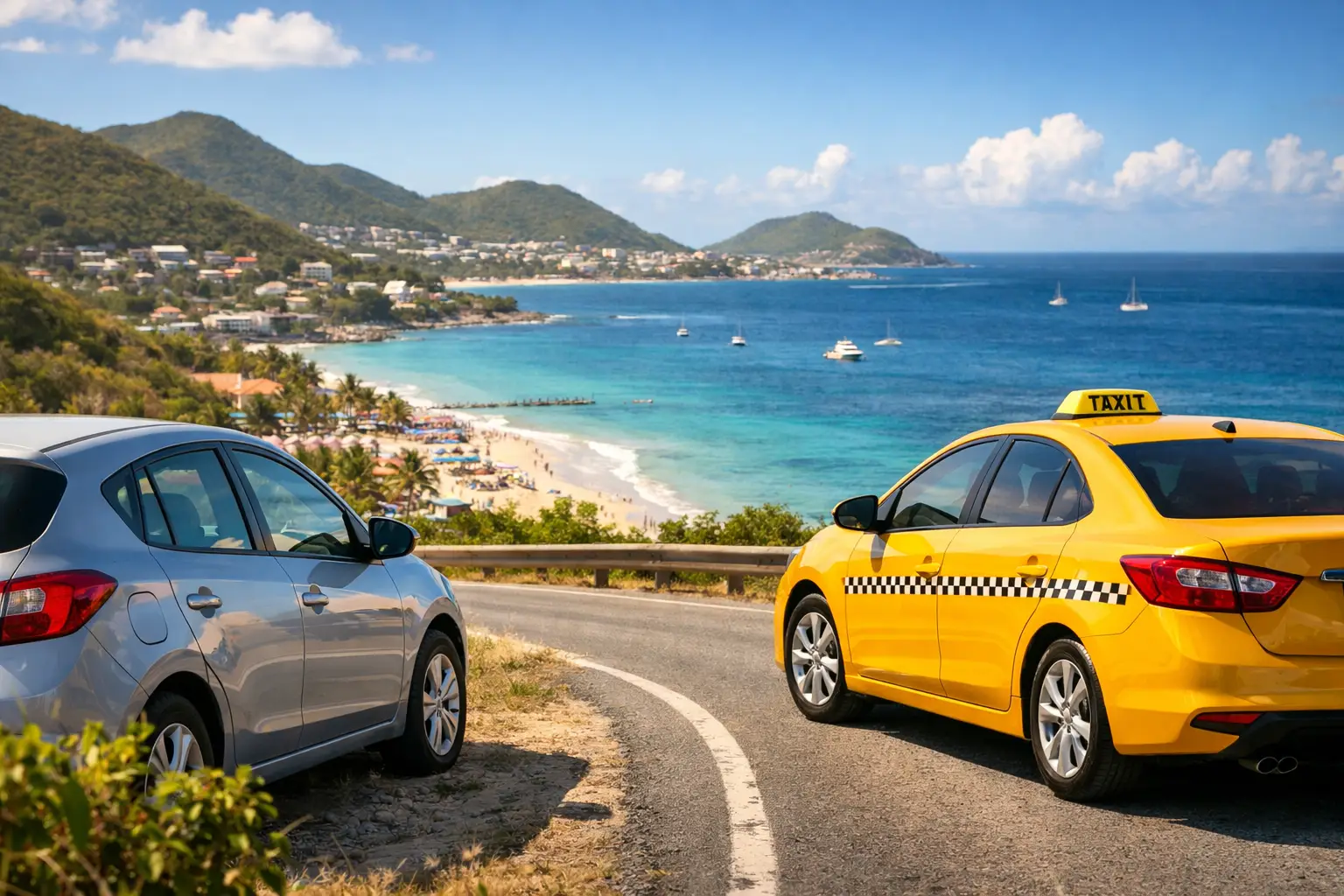
If you land at Princess Juliana Airport with a hotel transfer, two beach plans, and dinner across the island, local car rental versus taxi costs St Maarten becomes a real budget question fast. What looks simpler at arrival can become much more expensive by day two, especially if you want the freedom to move around on your own schedule.

For many visitors, taxis feel like the easy choice at first. You walk out, get in, and go. No paperwork, no parking to think about, no need to learn the roads right away. But St. Maarten and St. Martin are not destinations where most travelers stay in one place all day. People go from the airport to Simpson Bay, then to Maho, then to Philipsburg, then over to the French side for lunch or dinner. Once your trip includes more than a couple of rides, the math changes.

Local car rental versus taxi costs St Maarten travelers should compare

The biggest mistake travelers make is comparing only the airport ride. A taxi may seem reasonable if you are thinking about one trip from the airport to your hotel. But most vacations involve much more than that.

A rental car is usually a daily fixed cost. A taxi is a per-trip cost. That means taxis often work best for short stays, travelers who plan to stay mostly at one resort, or visitors who only need one or two simple rides a day. A rental car tends to make more financial sense for people who want flexibility, plan to explore both sides of the island, or are traveling as a couple, family, or group.

For example, imagine a couple taking a taxi from the airport to their hotel, then heading to dinner, then to a beach the next morning, then back to the hotel, and later out again for the evening. Even without exact fare charts, it is easy to see how several separate rides per day can add up quickly. A rental car, by contrast, stays the same whether you make two trips or ten.

That difference matters even more when you are not traveling solo. A taxi fare may cover the vehicle, but repeated rides for multiple people still add up over several days. With a rental car, the daily cost is shared across everyone in the vehicle, which can make it feel much lighter per person.

What travelers usually worry about

Most people are not only asking which option is cheaper. They are asking which option will make the trip easier.

First-time visitors often worry about driving somewhere unfamiliar. That is normal. But St. Maarten is a place where many tourists rent cars specifically because it makes the trip less stressful after the first hour or two. Once you know the main areas - airport, Simpson Bay, Maho, Philipsburg, Orient, Grand Case, Marigot - getting around becomes fairly straightforward.

The other common concern is parking. Parking can be tighter in busy areas at peak times, especially near popular beaches, shopping streets, and dinner spots. Still, for many travelers, the trade-off is worth it. Spending a few extra minutes finding a spot can be preferable to waiting for a ride, arranging return transportation, or limiting your plans because taxi costs are stacking up.

Then there is pricing clarity. Visitors often prefer rentals because they know the main cost up front. With honest pricing and no hidden fees, it is easier to plan the transportation part of the vacation. Taxis are convenient, but your total is harder to predict unless you already know exactly how often you will go out.

When taxis make more sense

To be fair, taxis are not a bad choice. They are simply a better fit for certain kinds of trips.

If you are staying one or two nights, spending most of your time at a resort, and only need transportation from the airport plus one dinner outing, a taxi may be the more practical option. The same goes for travelers who do not want to drive at all, or those planning to enjoy nightlife without thinking about the return trip.

Taxis can also work well for business travelers with a tight schedule and very few stops. If your meetings are arranged and your movement is limited, paying per ride may be easier than renting a vehicle you barely use.

This is why the answer is not always rental car. It depends on how you travel. The more active and spread out your plans are, the stronger the case for renting becomes.

Best for first-time visitors

For first-time visitors, a local rental car often gives the best balance of value and control. That may sound surprising, but the island is much easier to enjoy when you do not have to think about arranging each movement one by one.

Want to stop for groceries before checking in? Easy. Want to leave the beach early because it started raining on one side of the island and drive somewhere sunnier? Easy. Want to have dinner in Grand Case after spending the afternoon near Maho? Also easy.

That freedom is hard to put a dollar amount on, but it matters. Vacation time is limited. When you are relying on taxis for every move, you naturally become more selective. You may skip a viewpoint, a restaurant, or a beach because it feels like one more fare. With a rental car, your plans can stay flexible.

The hidden cost is not always money

When people compare local car rental versus taxi costs in St Maarten, they often focus only on the total price. But convenience has value too.

A taxi can save you effort in the moment, but it can cost you spontaneity. You may wait for pickup, coordinate timing, or second-guess whether a short trip is worth the fare. A rental car asks more from you at the start, but then gives you independence for the rest of the trip.

This matters a lot on an island where beach-hopping, restaurant-hopping, and crossing between the Dutch and French sides are part of the experience. You do not want every plan to feel like a transportation decision first.

Good to know before you book

If you are leaning toward a rental, book with a company that is clear about pricing, pickup process, fuel expectations, deposits, and what is included. Dependability matters just as much as rate.

Ask whether airport pickup is simple, whether there are extra charges beyond the quoted rate, and what type of vehicle best suits your plans. A compact or economy car is often enough for couples and solo travelers. Families may prefer a mid-size, full-size, SUV, or van depending on luggage and daily comfort.

This is where local service helps. A company that understands how visitors move around the island can guide you toward the right vehicle instead of pushing you into more car than you need. H & L Car Rental, for example, focuses on straightforward service and transparent pricing, which is exactly what most travelers are looking for after a flight.

Local tip

If your hotel is in a busy area and you plan to stay close by for a day or two, you do not have to use the car constantly to make the rental worthwhile. Even using it for selected beach days, shopping runs, and one cross-island dinner can still beat multiple taxi fares.

Another smart approach is to think in trip clusters. If one day includes breakfast out, a beach, lunch, shopping, and dinner in different areas, that is usually a strong rental-car day. If another day is mostly poolside at the hotel, the car simply gives you backup options.

So which is the better value?

For most visitors staying more than a couple of days, a local rental car offers better overall value than relying on taxis for every outing. Not because taxis are wrong, but because St. Maarten rewards flexibility. The island is more enjoyable when you can move easily, change your plans, and explore at your own pace.

If your trip is short, simple, and centered on one area, taxis may be enough. If your vacation includes beaches, restaurants, sightseeing, shopping, and time on both sides of the island, renting is usually the smarter financial choice and the easier travel choice.

The best transportation option is the one that fits how you actually vacation, not just how you arrive. A little planning before you book can save money, reduce friction, and give you more room to enjoy the island the way you want to see it.

What to Check Before Booking a Car Rental in St. Maarten

What to Check Before Booking a Car Rental in St. Maarten

You notice the difference almost as soon as you land. On an island like this, your plans can change quickly - one beach in the morning, lunch on the French side, sunset back near Simpson Bay. That is exactly why travelers often ask what to check before booking a car rental in St. Maarten. A good booking can make the trip feel easy. A rushed one can leave you dealing with extra fees, the wrong vehicle, or pickup confusion right after your flight.

What travelers usually worry about

Most people are not worried about the car itself at first. They are worried about surprises. Will the final price be higher than the quote? Will the car fit luggage and passengers comfortably? Is pickup actually close to the airport, or does it involve extra waiting? Those are smart questions, especially for first-time visitors.

In St. Maarten, convenience matters more than many travelers expect. Roads are manageable, but traffic can build in busy areas and parking can vary depending on where you go. If your rental process is clear from the start, the rest of your trip usually goes much more smoothly.

The first thing to check is the full price, not just the headline rate. A low daily rate can look great until you realize it does not include taxes, insurance options, deposit terms, or added driver fees. Honest pricing matters because it tells you what kind of rental experience you are likely to have. If the charges are hard to understand before booking, they usually do not get easier later.

Good to know before you book a car rental in St. Maarten

Look closely at the pickup and return process. If you are arriving at Princess Juliana International Airport, you want to know exactly where to go, how long pickup takes, and what happens if your flight is delayed. On travel day, simple logistics matter more than sales language.

Check the fuel policy too. Some companies ask you to return the car with the same fuel level, while others use different arrangements. Neither is automatically bad, but it should be clear before you confirm. Ambiguity here often leads to avoidable charges.

You should also review the mileage policy, although many visitors assume all island rentals are unlimited. That is often true, but not always. Even on a relatively small island, people drive more than they expect once they start exploring beaches, restaurants, shopping areas, and scenic stops across both the Dutch and French sides.

Another detail worth checking is the deposit or hold placed on your card. Some travelers only focus on the rental total and forget to ask how much will be temporarily held at pickup. That can affect your available travel budget more than expected, especially for families or longer stays.

What to ask before confirming

Before you lock in the reservation, ask what is included and what is optional. That applies most of all to insurance. Some travelers rely on credit card coverage, some prefer local coverage for peace of mind, and some are not sure what they already have. There is no one-size-fits-all answer, but you do want the rental company to explain it clearly.

Ask about roadside assistance, windshield or tire coverage, and what happens if you have a minor issue during the rental period. Island driving is generally straightforward, but things like curb damage, tire trouble, or a drained battery can happen anywhere. Clear support matters just as much as the vehicle itself.

It is also worth asking whether the reserved car category is guaranteed or whether you are booking a type rather than a specific model. That is standard in the rental industry, but it helps to know what level of flexibility to expect. If you need space for strollers, beach gear, or multiple suitcases, the category matters a lot.

Best for first-time visitors

If this is your first trip, do not overcomplicate the decision. The best rental is usually the one that fits your actual trip, not the one that sounds most adventurous. A couple staying near Simpson Bay with light luggage may be perfectly comfortable in an economy or compact car. A family changing hotels or planning full island days may be much happier in a mid-size car, full-size car, SUV, or van.

First-time visitors should pay attention to luggage space more than they think. A car may seat five adults on paper, but once suitcases are added, the fit can become tight fast. This is especially true if you are arriving with beach gear, baby items, or shopping plans.

You should also think honestly about driving confidence. Most roads used by visitors are not difficult, but some areas are busier, parking spaces can be snug, and local traffic flow may feel different if you are used to wide mainland roads. If a slightly larger, more comfortable vehicle helps you feel more relaxed, that can be worth it. On the other hand, a smaller car is often easier to park and more budget-friendly. It depends on your priorities.

What type of car is best for St. Maarten?

There is no single best answer because travel style matters. Economy and compact cars are a strong choice for couples, solo travelers, and visitors who want easy parking and good value. They work well when you are packing light and staying in areas with easy access to beaches, dining, and nightlife.

Mid-size and full-size cars are often the sweet spot for travelers who want more room without moving into a larger SUV. They can be especially practical for small families or business travelers carrying more than a few bags.

SUVs and Jeeps appeal to travelers who want a higher seating position, more interior space, or extra comfort for day trips around the island. A van makes sense for larger groups, multigenerational travel, or anyone trying to keep everyone in one vehicle instead of splitting up.

Do you need an SUV in St. Maarten? Usually no, but sometimes yes. You do not need one simply to get around the island. Still, if your group is larger, your luggage is bulky, or you value extra cabin space, an SUV can make the trip more comfortable.

Local tip: book for your itinerary, not just your budget

One of the most common mistakes is booking the cheapest category and assuming it will be fine for everything. That works until you are loading in airport luggage, then driving to a hotel, then heading out again for dinner and beaches with very little personal space left.

A better approach is to match the vehicle to your real itinerary. If you are staying put most of the time and only taking short drives, smaller is often perfect. If you plan to move around constantly, cross the island often, or travel with family, comfort becomes more valuable than the smallest daily rate.

This is also where local service makes a difference. A company that knows typical visitor patterns can help you choose a practical vehicle instead of upselling you into something unnecessary. That traveler-first approach is one reason many visitors appreciate working with dependable local providers like H & L Car Rental.

When to book early

Booking early matters most during peak travel periods, holiday weeks, and busy event windows. The issue is not only availability. It is also selection. If you wait too long, you may still find a car, but not the size or category that actually fits your group.

Early booking is especially helpful if you need a van, SUV, or a specific type of family-friendly vehicle. Larger vehicles usually go first because there are fewer of them in any fleet. Travelers arriving on popular flight schedules should also book ahead if they want a smoother airport pickup experience.

If your dates are flexible, check cancellation terms before reserving. A reasonable cancellation policy gives you breathing room while still letting you secure the vehicle you want. That combination is often better than waiting and hoping prices stay low.

Final checks that save headaches later

Before you submit payment details, review the driver's license requirements, minimum age policy, and whether additional drivers must be listed in advance. These points seem small until they affect pickup.

Take a moment to confirm business hours too, especially if your arrival is late in the day. If your flight lands behind schedule, you want to know how after-hours arrivals are handled. The best rental experiences are usually the ones where expectations are clear before the plane even takes off.

And finally, read the confirmation carefully. Make sure dates, times, airport details, vehicle category, and contact information are all correct. That last two-minute check can prevent the kind of travel-day stress no one wants to start a vacation with.

A rental car should give you freedom, not extra work. If the pricing is transparent, the pickup process is clear, and the vehicle fits the way you actually travel, you are much more likely to enjoy the island at your own pace from the moment you arrive.