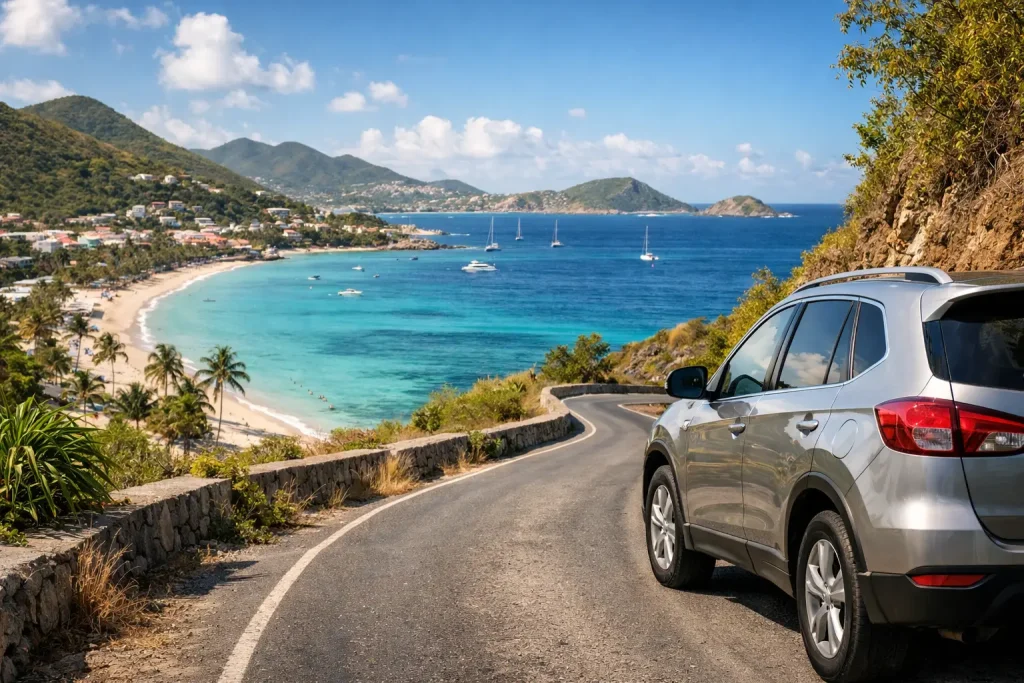
The island gets busy in the places everyone sees first: the airport area, Simpson Bay, Philipsburg, and the road toward popular beaches. But a slow travel guide to exploring St. Maarten by car starts with a different idea: choose less in a day, stay longer at each stop, and let the drive be part of the vacation.
Having your own rental car gives you that freedom. You can leave the beach before the afternoon crowds build, take a scenic detour when the view calls for it, or stop for lunch without watching the clock for a taxi. St. Maarten and St. Martin are compact, but the roads, hills, traffic patterns, and beach parking all reward travelers who give themselves room to slow down.
What slow travel looks like on the island
Slow travel is not about trying to visit every beach in one week. It is about building simple days around one area, with time for a swim, a long lunch, a lookout point, and an unplanned stop along the way.
A good rhythm is one main destination in the morning, a relaxed meal, and one nearby place in the afternoon. For example, spend a morning around Maho and Cupecoy, then drive to Simpson Bay for lunch and sunset. On another day, make Grand Case your main stop, with time to explore the French-side coastline rather than racing back across the island.
This approach also makes driving more pleasant. Rather than treating the car as transportation between a long checklist of attractions, you can travel outside the busiest periods and choose where to linger.
Good to know before you book
The right vehicle depends less on distance and more on the way you plan to travel. Most visitors can comfortably explore the island in an economy, compact, or mid-size car. These are easier to park near beaches, restaurants, and shopping areas, and they are a practical choice for couples or small families traveling light.
An SUV can be a better fit if you are carrying several beach bags, traveling with children, staying in a hillier area, or simply want more room and a higher seating position. A Jeep appeals to travelers who want an open-air island feel, though it is worth thinking about luggage space, sun exposure, and the possibility of passing showers. Larger families and groups are usually more comfortable in a full-size vehicle or van.
You do not need an SUV solely because you are visiting St. Maarten. Main roads connect the island well, and many of the best-known beaches are easy to reach in a standard car. The better question is how much space, comfort, and luggage capacity your trip requires.
When comparing rental options, ask what is included in the quoted rate, how pickup works after landing, what documentation is needed, and what the fuel and return expectations are. Clear answers help you avoid surprises and begin your vacation with confidence. Dependable local rental providers such as H & L Car Rental can also help match the vehicle to your hotel location and group size.
A relaxed three-day route by car
Day one: Settle into the Dutch side
After arriving at Princess Juliana International Airport, keep your first driving day light. Depending on where you are staying, head toward Simpson Bay, Maho, or Pelican Key, check in, and resist the urge to cover the entire island immediately.
Maho Beach is a memorable early stop if you want to see aircraft approaching the runway, but it can become crowded. Visit for a short while, then continue to Cupecoy Beach or a nearby waterfront spot where the pace is quieter. From there, return through Simpson Bay for dinner rather than adding another long drive.
This first day is also the right time to become comfortable with the car, local roundabouts, road signs, and parking. Roads can be narrow in places, and traffic may move more slowly than expected. That is normal. Leave extra time and avoid making your first afternoon a tight schedule.
Day two: Philipsburg and the east coast
Start early for Philipsburg, especially if shopping or the boardwalk is part of your plan. Morning is generally easier for parking and walking before cruise-related activity and midday heat pick up. Park where permitted, keep valuables out of sight, and enjoy the town on foot once you arrive.
After lunch, continue toward the east coast for a change of scenery. Orient Bay on the French side is a natural choice for beach time, while the drive itself offers changing views of hills, bays, and neighborhoods. If you prefer a quieter afternoon, choose one beach and stay there instead of hopping between several.
The trip between the Dutch and French sides is usually straightforward for visitors. There is no routine border checkpoint in the way many US travelers expect, but you should still carry your driver’s license and rental documents. Drive attentively, follow posted rules, and remember that the island has different administrative sides even though it feels like one connected destination.
Day three: Grand Case, Marigot, and a scenic return
Plan a French-side day around Grand Case and Marigot. Grand Case is known for its beach, restaurants, and relaxed village atmosphere. It is a place where slow travel pays off: arrive late morning, enjoy the water, take your time over lunch, and walk before moving on.
Marigot offers a different feel, with waterfront views and a market atmosphere on certain days. Parking may be more limited near the center, so patience matters. If you find a space a short walk away, take it rather than circling repeatedly for the closest possible spot.
On the drive back, leave room for a scenic pause. The road near Cole Bay and Simpson Bay can be busy, particularly later in the day, but the lagoon views are worth enjoying when traffic allows. If sunset is important to you, pick one location and arrive early rather than trying to chase it across the island.
What travelers usually worry about
Is driving easy for tourists?
For most US visitors, yes. Driving is on the right, and the island is manageable once you settle into the pace. The biggest adjustment is not the driving rules - it is allowing for traffic, tight parking areas, hills, and roads that may feel unfamiliar after dark.
Use your navigation app, but do not rely on it blindly. A route that looks quick on a map can take longer during busy times or after rain. Keep your phone charged, know the name of your hotel or villa, and ask your rental provider for practical directions if your accommodation is in a less familiar area.
Is parking difficult in St. Maarten?
It depends on the time and place. Parking can be easy at some beaches and difficult around Philipsburg, Maho, Simpson Bay, and popular restaurant areas during peak hours. The simplest solution is to arrive earlier, accept a short walk, and avoid blocking roads or private driveways.
Do not leave bags, electronics, passports, or beach gear visible in the vehicle. Even in a relaxed destination, basic travel habits matter. Bring only what you need when you park and secure the car every time.
When should you book a rental car?
Book early if you are traveling during holidays, school breaks, major events, or the busiest winter months. Availability for SUVs, Jeeps, vans, and specific vehicle sizes can tighten first. Early booking gives you more choice and more time to compare options based on your actual needs instead of settling for what remains.
Local tip: Plan around the clock, not just the map
A beach that is 20 minutes away in light traffic may take much longer at a busy time. Build your days around early mornings, long midday stops, and relaxed evenings near where you are staying. If you have dinner reservations across the island, leave earlier than your map estimate suggests.
The same principle applies to weather. Tropical showers can be brief, but roads may become slick and views can change quickly. A slower itinerary gives you flexibility to wait out a shower over lunch or switch beach plans without feeling that the day is lost.
Your rental car is most valuable when it removes pressure. Pick a vehicle that fits your people and luggage, keep your plans comfortably loose, and give each part of the island time to make an impression. The best St. Maarten days are often the ones with enough space for one more swim, one more view, or one more stop you did not plan.