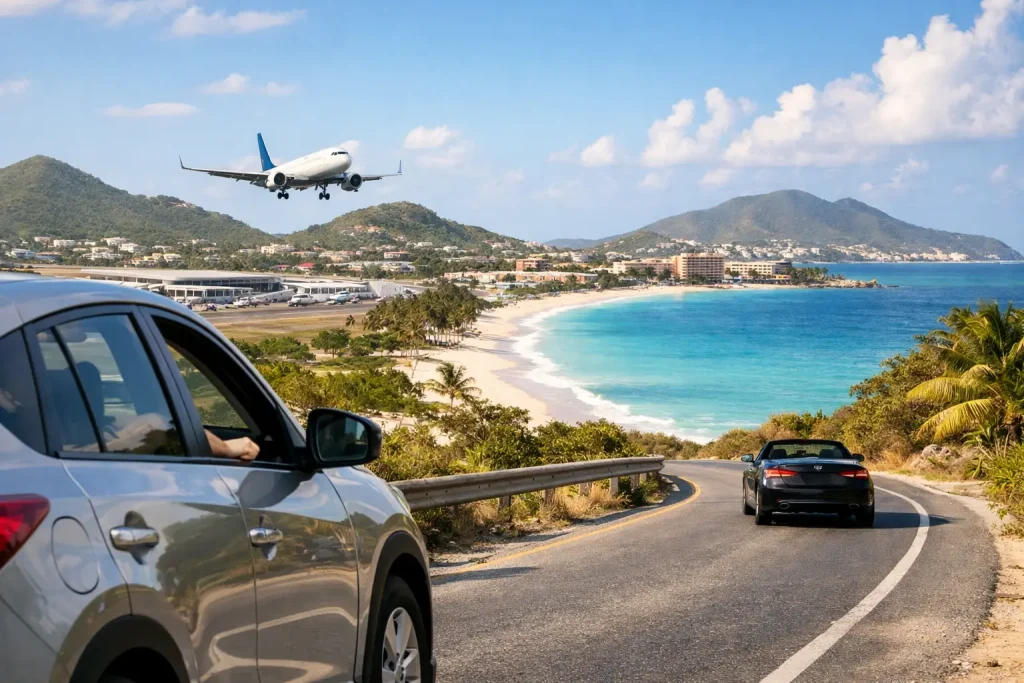
The first decision after landing is often the one that shapes the whole vacation: how will you get from the airport to the hotel, then from the hotel to the beaches, restaurants, shops, and viewpoints you came to see? From Princess Juliana Airport to your hotel, getting around St. Maarten by rental car gives you the freedom to set your own pace from day one.
Whether you are staying near Maho, Simpson Bay, Cupecoy, Philipsburg, Orient Bay, Grand Case, or farther north on the French side, a rental car can make your arrival feel much less complicated. You can collect your luggage, pick up your vehicle, and head out without waiting for a shared transfer or planning every outing around taxi availability.
What travelers usually worry about after landing
First-time visitors commonly wonder whether the island is difficult to drive, whether roads are easy to follow, and whether they need a large vehicle. The reassuring answer is that many visitors drive comfortably here, especially when they take the first day slowly and allow extra time around busier areas.
Princess Juliana International Airport is on the Dutch side of the island, close to Maho and Simpson Bay. Depending on traffic and your hotel location, the drive may be short, but island driving is not always about mileage. Roads can narrow, roundabouts can be busy, and traffic may build near popular beaches, bridges, and shopping areas. A relaxed approach matters more than trying to rush.
If you arrive during a busy afternoon, give yourself a little breathing room before making dinner reservations or booking an activity. That way, your first drive is simply about settling in, not watching the clock.
From Princess Juliana Airport to your hotel by rental car
For hotels in Maho, Cupecoy, Simpson Bay, Beacon Hill, or Pelican Key, the trip from the airport is generally straightforward. These areas are close by, but traffic around the airport and the Maho area can move slowly at popular times. This is normal, particularly when visitors are stopping near the beach to watch planes land.
For a stay in Cole Bay, Porto Cupecoy, or the wider Simpson Bay area, having your own car is especially useful. These neighborhoods have plenty of dining, grocery stores, marinas, beaches, and nightlife, but they are spread out enough that walking everywhere may not be realistic in the heat.
If your hotel is in Philipsburg, allow more time than the map may suggest. The route is manageable, but traffic can increase when cruise visitors are in town or when roads are busy around Great Bay. A rental car still gives you more flexibility than a one-way transfer because you will have transportation ready for the rest of your stay.
Heading to the French side, such as Orient Bay, Grand Case, Anse Marcel, or Marigot? You can drive across the border without a formal checkpoint. The island is shared by Sint Maarten and Saint-Martin, and visitors move between the Dutch and French sides regularly. Road conditions, signs, and driving style can vary a little by area, so use a navigation app, stay alert, and enjoy the scenery rather than treating the drive like a race.
Best for first-time visitors
A rental car is a particularly good fit for travelers who want more than one beach day at the same resort. St. Maarten and St. Martin are compact enough for easy day trips, yet varied enough that you will likely want to explore both sides of the island.
One morning can start with coffee in Simpson Bay, continue with time at Mullet Bay or Maho Beach, and end with dinner in Grand Case. Another day might include shopping in Philipsburg, a stop at a lookout point, and a quiet sunset near Cupecoy. With a car, you do not have to choose just one zone of the island for the entire day.
It is also practical for families carrying beach bags, strollers, snorkeling gear, or groceries. Couples often enjoy it for the freedom to try restaurants outside their hotel area. For business travelers, it can make getting between the airport, meetings, and accommodations more predictable.
That said, a rental car may be less essential if you plan to stay at one all-inclusive resort and expect to spend nearly all your time there. In that case, taxis for a few outings may be enough. It depends on how independently you want to explore.
Good to know before you book
Vehicles drive on the right side of the road. Most visitors from the United States find this familiar, but the pace can feel different from driving at home. Be prepared for roundabouts, occasional steep or narrow roads, and drivers who may stop unexpectedly or pull in and out of roadside businesses.
Keep your seat belt on, avoid using your phone while driving, and never drink and drive. Roads are generally easiest to handle in daylight, especially on your first trip to an unfamiliar part of the island. At night, use extra care on less-developed roads where lighting may be limited.
Before confirming a rental, make sure you understand the pickup process, insurance options, fuel policy, deposit requirements, and what is included in the quoted rate. Transparent pricing matters after a long flight. You should know what you are paying for before you arrive, not discover added surprises at the counter.
At H & L Car Rental, travelers can choose from economy and compact cars through SUVs, Jeeps, and vans, allowing the vehicle to match the trip rather than paying for more car than needed.
Best car type for this route
For most couples and solo travelers, an economy or compact car is an easy choice. It is simple to park, fuel-efficient, and suitable for airport-to-hotel driving as well as everyday beach hopping. A mid-size or full-size car may be more comfortable for travelers with several suitcases or those who prefer a little extra room on longer days out.
An SUV can be a good choice for families, groups with beach equipment, or visitors who want a higher seating position and more cargo space. It is not required for the standard drive from the airport to most hotels, but it can be helpful if comfort and luggage capacity are priorities.
A Jeep may appeal to travelers who plan to explore more scenic, less-developed areas, while a van makes sense when a larger family or group wants to travel together. The best vehicle is not necessarily the biggest one. It is the one that fits your passengers, bags, and parking comfort.
Parking, traffic, and timing
Parking is usually manageable, but popular places require patience. Philipsburg can be busy during cruise ship days, while Maho, Simpson Bay, and beach access points may fill up around lunch and sunset. When you see a legal parking space near a popular stop, it is often worth taking it instead of assuming a closer one will open up.
Do not block driveways, park where signs prohibit it, or leave valuables visible in the vehicle. For beach days, bring only what you need and keep personal items out of sight. These simple habits go a long way toward a more relaxed outing.
Traffic is often heaviest around the airport corridor, Simpson Bay, Cole Bay, and Philipsburg. If you have a dinner reservation or a scheduled excursion, leave early. On an island, a 20-minute drive can become longer when traffic builds, especially after rain or during peak visitor periods.
Local tip: plan your first stop
Rather than driving directly into a full day of sightseeing after landing, make your first stop your hotel or a nearby grocery store. Get checked in, cool off, put away your bags, and get familiar with your vehicle. Then take a short drive close to your accommodation for dinner or sunset.
This small adjustment helps first-time visitors gain confidence before planning a longer cross-island day. By the next morning, the roads, roundabouts, and local traffic flow will already feel more familiar.
A rental car is not just transportation from Princess Juliana Airport to your hotel. It is the option to take the scenic turn, stay for one more swim, and make the island feel like your own for the week.