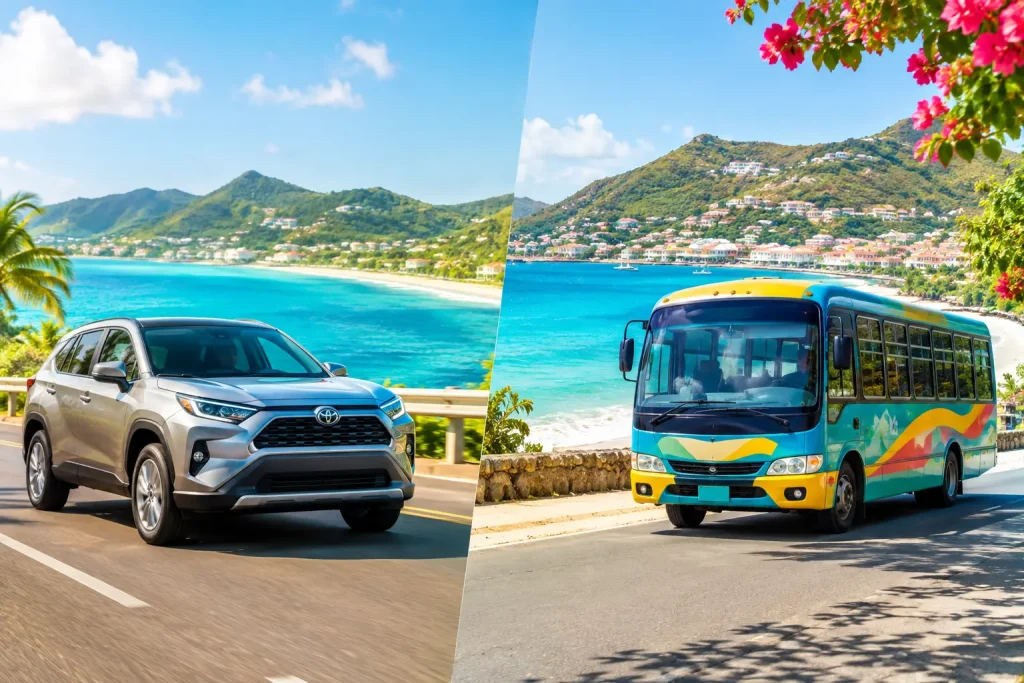
A beach day can look very different depending on how you get there. With a rental car versus island bus in St. Maarten, the real question is not simply which option costs less. It is whether you want your vacation days shaped around fixed routes and waiting times, or around your own plans.
The island bus system is a useful, local, budget-friendly way to travel along major roads. A rental car gives you more room, more privacy, and more control over where the day goes next. Neither is automatically right for every traveler. Your hotel location, group size, luggage, comfort with driving, and wish to explore both sides of the island should guide the decision.
Rental car versus island bus: the practical difference
For visitors staying near a main road in Simpson Bay, Maho, Philipsburg, or Marigot, island buses can cover some common trips. They generally operate as privately run minibuses and vans, with destination signs displayed in the windshield. You can often flag one down along its route, then pay a small fare when you get off.
That flexibility comes with a trade-off. Service is not built around a detailed, guaranteed tourist timetable. Buses may be frequent in busy areas and less convenient once you are headed toward quieter beaches, hillside accommodations, dinner reservations, or an early morning activity. You may also need to change buses or walk the last portion of the trip.
A rental car turns several separate outings into one easy day. You can leave your hotel early for Maho Beach, continue to a beach on the French side, stop for lunch in Grand Case, and return when you are ready. There is no need to carry beach gear on your lap or rush to catch transportation after sunset.
For many travelers, the convenience starts right after landing. Picking up a reserved vehicle near Princess Juliana International Airport means you can load your luggage once and head directly to your accommodations. That is especially helpful after a long flight, when waiting outside with children or multiple bags is not how most people want to begin a vacation.
When the island bus makes sense
The bus can be a smart choice for travelers with a simple plan. If you are staying at a resort, expect to spend most days on-site or nearby, and only want an occasional trip into town, you may not need a vehicle for the entire stay.
It also works well for solo travelers who enjoy a more local style of travel and are comfortable allowing extra time. A short ride into Philipsburg for shopping, or a casual daytime trip between busier beach areas, can be straightforward when you are not working around a strict schedule.
The bus is less appealing when your day includes several stops. A family hoping to visit a grocery store, pick up snacks, spend time at two beaches, and go out for dinner may find that low per-person fares add up in time and effort. The same applies to couples planning evening dining beyond walking distance from their hotel.
One practical point: buses are not designed as luggage transport. If you are arriving with large suitcases, a stroller, golf equipment, or a stack of beach supplies, arranging a rental car or airport transfer is usually much easier.
What travelers usually worry about
Is driving difficult for visitors?
Most visitors find driving manageable once they adjust to the island's pace. Traffic can be busy around Simpson Bay, Cole Bay, Philipsburg, and Marigot, particularly during peak arrival times and late afternoons. Roads can be narrow in some areas, and hills or sharp turns require attention, but visitors who drive calmly and follow local traffic conditions can get around comfortably.
The key is to avoid trying to fit too much into one day. Leave extra time between beach plans, meals, and activities. Island distances may look short on a map, but traffic, roadwork, and parking searches can extend the journey.
Is parking difficult?
Parking is usually manageable, but it is not equally easy everywhere. Popular beaches, central Philipsburg, and busy restaurant districts can fill up at the most popular times. Arriving earlier for a beach day and being willing to walk a few minutes can make a big difference.
A smaller car is often easier to park and navigate than a large vehicle. Couples and small families do not always need an SUV simply because they are on an island vacation. An economy or compact car can be a comfortable, practical fit when luggage is limited and most driving is on paved roads.
What about driving between the Dutch and French sides?
One of the strongest reasons to rent is the freedom to experience both Sint Maarten and Saint-Martin without turning each outing into a transportation project. The island is shared by the Dutch and French sides, and visitors regularly travel between them. A car makes it easier to enjoy different beaches, markets, restaurants, and viewpoints in one trip.
Bring your driver's license, keep the rental documents in the vehicle, and ask your rental company about any coverage details that apply to cross-island driving. Clear information before pickup is part of a dependable rental experience.
When a rental car is worth the added cost
A rental car is often the better value when its cost is shared. Two, three, or four travelers using buses and occasional taxis may discover that a compact or mid-size vehicle offers better daily flexibility for a reasonable difference in price.
It is particularly worthwhile for families, groups, and travelers staying in villas or accommodations away from the main road. Grocery trips, beach chairs, coolers, snorkeling gear, and tired children all change the transportation equation. Having a vehicle nearby means you can leave when someone is ready, rather than when transportation appears.
A car also gives you a reliable answer to the evening question: how do we get back? Buses may be a daytime option on active routes, but visitors going to dinner in Grand Case, enjoying nightlife in Simpson Bay, or catching a sunset from a quieter location usually prefer the certainty of their own transportation. Of course, anyone planning to drink should arrange a safe, sober driver or use a taxi instead.
Best car type for your plans
Choose the smallest vehicle that comfortably fits your people and bags. An economy or compact car suits couples and light packers who want easy parking and efficient island driving. A mid-size or full-size car gives a family more passenger and trunk space for beach days.
SUVs are useful for groups carrying more gear, travelers staying on steeper roads, or anyone who simply wants a higher seating position. Jeeps can be a fun option for open-air island exploring, while vans make sense when several people would otherwise need separate transportation.
The best choice is not necessarily the largest vehicle available. A vehicle that fits your hotel parking area, luggage needs, and driving comfort will make the trip easier from the first day.
Good to know before you book
Book early if you are traveling during holiday weeks, school breaks, major events, or peak winter season. The most popular vehicle categories, especially compact cars, SUVs, and vans, can be reserved well in advance.
Before confirming, ask what is included in the quoted rate, how airport pickup works, what the fuel policy is, and whether there are any deposits or additional driver requirements. Transparent answers matter. A lower-looking rate is only useful if you understand the full cost and terms before arrival.
H & L Car Rental focuses on straightforward vehicle choices and clear pricing, so travelers can select a car based on their actual plans rather than sorting out surprises at the counter.
A simple way to choose
Choose the island bus if you are staying close to the action, traveling light, have a relaxed schedule, and do not mind walking or waiting from time to time. Choose a rental car if you want to see more than one area, travel with family or friends, carry beach equipment, eat out in the evenings, or simply keep your vacation on your own clock.
The island is best enjoyed with room for an unplanned stop: a roadside viewpoint, a quiet beach, a bakery you spot on the way, or one more swim before dinner. Pick the transportation that gives your trip the kind of freedom you came here to enjoy.