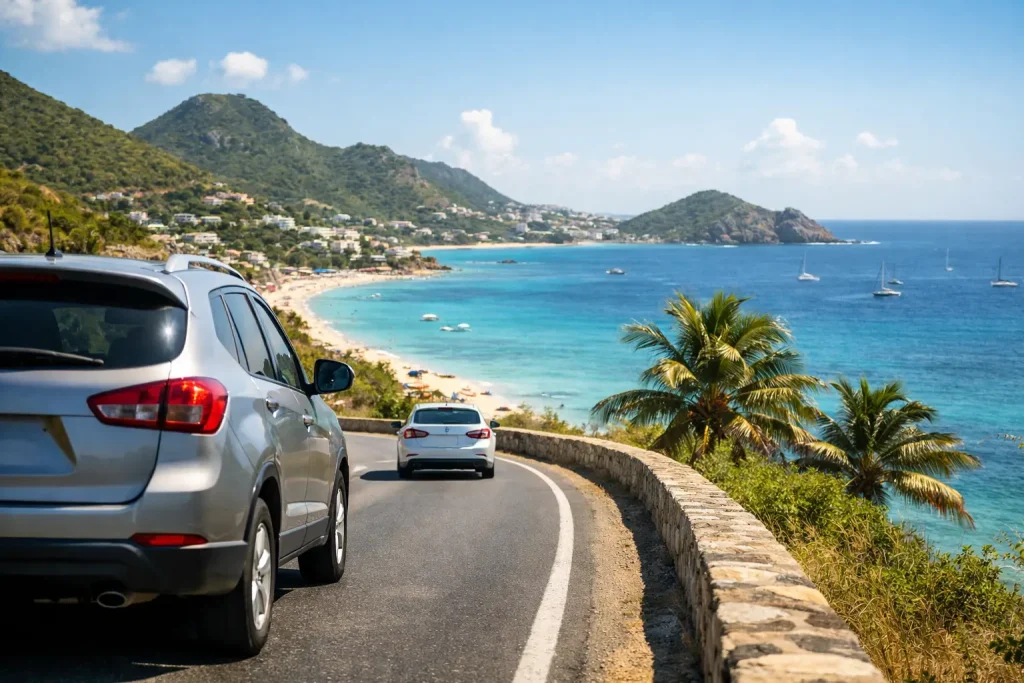
The first roundabout after leaving the airport can feel like a lot when you are adjusting to a new car, unfamiliar signs, and island traffic all at once. The good news is that SXM driving rules are straightforward for visitors who take their time, watch the road, and let the local pace guide them. A rental car gives you the freedom to move between beaches, restaurants, resorts, and both sides of the island, but a few practical habits make that freedom much more enjoyable.
SXM Driving Rules Start With the Basics
Traffic drives on the right side of the road throughout both Sint Maarten and Saint-Martin. If you are visiting from the United States, that part will feel familiar. Road layouts, however, can be tighter, hillier, and busier than you may expect from looking at a map.
Seat belts should be worn by everyone in the vehicle. Keep your attention on the road and avoid handling your phone while driving. This is especially important around Simpson Bay, Cole Bay, Philipsburg, Maho, and Marigot, where traffic, pedestrians, scooters, parked cars, and turning vehicles can all share limited space.
Never assume another driver will move quickly just because the light has changed or the road is clear ahead. Island driving is often patient and practical. Give people room to merge, expect occasional slowdowns, and do not make rushed decisions near busy intersections.
Speed limits are posted in kilometers per hour, not miles per hour. This is one of the easiest details for American visitors to overlook. A speed limit of 50 km/h is roughly 31 mph, so check your dashboard and road signs before settling into your route. Limits can change between town areas and more open roads, and posted signs should always be your guide.
Roundabouts, Intersections, and Right of Way
Roundabouts are common on the island and help keep traffic moving where several roads meet. Slow down as you approach, look for traffic already circulating, and yield before entering. Use your turn signal as you exit whenever possible. It is a small courtesy that helps drivers behind you understand where you are headed.
Not every intersection feels as formal as one back home. You may come across roads where sightlines are short, markings are faded, or vehicles are parked close to a corner. Treat these areas carefully. Ease forward, look twice for scooters and motorcycles, and do not assume a clear lane means there is no one coming around the bend.
Local drivers know the roads well and may move with more confidence than a first-time visitor. There is no need to match that pace. Staying calm, using your signals, and choosing the safer gap is always the better call.
What travelers usually worry about
Most visitors are less concerned about the rules themselves than about traffic congestion and unfamiliar roads. The busiest periods often occur around morning and late-afternoon commuting times, particularly between Simpson Bay, Cole Bay, and Philipsburg. A route that looks short can take longer when traffic builds, so leave extra time for dinner reservations, airport returns, or a planned beach stop.
The island is compact, but that does not mean every drive is quick. Roads may narrow through neighborhoods, climb into the hills, or slow behind delivery trucks and buses. Build your day around a few nearby stops instead of trying to cross the island several times. You will spend less time in traffic and have more time to enjoy where you are.
Parking Rules and Smart Parking Habits
Parking can be easy at beaches, restaurants, and many hotels, but it becomes more competitive in popular areas such as Philipsburg, Marigot, Maho, and Simpson Bay. If you see a legal space that gives you enough room to park safely, it is often worth taking it rather than circling for a closer option.
Pay attention to signs, painted curbs, marked loading areas, and private lots. Do not block driveways, narrow streets, intersections, or another vehicle's path. Parking too tightly on a busy road can turn a simple stop into an obstacle for everyone else.
When you park near a beach or shopping area, lock the vehicle and keep bags, phones, passports, and other valuables out of sight. This is sensible travel practice anywhere, but it is especially helpful when your rental car makes it obvious that you are carrying vacation gear.
Local tip
For a day in Philipsburg, arrive earlier rather than hoping to find convenient parking at midday. Park once, then walk the boardwalk, Front Street, and nearby shops at an easy pace. It is usually far more relaxing than repeatedly moving the car between short stops.
Driving From the Dutch Side to the French Side
One of the best parts of renting a car is being able to explore both sides of the island in one trip. The border between Sint Maarten and Saint-Martin is generally easy to cross, and visitors typically do not encounter a traditional border checkpoint during normal travel. Still, you are entering a different jurisdiction, so drive attentively and respect the signs where you are.
Carry your driver's license and rental documents in the vehicle. Before confirming a rental, make sure the company permits travel on both the Dutch and French sides and that the vehicle has the required insurance coverage. This is a simple question that can prevent an unnecessary problem later in your vacation.
French-side roads can feel quieter in some areas, but do not let that encourage faster driving. The routes toward Grand Case, Orient Bay, and the island's northern beaches include curves, village traffic, pedestrians, and scenic stretches where it is easy to get distracted. Pull over safely if you want to admire the view or take photos.
Weather, Hills, and Road Conditions
A bright morning can turn into a heavy tropical shower with little warning. When rain arrives, reduce your speed, leave more following distance, and avoid sudden braking. Roads can become slick, and standing water may hide uneven pavement or potholes.
Some of the most beautiful areas are reached by hilly roads with sharp curves. Keep both hands on the wheel, take corners slowly, and avoid stopping in a blind bend. An economy or compact car is suitable for many island itineraries, while an SUV or Jeep can be a comfortable choice for families, travelers carrying beach gear, or guests planning to explore hillier routes. The best car depends less on the distance and more on your group size, luggage, and preferred level of comfort.
At night, use extra caution outside the busiest areas. Street lighting can vary, rain can reduce visibility, and road edges may be harder to see. If you are unfamiliar with a route, driving it during daylight first is often the easier option.
Good to Know Before You Book
A valid driver's license from home is generally the key document visitors need to drive, but rental requirements can vary by company, driver age, and vehicle category. Ask about the security deposit, fuel policy, coverage, additional-driver rules, and the procedure for roadside assistance before you confirm. Clear answers matter more than a low advertised rate that comes with surprises at pickup.
Choose a vehicle that fits the reality of your trip. Couples traveling light may appreciate the ease of a compact car in busy parking areas. Families often benefit from an SUV with room for suitcases, strollers, and coolers. Groups should consider a van rather than trying to split across multiple cars or squeeze into a vehicle with too little luggage space.
H & L Car Rental helps travelers choose from practical economy cars to larger SUVs and vans, with straightforward rental information designed to make arrival easier. Booking early is especially wise for holiday periods, school breaks, and major island events, when popular vehicle categories can sell out.
A Safer, More Relaxed Way to See the Island
The best island drives are not rushed. Leave a little early, keep your phone charged for navigation, carry water, and give yourself permission to change plans if traffic or weather shifts. Follow the signs, be courteous at roundabouts, and park with care. With those habits in place, your rental car becomes less about getting from point A to point B and more about having the freedom to stop when the beach, viewpoint, or lunch spot looks too good to pass up.