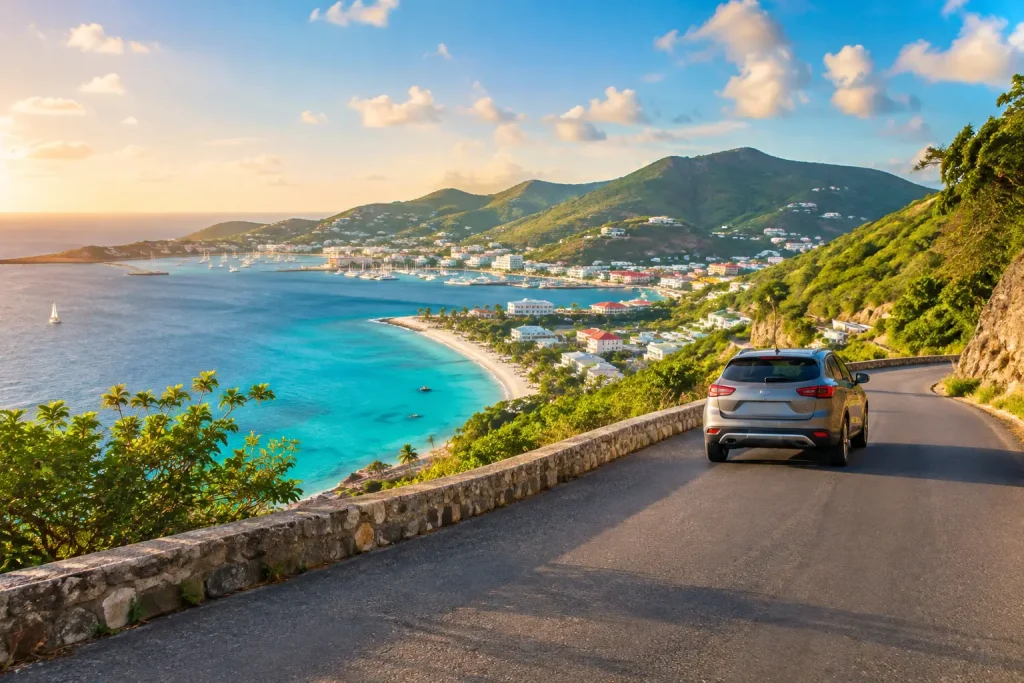
A beach day can begin with a view from a hillside road, but managing steep island hills takes a little more attention than driving on flat vacation roads. In St. Maarten and St. Martin, a short distance on the map can include sharp bends, changing grades, narrow lanes, and traffic that moves at a relaxed but unpredictable island pace. With the right vehicle and a calm approach, those roads can be one of the best parts of exploring beyond the resort area.
What travelers usually worry about
Most visitors are not concerned about the main roads near the airport, Simpson Bay, or Philipsburg. The questions tend to come up when a hotel, villa, beach, or restaurant sits above the coast. Will a small rental car make it up the hill? Is an SUV necessary? What happens if another vehicle comes downhill on a narrow curve?
The reassuring answer is that many visitors drive the island comfortably in standard cars. A steep route does not automatically require a large SUV. What matters more is choosing a vehicle that fits the number of passengers and luggage, then driving it within its limits. A compact or midsize car can be a practical choice for a couple traveling light, while an SUV may offer more confidence and space for families, groups, or travelers staying in a hillside villa.
Road conditions also vary. Some routes are broad and paved, while others are tighter, more winding, or affected by rain, runoff, and roadside parking. Leave extra time rather than trying to make up minutes on a steep section. The island is best enjoyed at a pace that gives you time to read the road.
Managing steep island hills with confidence
Before you start up a grade, look farther ahead than usual. Watch for curves, pedestrians, scooters, parked cars, and vehicles coming down the hill. Keep a safe following distance so you do not have to stop suddenly behind another vehicle on an incline.
Build gentle momentum before the steepest part of a climb, but do not accelerate aggressively. Smooth throttle input gives the tires better grip and makes the ride more comfortable for everyone in the car. If your automatic vehicle has lower gear settings, use them when a long, steep climb or descent calls for more control. Your rental agent can explain the controls for your specific vehicle before you leave.
On the way down, avoid riding the brakes continuously. Instead, slow down early before turns and use a lower gear when available to help control your speed. Braking hard in the middle of a curve can unsettle the vehicle, particularly after rain when pavement may be slick. Never coast downhill in neutral.
If you need to stop on a hill, keep your foot firmly on the brake and leave enough room from the vehicle ahead. When moving again, release the brake gradually while applying light acceleration. There is no prize for a fast hill start. A steady, controlled move is safer and easier on the vehicle.
Take curves slower than they look
Island curves can feel sharper from behind the wheel than they appear in map directions. Enter bends slowly, stay in your lane, and resist the urge to cut across the center of the road for a better view. Larger vehicles, delivery vans, and taxis may need more room around tight corners.
Be especially alert on blind bends. A horn may be used as a brief courtesy signal on a very narrow curve, but it is not a substitute for slowing down and staying positioned correctly. If the road becomes too tight for two vehicles to pass easily, patience matters more than right-of-way assumptions. Let the situation develop, make eye contact when possible, and use a safe pull-off area if one is available.
Best car type for hillside routes
For many vacation plans, an economy, compact, or midsize rental car is enough. These vehicles are easier to park and can be more convenient on narrow streets. They are a good fit for two travelers, light packing, and an itinerary built around established roads and beach areas.
An SUV can make sense when you have four or more passengers, several suitcases, child seats, beach gear, or accommodations reached by a particularly steep driveway. The higher seating position may improve visibility, and the extra power can feel reassuring on climbs. Still, a larger vehicle also needs more space in small parking areas and on narrow roads. Bigger is not always better.
Jeeps are popular for travelers who want an open-air island experience, but choose one for the style and seating needs rather than assuming it is necessary for every hill. Vans work well for groups, although their size requires extra care on tight turns and when parking.
When booking, consider the whole trip: your hotel location, passenger count, luggage, likely beach gear, and how comfortable you are driving a larger vehicle. H & L Car Rental can help match a vehicle category to those real travel details, with clear pricing and no need to pay for more vehicle than your plans require.
Good to know before you book
Ask whether your accommodation has a steep driveway, limited turning space, or parking that requires backing up an incline. Villa hosts often know exactly what surprises first-time guests, and that information is more useful than simply asking whether the property is "in the hills."
It is also wise to confirm whether you plan to explore both the Dutch and French sides of the island. St. Maarten and St. Martin are connected, and many visitors cross between them during their stay. Check your rental terms in advance so you understand the permitted travel area, insurance coverage, and any required documents.
If you are arriving during a busier travel period, book early if you specifically want an SUV, Jeep, van, or automatic vehicle. These categories can be in higher demand among families and groups. Booking ahead gives you more choice and reduces the chance of settling for a vehicle that does not suit your hillside accommodation.
Rain changes the drive
A brief tropical shower can change road conditions quickly. Pavement that was dry and grippy can become slippery, especially where dust, leaves, or oil have collected. Rainwater may also run across sloped roads, and visibility can drop fast.
When it rains, reduce speed before corners, increase your following distance, and avoid sudden steering or braking. Do not attempt to drive through standing water if you cannot judge its depth or what is underneath it. If conditions feel uncomfortable, pull over somewhere safe and wait for the heaviest rain to pass. Island showers often move through quickly.
Night driving deserves the same extra caution. Some hillside roads have limited lighting, and familiar daytime landmarks can disappear after dark. If you are heading to dinner or returning to your hotel after sunset, use navigation before you leave, make sure your phone is charged, and give yourself more time than the estimated drive suggests.
Local tip: plan your first hillside drive in daylight
If your lodging is on a steep or unfamiliar route, make your first trip there during daylight if possible. You will be able to see curves, driveways, road edges, and places where you may need to yield. Once you know the route, returning later will feel much more comfortable.
Before setting out, put your bags securely in the trunk or cargo area. Loose beach chairs, coolers, and shopping bags can shift on a climb or slide forward on a descent. Keep water in the car, but save the scenic-photo stops for designated parking areas rather than stopping on a narrow hill.
The island's hills are not a reason to limit your plans. They are often the route to quieter beaches, hillside dining, panoramic views, and accommodations that feel wonderfully removed from the crowds. Choose a rental car that suits your trip, drive smoothly, and let yourself take the road at island speed. The best view is always better when you arrive relaxed.